Ancient Wooden Tool Discovery: 430,000-Year-Old Stick Found in Greece
▼ Summary
– Two wooden artifacts discovered in Greece are the oldest known wooden tools, dating back approximately 430,000 years.
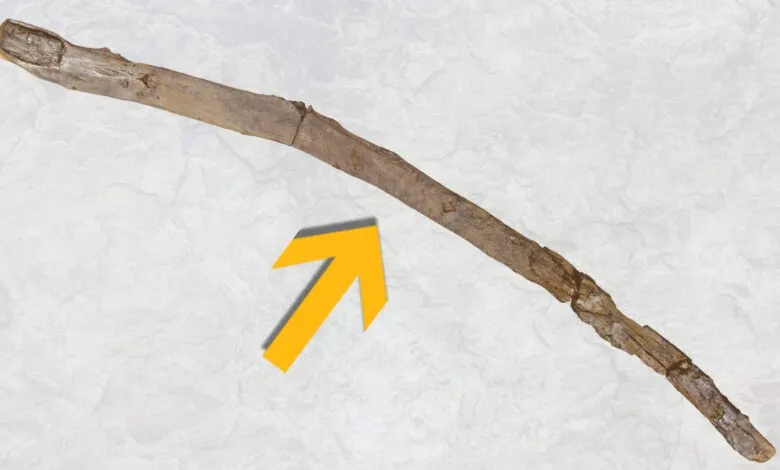
– One tool is a long stick possibly used for digging, while the other is a smaller, handheld piece that may have shaped stone tools.
– Wooden tools are rarely preserved due to decay, surviving only in specific environments like the wet sediment where these were found.
– The identity of the toolmakers is unknown, as no human remains have been found at the site, leaving open possibilities like Neanderthals or early human ancestors.
– This discovery provides a rare glimpse into the diverse toolkits and technological capabilities of early humans.
Archaeologists have unearthed two remarkably preserved wooden artifacts in Greece, pushing back the known timeline for such tools by hundreds of thousands of years. Discovered at a lakeshore site in the Megalopolis basin, these objects are estimated to be around 430,000 years old, making them the oldest wooden tools ever found. This extraordinary preservation offers a rare window into the technological capabilities of our ancient ancestors, whose wooden implements have largely vanished from the archaeological record due to decay.
The larger of the two artifacts is a slender stick, roughly 80 centimeters in length. Researchers suggest its most likely function was for digging in mud, perhaps to forage for roots or tubers. The second object is a smaller, handheld piece of wood from a willow or poplar tree. Its purpose remains more enigmatic, though scientists theorize it could have been used as a soft hammer for shaping stone tools, protecting the hands from sharp edges during the knapping process.
Wooden tools are exceptionally rare finds because organic material decomposes rapidly under normal conditions. These specific items survived for millennia because they were quickly buried in sediment within a persistently wet environment, which prevented rot. The same site has previously yielded other significant remains, including stone tools and elephant bones bearing cut marks, painting a picture of a resourceful hominin presence.
While the tools themselves were not directly dated, the geological layer in which they were discovered is firmly established at approximately 430,000 years old. This dating provides a reliable age for the wooden objects. No human fossils have been found at this location yet, leaving the identity of the toolmakers an open question. They could have been early Neanderthals, another archaic human species, or a direct ancestor of modern humans.
The unassuming appearance of these artifacts initially made their significance less obvious. Unlike the dramatic, sharpened wooden spears found at sites in Germany, these tools are more subtle in their design. Their very simplicity, however, underscores their importance. They represent the everyday, multipurpose items that were crucial for survival, objects that rarely endure through time. This discovery highlights a “little known aspect of the technology of early humans,” moving beyond the stone and bone tools that typically dominate our understanding of prehistoric life.
Other notable ancient wooden implements include a collection of throwing spears from Schöningen, Germany, and 300,000-year-old digging sticks from China. The Greek finds add a vital new piece to this sparse but growing puzzle, suggesting that wood was a fundamental material far earlier and more widely than the archaeological record usually shows. Experts believe the Megalopolis basin likely holds more secrets, waiting for future excavations to reveal further insights into the deep past.
(Source: Science Alert)