Yahoo Scout: A Web-Friendly AI Search Alternative
▼ Summary
– Yahoo’s new AI product, Scout, represents a return to its original mission of being a comprehensive guide to the web, now powered by artificial intelligence.
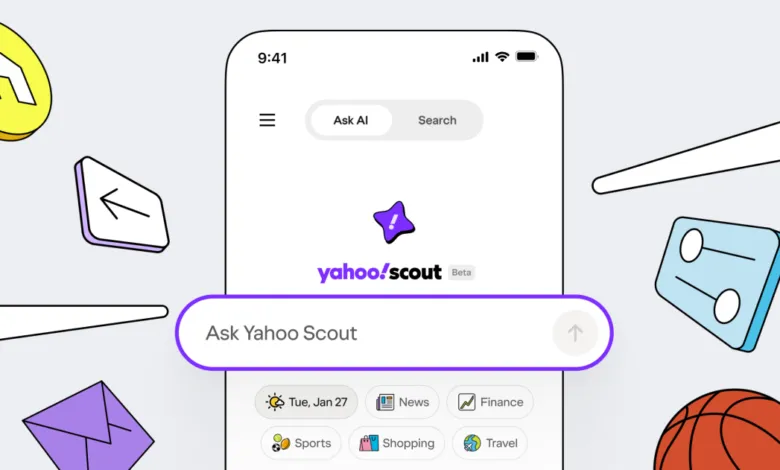
– Scout functions as an “answer engine” for AI web search, available as a tab in Yahoo Search, a standalone web app, and within a new mobile app.
– Yahoo is uniquely positioned for this because it can combine its vast, high-quality content verticals and user data with AI, using Anthropic’s Claude model and Bing for web search.
– Unlike Google, Yahoo can aggressively integrate Scout as the face of its search without hesitation, as it lacks a massive, dominant search-ads business to protect.
– Scout differentiates itself by prominently featuring and encouraging clicks on source links, supporting the web ecosystem, and providing straightforward, useful answers rather than acting as a conversational companion.
Yahoo’s latest move into artificial intelligence feels less like a leap forward and more like a homecoming. The company is reintroducing itself as a curated guide for the modern web with a new tool named Scout. This “answer engine” blends conversational AI with traditional search, aiming to cut through the noise of clickbait and low-quality AI content to deliver useful, well-sourced information. Positioned as a central feature across Yahoo’s platforms, Scout represents a strategic pivot back to the company’s original mission of helping users navigate the vast digital landscape.
Scout operates as a familiar search box, generating summaries in response to queries. It is available as a tab within Yahoo Search, a standalone web app, and a core component of the updated Yahoo Search mobile app. While CEO Jim Lanzone describes it as an answer engine, its function is fundamentally AI-powered web search. Early impressions suggest it feels more like a dedicated search tool than an AI chatbot, prioritizing straightforward information delivery over conversational flair.
The project has a dual purpose. Primarily, it acts as a modern guide to help users find reliable content online. Secondly, it is designed to integrate AI summaries and intelligence across all of Yahoo’s various services, from Finance to Mail, creating a unified hub for user data. Eric Feng, who leads Yahoo’s research group and the Scout initiative, notes the challenge has evolved from simply finding information to filtering out misleading or poorly generated content.
Interestingly, Yahoo’s extensive ecosystem may give it a unique edge. The company operates major content verticals like Sports and Finance, maintains its own newsroom, and has partnerships with numerous publishers. This provides Scout with a vast repository of high-quality reference material. By leveraging its owned content, user data, and established search infrastructure, Yahoo believes it can build a differentiated AI product. Lanzone argues this combination of assets is something only Yahoo can fully exploit.
Google would certainly dispute that claim, given its own vast resources and user base. However, Yahoo possesses a notable strategic advantage: it lacks a gigantic, entrenched search advertising business to protect. This freedom allows Yahoo to aggressively push Scout as the future face of its search experience without the same monetization anxieties that may slow Google’s rollout of similar AI features. Lanzone indicates that while Scout won’t immediately replace standard search, that is the clear long-term objective.
Monetization is still part of the plan. Scout is launching with affiliate links in shopping results and ad units placed at the bottom of some answer pages. This follows the broader industry trend of integrating advertising into AI search tools. The stated goal is to keep the core service free for all users, with a potential paid tier considered only for the future.
Notably, Yahoo is not developing its own foundational AI model from scratch, citing the prohibitive cost. Instead, Scout is built on top of Anthropic’s Claude model. The differentiation comes from what Feng calls “Yahoo content, Yahoo data, Yahoo personality.” For general web results, it continues to rely on a longstanding partnership with Microsoft and Bing.
In practical testing, Scout distinguishes itself by being notably web-friendly. A query about a winter storm, for example, yielded a concise summary with three prominently highlighted blue links. This was followed by detailed, localized sections and a “Latest News” area featuring stories from Yahoo, its partners, and other web sources. The page prominently displayed nine links in total, along with an option to view all sources, a stark contrast to competitors that often tuck citations behind subtle icons. This emphasis on driving traffic to publishers is critical for maintaining Yahoo’s relationships with its newsroom and content partners.
Compared to tools like ChatGPT, Perplexity, and Google’s AI Mode, Scout’s approach feels less like an attempt to replace the web and more like an enhanced gateway to it. Its utility lies in organizing information conversationally while still encouraging users to explore source links. In a crowded field of AI tools that can sometimes obscure their sources, Scout’s web-forward design is a pragmatic and refreshing take. While it’s not yet a challenger to search dominance, it offers a compelling and useful alternative for finding clear answers online.
(Source: The Verge)