LEGO Reaffirms Smart Brick Commitment, Addresses Digital Play Concerns
▼ Summary
– LEGO executives responded to concerns that its new Smart Brick technology risks abandoning the company’s core focus on physical play, assuring it is an addition rather than a replacement.
– The Smart Brick is a sensor-equipped piece that enables screen-free, interactive play by producing sounds and reactions based on movement, proximity, and color detection.
– The company developed the technology based on learnings from past interactive products, aiming to make it less prescriptive and integral to the LEGO system, while ensuring sets remain enjoyable without the smart features.
– Initial reactions included criticism from some play experts who worried smart elements could undermine imaginative play, which LEGO directly addressed in its statements.
– LEGO views Smart Play as a significant, permanent part of its future, with the current launch sets representing just the beginning of the technology’s potential applications.
Following the official unveiling of the LEGO Smart Brick, the company has moved quickly to address questions about its commitment to physical play. LEGO executives emphasize that this new technology is an enhancement to their classic building system, not a replacement for it. The core proposition of hands-on, imaginative construction remains untouched. This innovation represents a significant moment for the brand, the result of extensive development aimed at enriching the play experience without shifting focus away from the tactile bricks that built the company’s legacy.
Some observers expressed concern that embedding electronics into bricks and minifigures might dilute LEGO’s fundamental strengths. Critics suggested smart elements could potentially limit creative freedom during play. In response, the company firmly rejects the idea that this marks a departure from its roots. The Smart Brick is framed as a complementary evolution, an additional layer integrated into the existing “System-in-Play,” much like the introduction of the minifigure decades ago. It is designed for specific scenarios where interactive, dimensional play adds value, not as a universal substitute for traditional sets.
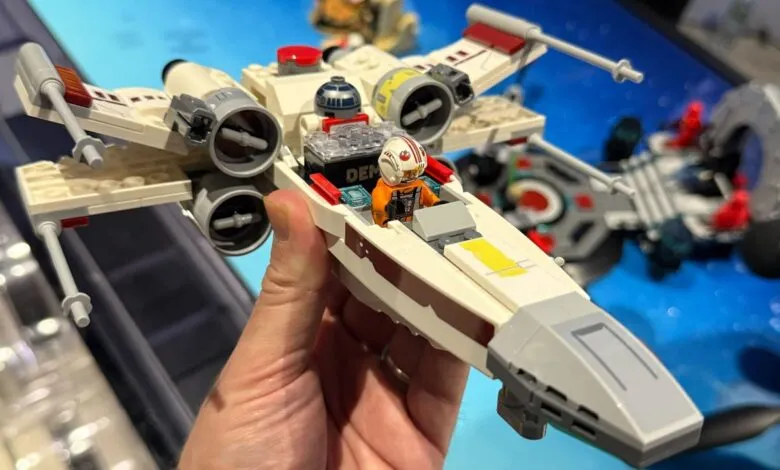
A key point of reassurance is that Smart Play is designed to be a screen-free, entirely physical experience. While a parental app manages firmware updates, the play itself does not involve digital interfaces or gaming. The technology aims to fulfill a long-held childhood dream of making physical toys more responsive. For example, in upcoming Star Wars sets, a sensor-packed Smart Brick can generate engine sounds for an X-Wing based on its movement and interact with smart minifigures when they are placed in the cockpit.
The development process drew important lessons from previous interactive projects like LEGO Super Mario. Those experiences taught designers to avoid overly prescriptive play patterns. The goal with Smart Play is to provide triggers for interaction while leaving children free to invent their own stories and uses. A LEGO set with a Smart Brick must still be an excellent build and play experience even if the electronic component is set aside entirely. This ensures the product’s integrity as a classic construction toy first and foremost.
Looking ahead, LEGO describes the current launch as merely the beginning. The initial implementation is seen as the tip of the iceberg, with the technology built to support more complex future applications. The company focused on introducing a manageable leap that feels new and exciting without being overwhelming. The roadmap for Smart Bricks is carefully planned to expand their capabilities gradually, ensuring each step enhances play without creating unnecessary hurdles for understanding. This measured approach underscores a commitment to evolving the brand thoughtfully while staying true to the physical, creative play at its heart.
(Source: IGN)