Expert-Tested: The Best Gaming TVs for Every Budget
▼ Summary
– The article provides a curated list of the best gaming TVs, with the LG C5 recommended as the top overall choice for most people due to its low input lag, full gaming features, and versatile size options.
– Key criteria for selecting a gaming TV include low input lag (ideally under 15ms), HDMI 2.1 support, and features like 4K 120Hz, VRR, and ALLM for a responsive, future-proof experience.
– Specific models are highlighted for different needs, such as the Sony Bravia 8 for PS5 owners, the Hisense U7N for budget buyers in the US, and the Samsung QN90F for gaming in bright rooms.
– The guide explains that while high-end OLED models are generally excellent for gaming, budget TVs can also be great but may lack features like 4K 120Hz or HDMI 2.1.
– The recommendations are based on hands-on testing by experts using specialized equipment and gaming consoles to evaluate performance, picture quality, and feature implementation.
Finding the perfect gaming television requires balancing image quality, budget, and room size, but it also demands specific performance features that elevate the interactive experience. Our selection prioritizes critical gaming metrics like exceptionally low input lag and comprehensive HDMI 2.1 support, ensuring your gameplay is as responsive and future-proof as possible. We conduct hands-on testing with specialized equipment and real console gameplay, seeking models that deliver on their promises for a seamless, immersive experience.
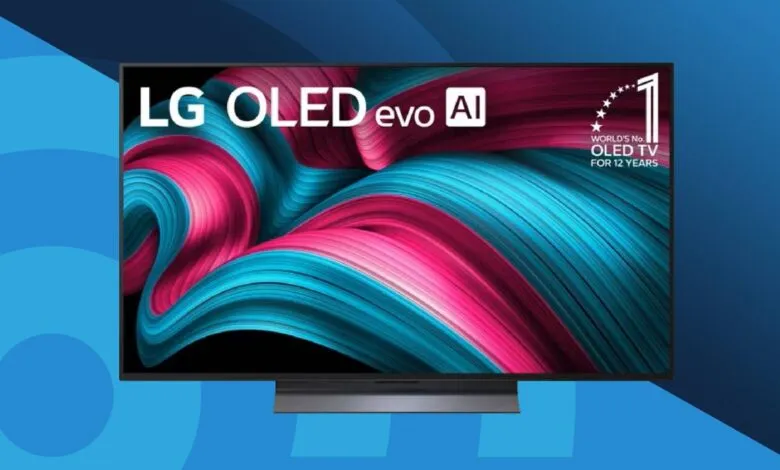
For the majority of gamers, the LG C5 stands out as the top recommendation. It builds upon the success of its predecessor with a new Alpha 9 Gen 8 AI processor and enhanced brightness for more vivid HDR gaming. Available in sizes from 42 to 83 inches, it fits various setups. This model is a gaming powerhouse with four HDMI 2.1 ports supporting 4K at 144Hz, VRR (including G-Sync and FreeSync Premium), ALLM, and Dolby Vision Gaming. Its measured input lag of 9.2ms ensures fluid and responsive control. Picture quality is outstanding, offering rich contrast and vibrant colors. The main compromise is the built-in audio, which is adequate but benefits significantly from pairing with a soundbar. While it’s a modest upgrade over the C4, its premium performance and versatility make it our current favorite.
PlayStation 5 owners should strongly consider the Sony Bravia 8. It features exclusive ‘Perfect for PS5’ capabilities, including an auto HDR tone mapping mode that activates upon connection to optimize the picture specifically for that console. It supports 4K 120Hz, VRR, and ALLM, with a solid 12.8ms input lag. The picture quality is impressive, with excellent backlight control and improved HDR brightness. Furthermore, it boasts one of the best built-in sound systems in the TV market, providing accurate placement and immersion. It only has two HDMI 2.1 ports, so those with multiple next-gen devices should plan accordingly.
In the United States, the best budget option is the Hisense U7N. It packs a near-complete suite of gaming features, including 4K 144Hz, VRR, ALLM, and Dolby Vision gaming, for a fraction of the cost of premium sets. Its mini-LED panel delivers a picture with bold colors and good contrast, though it exhibits some backlight blooming and limited viewing angles. The sound quality is a weak point, feeling narrow and lacking immersion, so a soundbar is a wise addition. For its price, especially around $800 for a 65-inch model, the value is exceptional.
For UK shoppers, the Samsung Q80D represents outstanding budget value. It feels far more premium than its price suggests, equipped with four HDMI 2.1 ports supporting 4K 120Hz, VRR, and ALLM. Performance is exhilaratingly responsive with a 9.8ms input lag. It delivers a dynamic, colorful picture with surprisingly rich black levels for an LCD TV. Unlike many budget models, its built-in sound is actually impressive, offering a wide soundstage and good Atmos staging. It requires some picture settings adjustments for optimal color, but it’s the stand-out gaming TV in its price range.
Gamers dealing with bright rooms will appreciate the Samsung QN90F. Its high peak brightness, effective Glare Free anti-reflection screen, and vibrant colors make daytime gaming viable. It’s well-equipped with four HDMI 2.1 ports supporting 4K 165Hz, VRR, and HDR10+ gaming, and it boasts a low 9.5ms input lag. The picture holds up brilliantly in well-lit conditions, offering realistic detail and stunning contrast. While not the best value, it solves a specific problem for challenging viewing environments.
The most affordable entry into OLED gaming is the LG B4. As the cheapest 2024 OLED from LG, it still brings a strong feature set, including four HDMI 2.1 ports with 4K 120Hz, VRR, and Dolby Vision gaming support, plus a low 9.2ms input lag. Picture quality is excellent for the price, with accurate color and superb black levels, though its brightness is limited compared to higher-end models and the built-in sound is average. For budget-conscious gamers wanting OLED contrast, it’s the best choice.
For the ultimate in OLED brightness, the LG G5 is in a class of its own. Utilizing a advanced ‘four-stack’ panel, it achieves the highest brightness levels we’ve measured on an OLED, making it ideal for bright rooms. It comes with every gaming feature imaginable: four HDMI 2.1 ports, 4K 165Hz, VRR, and Dolby Vision gaming, all with a 9.1ms input lag. It is a premium, pricey flagship, but for those seeking no-compromise OLED performance in any lighting, it’s unmatched.
PS5 enthusiasts looking for a premium mini-LED experience should look at the Sony Bravia 9. Its unique mini-LED technology delivers OLED-like blacks with exceptional brightness and minimal light bleed. It includes those helpful PS5-specific auto-tuning features and supports 4K 120Hz and VRR. Its 17ms input lag is the highest on our list, placing it just outside the ideal range for professional gamers, but its stunning picture quality and fantastic built-in audio system make it an elite, immersive choice for most players, albeit at a very high price.
The cheapest overall gaming TV we recommend is the Hisense U6N. It forgoes 120Hz support but offers a solid budget package with 4K 60Hz, VRR, ALLM, Dolby Vision gaming, and a respectable 13.2ms input lag. Its mini-LED picture provides good detail and punchy colors for the price, though it requires settings tweaks and its sound is best supplemented with a soundbar. For casual gaming at 60fps on a tight budget, it’s a compelling option.
Choosing the right gaming TV hinges on several key features. Low input lag, achieved through a Game Mode, is essential to minimize delay between your controller and the screen. HDMI 2.1 connectivity is crucial for accessing features like 4K at 120Hz, Auto Low Latency Mode (ALLM), and Variable Refresh Rate (VRR). VRR synchronizes the display’s refresh rate with the game’s frame rate to prevent screen tearing, with different types (HDMI Forum, AMD FreeSync, Nvidia G-Sync) offering varying compatibility with consoles and PCs.
Console-specific features can influence your choice. The Xbox Series X supports Dolby Vision gaming, which is not available on Samsung TVs or the PS5. Sony TVs offer PS5-specific auto-enhancement features. For PC gaming, a TV can be a great monitor substitute if your hardware can handle 4K output; otherwise, upscaling lower resolutions to a large screen may result in a soft image.
You do not need an 8K TV for gaming. While the PS5 Pro offers some 8K capabilities, it primarily uses upscaling, and native 8K gaming is extremely limited. Focusing on 4K performance with high refresh rates and VRR will provide a superior experience.
Prices for capable gaming TVs start around $800/£900 for models with 4K 120Hz and VRR in smaller sizes. Basic 4K TVs can be found for much less but will lack these next-gen gaming features.
Looking ahead, newly announced models like the Samsung S95F OLED with improved anti-reflection tech, the Samsung QN90F, and the Panasonic Z95B OLED promise to bring even more competition to the market in 2025.
Our testing methodology is rigorous. We evaluate gaming performance primarily in Game Mode using consoles like the Xbox Series X, measuring input lag with a Leo Bodnar tester. We assess picture quality with test patterns, colorimeters, and real content, examining brightness, contrast, color accuracy, and upscaling. Sound quality and feature implementation are also thoroughly reviewed.
Other notable tested models include the bright Hisense U8N, the premium LG G4, the ultra-bright TCL QM851G, and the Ambilight-equipped Philips OLED809/909. While excellent in their own right, they were ultimately edged out by our top picks due to factors like price-to-performance ratio, port availability, or regional availability.
(Source: TechRadar)