CES 2026’s Smart Mirror: A Menace Unveiled
▼ Summary
– The Nuralogix Longevity Mirror is a $899 device that uses “transdermal optical imaging” to assess health metrics like heart rate and physiological age from a facial scan.
– It provides a longevity score from 1 to 100 based on these metrics, with the author’s demo indicating they looked 11 years younger than their actual age.
– The technology’s accuracy is mixed, with some readings aligning with other devices, but it can be inaccurate without correct personal data like height and weight.
– The mirror is part of a broader trend of “longevity tech” at CES, offering a contactless health assessment method that requires no bodily fluids.
– The device is expected to launch in early 2026 and includes an annual service fee after the first year, with an optional health concierge service available.
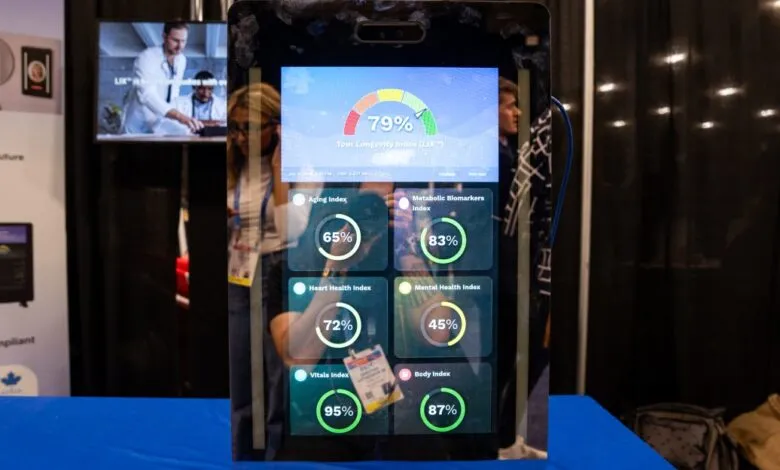
Walking into the CES 2026 show floor, you could sit before a smart mirror, snap a quick selfie, and receive a numerical grade on your aging process. This exact scenario unfolded recently, putting a group of tech journalists under the digital microscope. Reactions varied dramatically; some faced a blow to their confidence, while others sighed with relief. Personally, I was delighted when the device declared I appeared over a decade younger than my actual age, a triumphant moment for my diligent sunscreen routine.
This device is the Nuralogix Longevity Mirror, priced at $899. It employs a technology known as transdermal optical imaging, which analyzes blood flow patterns beneath the skin’s surface. This data fuels an assessment of numerous health indicators: heart rate, blood pressure, cardiovascular risk, metabolic condition, physiological age, and even mental well-being. These metrics combine to generate a single longevity score on a scale from 1 to 100, where a higher figure suggests better overall health prospects.
It’s wise to approach such technology with a degree of skepticism. In my test, the mirror accurately identified feelings of anxiety and subpar sleep quality. Its heart rate reading matched my smartwatch, and the blood pressure estimate aligned with my known averages. A company representative noted the blood pressure feature is currently seeking FDA clearance. A colleague reported similar accuracy for those two metrics during his demo, and his physiological age result was close to his real age. However, the system miscalculated my body mass index because it lacked my precise height and weight data.
Beyond the hardware, Nuralogix is developing an optional health concierge service. For an additional $399 annually, this connects users with a medical professional to discuss their results. Without this subscription, a built-in AI assistant helps interpret the data. The mirror is slated for release in early 2026, with the $899 purchase price covering the first year of basic service. Afterwards, an annual fee of $99 will apply.
Longevity-focused technology is a noticeable trend at this year’s CES. Withings introduced a new smart scale marketed as a “longevity station,” while other firms explore hormonal analysis via urine samples for preventive health. Brands like Whoop and Oura have also added longevity metrics to their wearable devices. The Longevity Mirror stands out by offering a completely contactless assessment that requires no blood, urine, or saliva. Yet, mirrors are inherently judgmental, even without embedded artificial intelligence. The real question is whether consumers are prepared to face this type of detailed health evaluation in their daily lives, all for the promise of a longer lifespan.
(Source: The Verge)