The British Roadster That Inspired the Mazda Miata
▼ Summary
– The Mazda Miata is a unique, affordable, two-seat convertible sports car in 2025, offering a minimal-frills driving experience for daily and weekend use.
– Decades before the Miata’s arrival, small, affordable sports cars were much more common, primarily produced by British manufacturers.
– British brands like Triumph, MG, Jensen, Jaguar, and Aston Martin produced such sports cars for many years during that era.
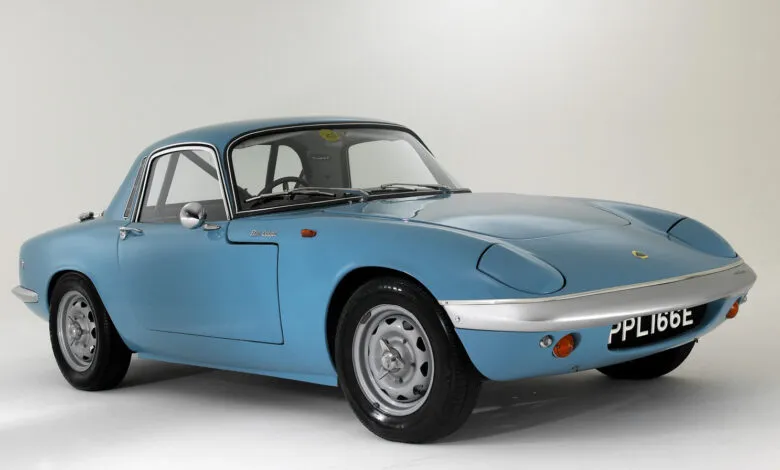
– The primary inspiration for the Mazda Miata was the much smaller and more delicate Lotus Elan sports car.
– The Lotus Elan was exceptionally lightweight, weighing only 1,290 pounds, reflecting Colin Chapman’s philosophy of minimizing weight.
The enduring appeal of the Mazda Miata is rooted in a simple, timeless formula: an affordable, lightweight, two-seat roadster built purely for driving joy. While it feels like a unique proposition in today’s market, its spiritual ancestors were once a common sight on British roads. Decades before the Miata’s debut, manufacturers like Triumph, MG, and Jensen perfected the art of the small, accessible sports car. Yet, among these classics, one model stands out as the definitive blueprint for Mazda’s iconic creation.
That foundational inspiration was the Lotus Elan. This was a car of remarkable delicacy and minimalism, so compact its cabin might give a modern driver pause. This extreme focus on size was no accident; founder Colin Chapman’s philosophy for Lotus was obsessively centered on reducing weight. The Elan embodied this principle, with a curb weight of just 1,290 pounds, a figure that seems almost unbelievable by contemporary standards.
Its influence on the Miata’s development team was profound and direct. Engineers and designers studied the Elan meticulously, aiming to capture its essence: the direct, communicative steering, the perfectly balanced chassis, and the intimate, open-air driving experience. They sought to modernize that classic feel with Japanese reliability, a combination that would become the Miata’s hallmark. The Elan’s layout, a front-engine, rear-wheel-drive configuration with a focus on handling purity, became the Miata’s mechanical gospel.
Beyond the technical specifications, it was the Elan’s character that Mazda wanted to replicate. The car felt alive and connected, responding instantly to driver inputs without being harsh or unforgiving. It was a sports car you could use every day, a concept that had faded but which Mazda brilliantly revived. The resulting Miata shared the Elan’s playful spirit, its tactile feedback, and its sheer fun factor, proving that advanced technology wasn’t a prerequisite for an engaging drive.
The legacy of this inspiration is clear. The Miata didn’t just borrow ideas; it successfully translated a classic British roadster ethos for a new global audience, creating a segment almost single-handedly. It demonstrated that the core ingredients of driving pleasure, light weight, perfect balance, and a responsive chassis, are timeless. While modern Miatas have grown more sophisticated, that original, Elan-inspired DNA remains palpably intact, ensuring its status as a modern classic that honors its heritage with every twist of the road.
(Source: jalopnik)