Samsung Unveils World’s First 2nm Phone Chip for Galaxy S26
▼ Summary
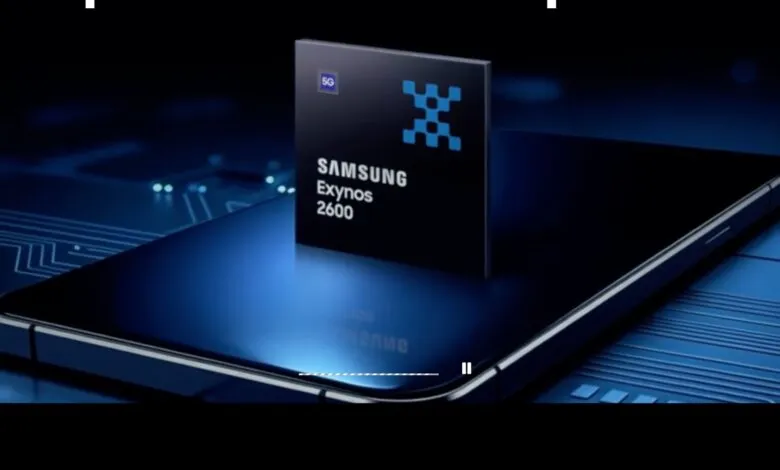
– Samsung has officially announced the Exynos 2600, the world’s first smartphone processor built on a 2nm GAA manufacturing process.
– The chip features a 10-core CPU using Arm’s v9.3 architecture with new C1-Ultra and C1-Pro cores, promising significant performance and efficiency gains.
– It includes the Xclipse 960 GPU for improved graphics and a new Heat Path Block technology designed to address past thermal and throttling issues.
– The upgraded NPU offers a major boost in AI performance, enabling larger generative AI models to run directly on the device.
– The integrated ISP supports cameras up to 320MP and advanced video features, while the chip is expected to power select models of the upcoming Galaxy S26 series.
Samsung has officially revealed its next-generation flagship processor, the Exynos 2600, marking a significant leap in semiconductor technology. This chip is the world’s first smartphone SoC manufactured on a 2nm GAA (Gate-All-Around) process, promising substantial improvements in performance, power efficiency, and thermal management. Expected to feature in upcoming Galaxy S26 series devices, the Exynos 2600 represents a major step forward for Samsung’s mobile ambitions.
The transition to the advanced 2nm node is a critical development, particularly for addressing the thermal challenges that have historically affected Exynos chips in competition with offerings from Qualcomm, MediaTek, and Apple. Samsung asserts this new fabrication technology enables notable gains across the board, directly targeting past weaknesses.
At the heart of the Exynos 2600 is a novel 10-core CPU configuration built on Arm’s latest v9.3 architecture. Samsung has moved away from traditional low-power cores, opting instead for a blend of high-performance and efficiency-focused cores. The setup comprises one prime C1-Ultra core running at 3.8GHz, three high-performance C1-Pro cores at 3.25GHz, and six efficiency-oriented C1-Pro cores clocked at 2.75GHz. This architecture reportedly delivers a 39% boost in overall CPU performance compared to its predecessor, the Exynos 2500. Support for Arm’s SME2 instructions is also included to accelerate on-device machine learning tasks and reduce latency for AI features.
For graphics, the chip integrates the new Xclipse 960 GPU. Samsung claims it offers double the compute performance of the previous generation and a 50% improvement in ray tracing capabilities. A key introduction is Samsung’s Exynos Neural Super Sampling (ENSS) technology, which employs AI-based upscaling and frame generation to enhance gaming smoothness without a significant drain on battery life.
Artificial intelligence is a central pillar of the Exynos 2600’s design. The upgraded Neural Processing Unit (NPU) is said to provide a massive 113% increase in AI performance, enabling larger and more complex generative AI models to operate entirely on the device. This focus on on-device AI processing is also framed as a benefit for user privacy and data security.
The integrated image signal processor (ISP) supports camera sensors up to an impressive 320 megapixels and enables zero shutter lag for 108MP photos. Video recording capabilities include 8K at 30 frames per second and 4K at up to 120fps with HDR support. New imaging technologies include a Visual Perception System for real-time detail detection and Deep Learning Video Noise Reduction to improve low-light video quality. Samsung states this new ISP is also up to 50% more power-efficient.
Perhaps the most anticipated improvement concerns thermal management. Samsung is introducing a new Heat Path Block (HPB) technology that uses specialized materials to enhance heat transfer, reducing thermal resistance by up to 16%. This innovation is specifically designed to help the chip maintain consistent performance under heavy workloads, potentially solving the throttling issues that affected earlier Exynos generations.
The Exynos 2600 also supports modern standards like LPDDR5X memory, UFS 4.1 storage, HDR10+ playback, and 4K displays with refresh rates up to 120Hz. It appears to utilize a separate modem for connectivity rather than an integrated design. While Samsung has not officially named the first devices to use the chip, it is already in mass production and is widely expected to power the Galaxy S26 and S26 Plus models in various global markets.
(Source: Android Authority)