Topic: research methods
-

Scientists Recycle Old Bullets for Essential Toxic Compound
A new process recycles spent lead ammunition, a persistent environmental toxin, into high-purity lead for manufacturing. This recycled lead is used to create lead halide perovskite, the key light-absorbing material in highly efficient next-generation solar cells. The method establishes a circular...
Read More » -

Sky-Hunters: Bats Snatch Birds Mid-Flight
Greater noctule bats, Europe's largest bat species, were studied using specialized lightweight sensors to uncover how they hunt birds, overcoming technical challenges to monitor their flight without interference. Researchers developed miniaturized tracking tags weighing about four grams, which re...
Read More » -

Most LLM users rely on unhealthy habits, study finds
Hank Green paused production after backlash over his AI use for research, calling his own reliance "not healthy," though he never used AI to draft scripts. The debate highlights tensions between authenticity and AI's training on uncompensated work, plus risks of fabricated information that sounds...
Read More » -

AI can now identify anonymous users with startling precision
New AI technology can accurately link burner social media profiles to real individuals, fundamentally undermining online pseudonymity as a privacy tool. The AI-driven approach achieves high precision and recall in deanonymization, posing serious risks like harassment and invasive profiling for us...
Read More » -

Male Mosquitoes Also Drink Human Blood
New research challenges the long-held belief that only female mosquitoes bite, revealing that **male mosquitoes are also capable of drinking human blood**, particularly when triggered by dehydration. Evidence from both lab experiments and wild-caught specimens confirms this behavior and shows mal...
Read More » -

Ice Age Woolly Mammoth Yields World's Oldest RNA
Scientists have extracted the world's oldest RNA from a 40,000-year-old woolly mammoth named Yuka, revealing unprecedented biological details about Ice Age creatures. The breakthrough involved specialized chemical techniques to isolate fragile RNA fragments, overcoming previous challenges with de...
Read More » -

Mars: How Wind Transformed the Red Planet into a Dust World
Mars is dominated by powerful winds and dust, which create dust devils and planet-wide storms that significantly influence the environment. Using advanced imaging and deep learning, researchers discovered that Martian winds are faster and carry more dust than previously thought, playing a key rol...
Read More » -
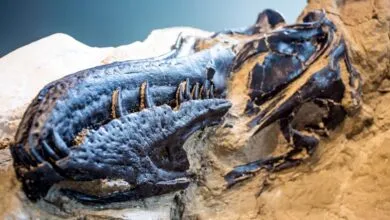
Nanotyrannus: A Separate Species, Not a Young T. Rex
New research confirms that controversial dinosaur fossils belong to a separate species called Nanotyrannus, not juvenile Tyrannosaurus rex, reshaping understanding of tyrannosaur diversity in the Late Cretaceous. The study, led by Nicholas Longrich and Evan Saitta, used growth ring analysis to sh...
Read More » -

AI can't explain its own decisions, study finds
Large language models often fabricate justifications for their decisions, lacking genuine self-awareness and relying on training data patterns instead. Anthropic's research reveals that current AI systems are fundamentally unreliable at introspection, failing to accurately report their own intern...
Read More » -

Drunk Chimps' Urine Tests Confirm Controversial Theory
The "drunken monkey hypothesis" proposes that the human attraction to alcohol evolved from our primate ancestors' ability to locate high-calorie, fermenting fruit. New research on wild chimpanzees in Uganda found alcohol metabolites in their urine, providing direct evidence they regularly consume...
Read More » -

Tiny RNA Molecule Replicates Itself in Lab
Researchers have discovered a remarkably short, 45-nucleotide RNA strand capable of copying itself, providing a tangible model for how early genetic material might have initiated life's complexity. This finding supports the "RNA world" hypothesis, as RNA can both store genetic information and cat...
Read More » -

Can Animals See Optical Illusions? The Surprising Answer
The Ebbinghaus illusion demonstrates that humans perceive object size differently based on surrounding context, and recent research indicates susceptibility to such optical illusions varies among animal species depending on their habitats and sensory needs. Studies reveal that while some animals ...
Read More » -
June Research Roundup: 6 Science Stories You Missed
Japanese researchers used high-speed cameras to analyze soccer's scissors feint, revealing how skill level affects weight shift and foot placement to improve training techniques. New modeling explains that human feces form a spiral due to colon contractions and stool viscosity, which could help d...
Read More »