Topic: material science
-
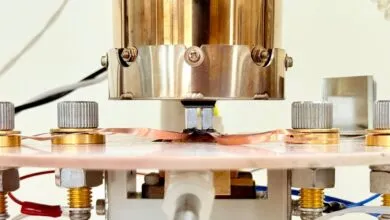
AI-Designed Thermoelectric Generator Cuts Design Time by 90%
Researchers in Japan have developed an AI-powered tool called TEGNet that designs thermoelectric generators 10,000 times faster than conventional methods, with prototypes performing comparably to leading devices. The AI tool rapidly screens thousands of potential device configurations by learning...
Read More » -

Ex-OpenAI, Google Brain Team Raises $300M for AI Startup
Periodic Labs, founded by former OpenAI and Google Brain researchers, has raised $300 million to use AI for automating material science, integrating simulations, robotics, and large language models to propose, create, and analyze new compounds. The company's approach leverages AI to learn from al...
Read More » -

Shape-Shifting Material Unlocked by a Simple Pull
Inspired by kirigami, researchers have developed a flat material that transforms into complex 3D structures with a single pull of a string, promising applications in medical devices, robotics, and space habitats. A computational algorithm converts a desired 3D shape into a flat, interconnected gr...
Read More » -

Scientists Build Real-World Magnetic Cloaking Device for Complex Shapes
Engineers have developed a functional magnetic cloaking device that shields complex objects from detection, moving the technology from theory to practical application. The cloak, detailed in *Science Advances*, uses a composite shell to redirect magnetic fields, making enclosed objects invisible ...
Read More » -

Why Okapa's $300 Water Bottle Costs So Much
Okapa's $295 water bottle positions itself as both a luxury status symbol and a hygiene innovation, using materials from medical and aerospace industries to justify its premium price. The bottle features eight years of R&D, over 10,000 prototypes, and 70+ patents, with a founder experienced in lu...
Read More » -

Everbloom's AI Turns Chicken Feathers Into Cashmere
Traditional cashmere production faces sustainability issues due to over-shearing and high demand, creating a need for ethical alternatives. Startup Everbloom uses AI and keratin waste (like feathers and textile scraps) to engineer biodegradable fibers that mimic cashmere's qualities. Their proces...
Read More » -

Fourth Power's Thermal Batteries Could Undercut Natural Gas Plants
Fourth Power is developing a thermal battery using superheated liquid tin and argon to store and release energy efficiently, aiming to make renewable energy more cost-effective than natural gas. The technology can supply power for about eight hours, twice the duration of most lithium-ion batterie...
Read More » -

Inertia Enterprises speeds up fusion fuel production
Inertia Enterprises has reduced fuel pellet production time from days to 2-3 hours by scaling up a process originally developed at the National Ignition Facility, clearing a key hurdle toward its commercial fusion plant. The startup achieved this by hiring industrial engineers, growing crystals i...
Read More » -

Kyoto Fusioneering begins work on key fusion reactor device
Kyoto Fusioneering, a Japanese startup, has secured $121 million in funding and DOE/Tennessee grants to build a fuel-breeding prototype at Oak Ridge National Laboratory, while relocating its U.S. headquarters there. The company specializes in fusion plant auxiliary systems, notably the Unity-3 br...
Read More » -

Arcturus’ Nano-Metals Could Halve Grid Electrical Losses
Global copper demand is set to skyrocket due to the energy transition and data center growth, with a study suggesting more copper will be needed by 2050 than has been mined in all of human history, primarily to upgrade the aging and strained U.S. electrical grid. Startup Arcturus uses lasers to i...
Read More » -

Gold's fake inertness: protected by bodyguards
Gold was traditionally considered inert due to its filled electron orbitals shielding reactive electrons, but this explanation failed to account for gold nanoparticles' catalytic properties. Two researchers now propose that gold's inertness is not an atomic property but stems from the surfaces fo...
Read More » -

Microsoft, Atom Computing, EeroQ share new quantum advances
Recent progress reports from multiple quantum computing companies represent essential groundwork and painstaking labor needed for practical quantum computing, rather than any seismic breakthroughs. Microsoft is pursuing a fundamentally different approach using topological qubits based on exotic p...
Read More » -
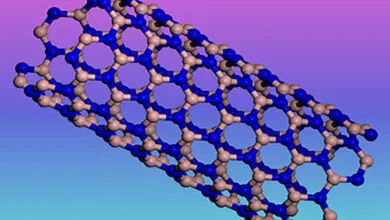
How 'Ghost' Photons Shape Superconductivity
A recent experiment manipulated virtual photons, or 'ghost' particles, to alter a superconducting material's properties, using superconductivity as a sensitive quantum effects detector. Virtual photons are fleeting, undetectable force carriers from quantum fields that influence matter, distinct f...
Read More » -

Apple's Foldable iPhone May Use Liquid Metal, Titanium
Apple's rumored foldable iPhone will feature a hinge made from durable liquid metal and a chassis using a next-generation titanium alloy, aiming for enhanced durability and reduced weight. The liquid metal hinge offers exceptional strength and fatigue resistance for repeated folding, while the re...
Read More » -

Head(amame) Launches 3D-Printed Pro Headphones on Kickstarter
The Head(amame) Pro headphones are a professionally assembled, 3D-printed product offering high-fidelity audio at an accessible price, evolving from the brand's DIY kits. Key innovations include a glass diaphragm driver for precise sound tuning and a lightweight, open-backed design reinforced wit...
Read More » -

X-Rays Uncover Kingfisher Feather Secrets
Scientists have revealed that the vibrant blue of kingfisher feathers, used in the historic Chinese art of *tian-tsui*, comes not from pigment but from nanostructures called photonic crystals, which manipulate light to create color. These natural photonic crystals are incredibly precise structure...
Read More » -

Google's Quantum Breakthrough: Outpaces World's Fastest Supercomputers
Google has developed a quantum algorithm called Quantum Echoes that operates 13,000 times faster than current supercomputers, potentially advancing applications in medicine and materials science within five years. The algorithm is the first verifiable quantum algorithm, running on Google's Willow...
Read More » -

The Challenge of Designing a Safer Football Helmet
The F7 Pro helmet is gaining adoption in the NFL, with over a third of players switching to it, as it aims to enhance safety amid ongoing concerns about head injuries in the sport. Despite technical innovations like the AiR-Lock fitting system and DNA Core for better impact absorption, player res...
Read More » -

SpaceX's Starship Faces Same Critical Flaw That Doomed NASA Shuttles
SpaceX aims to catch returning spacecraft mid-air using mechanical arms to enable rapid reusability, a technique demonstrated with the Super Heavy booster. The primary challenge is perfecting Starship's heat shield to prevent tile loss and damage, requiring extensive testing and design improvemen...
Read More » -

Samsung's new foldable display resists creases and damage
Samsung introduced Flex Titanium, a new foldable display technology designed to be thinner, tougher, and less prone to the visible crease that has long affected foldable phones. The technology, derived from seven generations of foldable devices, will debut in the upcoming Galaxy Z Fold 8 and Gala...
Read More »