Topic: ancient dna
-
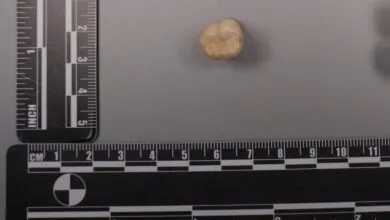
Fossil Tooth Protein Hints Denisovans Passed DNA to Humans
Ancient DNA analysis shows early humans interbred with Neanderthals and Denisovans, and the Denisovan genome contained traces of an even older, unidentified ancestor. New evidence from ancient proteins identifies Homo erectus as that mysterious population, meaning modern humans inherited some Hom...
Read More » -

Ancient Wolf's Stomach Reveals Woolly Rhino Genome
A 14,400-year-old wolf puppy's preserved stomach contents yielded a complete woolly rhinoceros genome, marking a groundbreaking achievement in paleogenomics. The genome was extracted from a degraded piece of rhino meat, overcoming immense technical challenges to separate the DNA from the wolf hos...
Read More » -

Southern Africa's Humans Were Isolated Until Recently
A new study successfully analyzed ancient genomes from southern Africa, revealing a population that remained genetically distinct and isolated for millennia, only integrating with other groups about 1,000 years ago. Reconstructing human history in Africa is challenging due to poor ancient DNA pre...
Read More » -
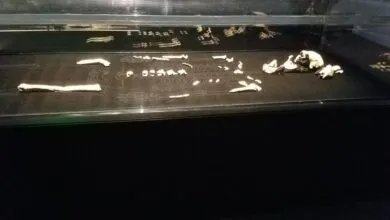
All Known Homo Naledi Are Female, With Fascinating Implications
A new analysis of dental enamel proteins from 23 Homo naledi teeth found in South Africa's Rising Star Cave System reveals that every known skeleton of this ancient hominin is female, with a statistical probability of this occurring by chance at just 0.0000954 percent. The researchers, led by mol...
Read More » -
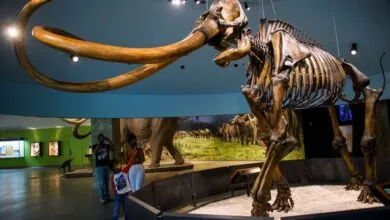
Unraveling the Genetic Mystery of Central American Mammoths
Mammoths were diverse, with the Columbian mammoth being particularly puzzling due to conflicting genetic evidence about its origins and possible hybridization with woolly mammoths. Genetic studies were historically biased toward northern specimens due to better DNA preservation in cold climates, ...
Read More »