Logitech Rival Killer Mouse: Great Specs, One Big Flaw
▼ Summary
– The reviewer compares the Keychron G6 HE gaming mouse to the Logitech G Pro X2 Superstrike, noting that while both use Hall effect switches for adjustable actuation depth, their execution differs significantly.
– Unlike the Logitech model which offers haptic feedback matching the click feel, the Keychron G6 HE lacks haptics, causing a disconnect where clicks register visually or audibly without tactile confirmation at certain settings.
– This design flaw leads to issues in productivity and gaming, such as phantom clicks during movement or shooting without feeling the trigger press, undermining the purpose of customizable actuation points.
– Keychron cofounder Fab Chan explained that the non-haptic design prioritizes user preference for traditional clicks and reduces weight, with plans announced for a heavier future model featuring haptic feedback.
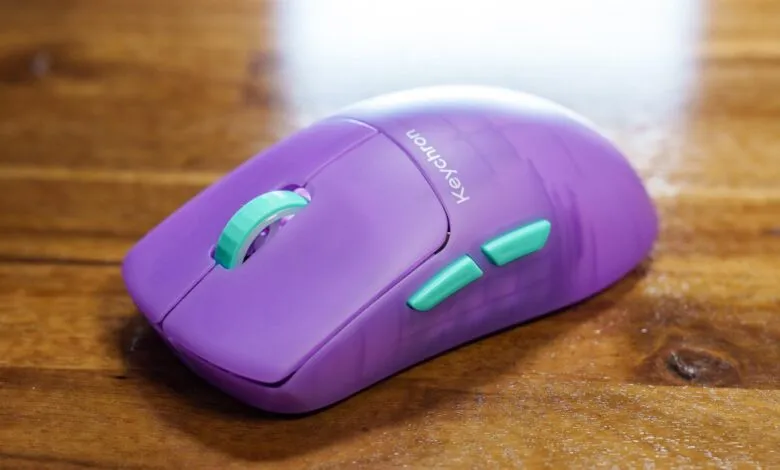
– Despite the clicking issues, the G6 HE is praised for its lightweight build, weighing only 49g with battery, and available in various colorful finishes like frosted lavender and mint.
The Logitech G Pro X2 Superstrike set a high bar for gaming peripherals by introducing magnetic Hall effect switches that allow users to adjust click depth while providing haptic feedback to mimic tactile resistance. When Keychron released the $90 G6 HE, it appeared to be a compelling, budget-friendly alternative leveraging similar technology. However, despite sharing the core innovation of customizable actuation points, the G6 HE suffers from a critical design flaw that undermines its primary selling point.
While the mouse’s aesthetic draws inspiration from Logitech’s Pro series with added color options, the execution of the clicking mechanism feels fundamentally disconnected from the hardware capabilities. The G6 HE utilizes MagOptic switches, which combine magnetic and optical sensing. Unlike the haptic response found in higher-end competitors, these buttons produce a standard mechanical click sound regardless of the configured actuation depth. This creates a sensory mismatch: setting the buttons to a shallow, hair-trigger sensitivity results in registering a press without any audible or tactile feedback, while setting them too deep causes the mouse to click before the signal registers.
This discrepancy renders the customization feature largely pointless for precision tasks. For fast-paced first-person shooters, a light trigger might offer speed, but the lack of physical confirmation is disorienting. Conversely, using the mouse for general productivity leads to frustration, as users may experience phantom clicks or struggle to distinguish intentional inputs from accidental brushes against the pad. In contrast, mice with true haptic feedback provide clear physical cues, ensuring that users remain aware of their input settings even when they are pushed to extreme values.
Keychron addressed this design choice by explaining that the company prioritized weight reduction and traditional user preferences. “There are two reasons for this design,” cofounder Fab Chan stated. “First, many users still prefer the feel of a traditional click over haptics. Second, a haptic motor adds weight, and for this model we prioritized a lighter design. That said, we’re planning a model with haptic feedback. It will be slightly heavier than the G6 HE, and we’ll share more details soon.”
In terms of physical attributes, the G6 HE excels in portability. Weighing just 49 grams with the battery installed, or 40 grams in wired mode, it undercuts the 60-gram range of Logitech’s current models. The ergonomic shape features inward-curving side walls that offer a comfortable grip for many hand sizes. A standout feature is the hot-swappable battery system, allowing for quick swaps between sessions rather than waiting for a charge. While a version with a built-in battery is available for $15 less, the convenience of swapping power packs makes the extra cost worthwhile for most users.
The accompanying charging dock doubles as the wireless receiver and features customizable RGB lighting. It includes four programmable buttons for adjusting DPI, profiles, or other functions on the fly. Control is managed through the Keychron Launcher web application, which offers robust configuration options similar to VIA keyboard software. However, accessing the battery in the base requires unscrewing a clear housing, adding a minor inconvenience to an otherwise streamlined setup.
Ultimately, the G6 HE presents a mixed bag. It offers a lightweight form factor and convenient hot-swap batteries at an attractive price point, but the lack of haptic feedback in its MagOptic switches prevents it from delivering a cohesive experience. The mouse feels like a compromise that fails to fully realize the potential of Hall effect technology. While future iterations promising haptic support may bridge this gap, the current model remains a half-measure in a market where seamless integration of hardware and software feedback is expected.
(Source: The Verge)