Vibe coding: Is open source the new synth standard?
▼ Summary
– AI tools and reverse engineering have forced music gear companies to respond by increasingly opening their devices to the modding community.
– inMusic is adopting an open-source strategy, providing SDKs and inner workings for products like the MPC Sample Key to empower users.
– Akai aims to balance professional reliability with modder access by offering features that allow experimentation without losing original data.
– Behringer is rapidly launching a variety of affordable, open-source clones of popular instruments, though launch dates remain uncertain.
– M-Vave’s hackable FM-1 synth sparked the movement, leading to open-source firmware releases and plans for a successor device.
The rise of vibe coding has sent shockwaves through the music technology sector, forcing hardware manufacturers to confront an unexpected threat: AI-driven reverse engineering. As tools like Reverse Engineer Anything and large language models enable users to deconstruct and rebuild complex synthesizers with minimal effort, legacy brands are scrambling for a strategy. While some industry giants have maintained silence, others are rapidly shifting toward open-source hardware, acknowledging that in an era where no device is immune to AI analysis, transparency may be the only viable defense.
The Industry Pivot to Open Source
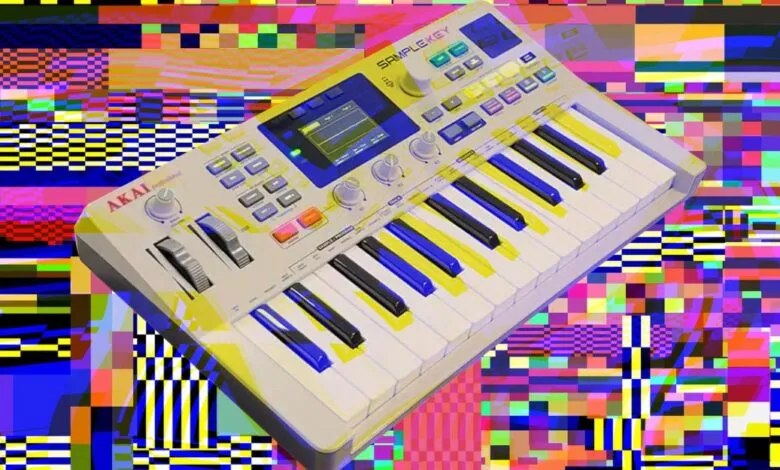
The most significant shift comes from inMusic, the conglomerate behind Akai, Moog, and Native Instruments. Rather than resisting the trend, CEO Jack O’Donnell announced a strategic pivot toward community empowerment. “We’re going to provide a toolbox to the community, we’re going to provide the inner workings of, say, an MPC or Sample so that people can do what they want,” O’Donnell stated. This initiative includes a new SDK and open-source releases such as the MPC Sample Key, aiming to channel the energy of modders into official channels.
Akai is attempting to balance this openness with professional reliability. O’Donnell explained that the company will “try to give them a reset button” so developers “can experiment with it, and then not lose what they have.” This approach seeks to protect the core functionality of professional gear while allowing enthusiasts to tinker without fear of permanent damage.
Meanwhile, Behringer has aggressively capitalized on the movement by announcing a suite of open-source devices. Within weeks, the company revealed a $150 clone of the MPC One named Kick, alongside open-source versions of the E-mu SP-1200 clone, the Anima DJ controller, the Ignite sequencer, and the Polykeys 61 MIDI controller. Although launch dates remain uncertain, the speed of these announcements highlights the urgency companies feel to compete in this new landscape.
The Catalyst: M-Vave and the FM-1
The current wave of openness was largely ignited by M-Vave’s FM-1, a pocket-sized clone of the Yamaha DX7. Priced at just $70, the device became a cultural phenomenon not only for its accurate recreation of ’80s tones but for its hackability. With over a dozen custom firmwares emerging from the community, M-Vave responded by releasing an open-source firmware update, encouraging further development. The company also confirmed that its successor, the FM-2, will follow suit as an open-source product.
This success has emboldened other manufacturers to embrace the modding scene. Erica Synths recently released the source code for its LXR-02 drum machine, though founder Ģirts Ozoliņš remains skeptical about the utility of vibe coding itself. “Inventions succeed if they solve some fundamental problems, right?” he asked. “So, I’m still wondering what fundamental problem vibe coding solves.”
Despite his reservations, Ozoliņš acknowledges potential benefits regarding sustainability. “What I like on the upside of this is that there is some trace of sustainability. Instead of buying five or 10 plastic boxes, you can try options on one,” he said. However, he cautioned against overstating the environmental impact, noting that the practice “by far does not offset data center impact on the planet and on ecology and stuff like that.”
Diverging Stances on Modification
Not all companies welcome the influx of AI-assisted hacking. Polyend has aligned itself with the open-source movement, opening its Tracker grooveboxes to AI tinkering after previously releasing the Endless guitar pedal, which allowed users to vibe-code their own effects. For Polyend, extending this access to other instruments feels like a natural evolution of their brand philosophy.
In contrast, Elektron has taken a restrictive stance. The company removed links to custom firmware from its official forums, citing risks such as bricking devices or voiding warranties. CPO Christian Alsing expressed sympathy for the hacker community, noting Elektron’s own history with the Commodore 64’s SID chip in its original Sidstation. He affirmed that users have a right to modify their devices but rejected accusations that the company is “withholding features.”
Ģirts Ozoliņš defended Elektron’s position, suggesting that criticism often stems from a misunderstanding of design intent. “People tend to blame the company, saying they are hiding features … you design an instrument, you have a specific concept in mind, and you cannot foresee millions of possibilities,” he explained. “It’s not about hiding features; it’s more about having an idea of how an instrument should look and work.”
While Behringer, inMusic, and smaller boutique labels race to open their platforms, major players like Roland, Korg, Arturia, and Novation have yet to issue public statements regarding the explosion of AI-aided custom firmwares. Their silence leaves the industry watching to see whether they will eventually join the open-source revolution or continue to resist it.
(Source: The Verge)