AST SpaceMobile Claims Rocket Building Is Simple
▼ Summary
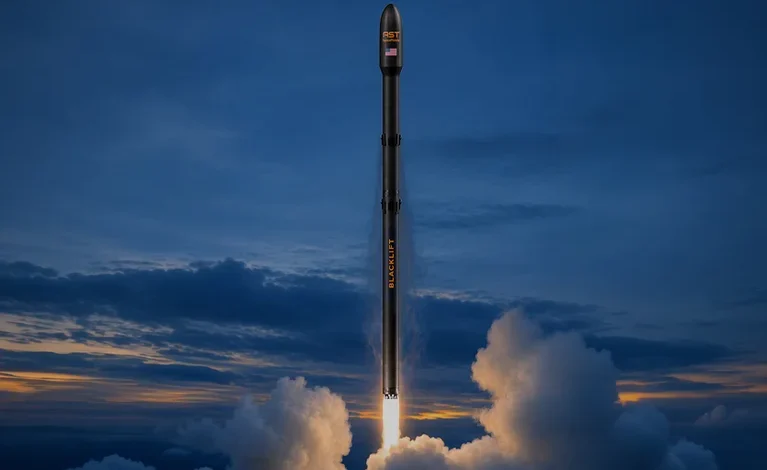
– Abel Avellan, CEO of AST SpaceMobile, announced plans to build a simplified rocket named Blacklift to launch his Bluebird satellites into orbit.
– Avellan argued that the design focuses on simple composite tanks and pre-procured engines to bypass complex development cycles typical in aerospace.
– The company faces a commercial launch crunch, making it difficult to place its direct-to-cell satellites into orbit using existing providers.
– Avellan clarified that entering the launch business is a necessity driven by high demand rather than a desire to compete in the launch market.
– Critics note that Avellan may be significantly underestimating the technical challenges involved in building rockets despite his simplified approach.
AST SpaceMobile founder and CEO Abel Avellan recently outlined a bold strategy to address the company’s launch bottlenecks by developing its own rocket. During a detailed presentation on Thursday, Avellan argued that constructing a launch vehicle is a manageable task, specifically claiming that AST plans to build a “simple” rocket. He frequently referenced SpaceX founder Elon Musk, citing the principle that “the best part is no part,” to justify his minimalist approach to aerospace engineering.
Avellan asserted that AST has already secured engines for its proposed Blacklift rocket. He emphasized that engine acquisition represents approximately 80 percent of the standard development cycle for new rockets. By focusing on propulsion, he believes the remaining structural challenges are trivial. “Of course rocket engineers are going to get mad with me, but you can simplify it as a big tank feeding engines,” Avellan stated. “So big tanks,we know how to do them. We know how to do them. We know how to do them in composite.” While industry experts might view this assessment as overly optimistic, Avellan remains confident that composite tank technology provides a straightforward solution to the structural requirements of spaceflight.
The Launch Crunch Dilemma
The decision to enter the launch market stems from severe logistical constraints rather than a desire to diversify into the launch industry. AST SpaceMobile has successfully engineered massive Bluebird satellites capable of delivering direct-to-cell connectivity from an orbit roughly 550km above Earth. However, the company faces a significant commercial launch shortage that threatens its deployment timeline.
Despite the technical success of the satellites, AST cannot secure enough launch slots to meet growing demand. This scarcity affects both immediate deployments and future project schedules. Avellan clarified the motivation behind the vertical integration move during the event. “We’re not doing this thing because we like rockets,” he said. “We’re not doing this thing because we want to be in the launch business. We want this because we have so much demand of our satellites, and as you have seen it, we cannot get enough launches.”
(Source: Ars Technica)