Why the M6 MacBook Pro Is Likely Its Last of Kind
▼ Summary
– Apple is releasing the M6 MacBook Pro on November 6th, featuring a processor upgrade to a 12-core M6 and the new N1 networking chip for Wi-Fi 7.
– The base model retains the same chassis used since 2021 but starts at $1,999, which is a $200 increase from its initial launch price.
– A separate, more expensive OLED touchscreen MacBook Pro was also released, though this design is expected to eventually replace the current entry-level model.
– The hardware remains highly rated with excellent scores for the screen, webcam, trackpad, and speakers, maintaining its status as a top-tier laptop.
– Key upgrades include the faster processor and improved connectivity, while core components like the keyboard and display technology remain consistent with previous years.
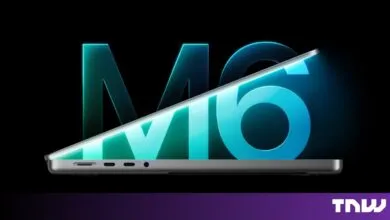
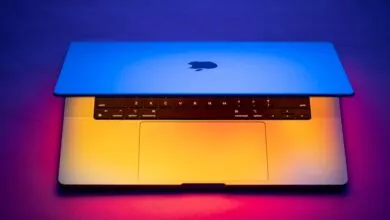
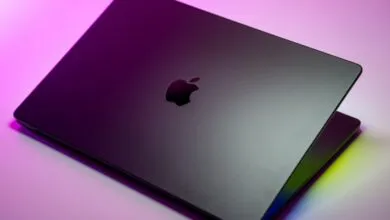
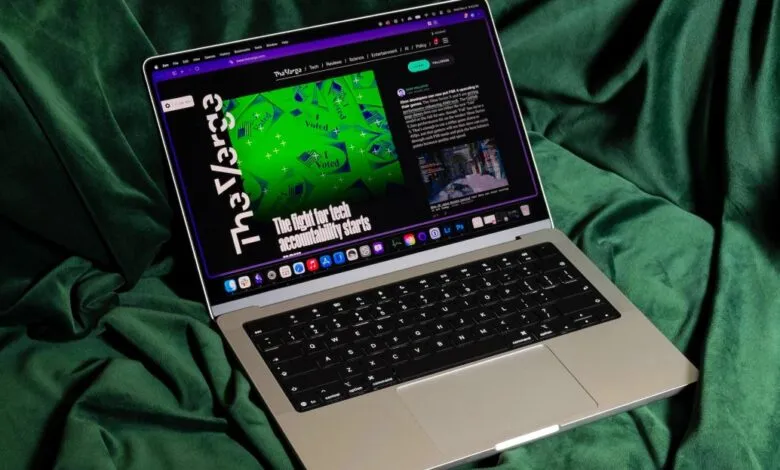
Apple is set to unveil a redesigned MacBook Pro on November 6, featuring a thinner chassis and an OLED touchscreen. This new design language is expected to define the future of the lineup. Consequently, the M6 MacBook Pro, released on the same day, represents the final iteration of the current generation’s form factor. It serves as a minor internal upgrade rather than a revolutionary shift, retaining the chassis introduced in 2021 while enhancing performance through a new processor and networking chip.
The entry-level model remains a compelling option for users upgrading from a MacBook Air or older Intel-based machines. It offers superior specifications across the board, including a better display, improved audio, more robust port selection, and longer battery life. However, two factors complicate the purchasing decision: the starting price has increased, and a significantly redesigned competitor is arriving shortly. The base M6 model starts at $1,999 for 16GB of RAM and 1TB of storage, marking a $200 increase from its launch price a year ago. Meanwhile, the new OLED-equipped model costs $900 more than the base M6, raising questions about whether consumers should wait for next year’s redesign.
Hardware Consistency and Display Quality
The hardware configuration inside the M6 MacBook Pro is largely unchanged from previous years, with the exception of the silicon. The device retains the excellent build quality and component reliability that have defined the line since the removal of the Touch Bar and butterfly keyboard in the 2023 M3 model. The 14.2-inch miniLED display continues to be a standout feature, offering a resolution of 3092 x 1964 and up to 1,000 nits of brightness. The 120Hz adaptive refresh rate, known as ProMotion, provides a noticeably smoother experience for gaming and general navigation, making it difficult to return to standard 60Hz screens.
While the miniLED panel is highly regarded, the transition to OLED technology in the newer model presents a stark contrast. Once experienced, the deeper blacks and vibrant colors of OLED make miniLED feel less impressive by comparison. For now, the M6 relies on Apple’s proven miniLED implementation, which delivers accurate color reproduction and high brightness levels suitable for professional creative work. The screen receives an “A” rating in evaluations, reflecting its status as one of the best displays available on any laptop today.
Input Devices and Audio Performance
The input peripherals remain consistent with recent models, maintaining high standards for usability. The haptic trackpad is widely considered the best in the industry, offering precise cursor control and satisfying click feedback. The keyboard, while not universally loved by all typists, features large, well-spaced keys that provide a tolerable and efficient typing experience. It earns a “B” grade, acknowledging its functionality despite lacking the distinctive character some users prefer.
Audio capabilities are a significant strength of this model. The stereo speakers deliver rich, clear sound that exceeds expectations for a laptop of this size. Furthermore, the studio-quality three-mic array performs exceptionally well in noise-canceling tests. During video calls, the microphone isolation was effective enough that remote participants mistook the user for wearing headphones, a feat rarely achieved by built-in laptop microphones. This audio performance contrasts sharply with older models like the M1 MacBook Air, highlighting the advancements made in acoustic engineering over recent years.
Connectivity and Webcam Specifications
Port selection remains a key advantage for the MacBook Pro over the MacBook Air. The device includes three Thunderbolt 4 ports, an HDMI 2.1 port, an SD card slot, a 3.5mm headphone jack, and MagSafe charging. This variety eliminates the need for dongles and adapters, allowing for seamless connectivity with external displays, storage devices, and cameras. The placement of ports on both sides of the chassis ensures easy access without cluttering either edge.
The webcam utilizes a 12MP sensor with Center Stage technology, which keeps the user centered during video calls. While the resolution is adequate for most professional and personal uses, the Center Stage algorithm can take a moment to adjust when the user moves quickly. Nevertheless, it represents a substantial improvement over earlier generations and handles typical lighting conditions well. The camera receives an “A” rating, reflecting its capability to meet modern communication standards effectively.
Performance and Gaming Capabilities
Under the hood, the M6 chip features 12 CPU cores (two super cores, four performance cores, and six efficiency cores) and integrates the new N1 networking chip for Wi-Fi 7 and Bluetooth 6 support. This configuration provides ample power for everyday tasks, photo editing, light video editing, and casual gaming. In benchmark tests, the M6 MacBook Pro performed similarly to other M6 devices like the Mac Mini and iMac, though systems with 24GB of RAM showed a slight edge in memory-intensive applications like Premiere Pro and DaVinci Resolve.
Gaming performance is competent but not exceptional. Titles like Cyberpunk 2077 run with upscaling and frame interpolation, making them playable in a pinch. However, the hardware struggles with demanding graphical loads, resulting in occasional glitches and reduced visual fidelity. The fan noise during heavy loads is minimal, described as a faint whoosh rather than an irritating whine, contributing to a quieter user experience. Overall, the M6 chip proves that Apple Silicon remains highly capable for a wide range of workloads.
Battery Life and Real-World Usage
Battery life remains one of the strongest selling points of the MacBook Pro. In real-world testing, the device sustained over 12 hours of screen-on time on a single charge. This included approximately three hours of video conferencing and extensive multitasking. The efficiency of the M6 chip, combined with the optimized macOS software, allows for all-day productivity without needing to carry a charger. This endurance matches or exceeds that of previous models, ensuring that users are not tethered to power outlets during long work sessions or travel.
Pricing Strategy and Value Proposition
The starting price of $1,999 places the M6 MacBook Pro in a competitive but challenging position. This price point reflects broader market trends of inflation and supply chain adjustments, but it does put pressure on value perception. With Apple Silicon laptops lasting many years, investing in the base model with only 16GB of RAM may prove limiting in the future. Users planning to keep the device for five or more years might find themselves constrained by memory limitations before the processor becomes obsolete.
Upgrading to 24GB of RAM increases the price to $2,199, while 36GB of RAM brings it to $2,399. At these higher tiers, the cost approaches that of the M5 Pro model, which offers significantly more powerful CPU and GPU performance. This pricing structure suggests that buyers seeking maximum longevity and performance might be better served by stepping up to a higher-tier model or waiting for the next generation. The decision ultimately hinges on individual needs and budget constraints.
Future Outlook and Recommendation
The arrival of the redesigned MacBook Pro with an OLED display next year casts a shadow over the current M6 model. Rumors indicate that the new chassis will be thinner and lighter, addressing common complaints about weight and bulk. Additionally, the OLED screen is expected to become standard on entry-level models, bringing premium display technology to a lower price point. For consumers who are not urgently in need of a new laptop, waiting until next year could result in a better overall package.
However, if a purchase is necessary immediately, the M6 MacBook Pro remains a solid choice. It offers a reliable, high-performance machine with excellent build quality, great battery life, and comprehensive connectivity. The decision to buy now versus later depends on how much value a user places on the potential improvements in design and display technology. Those prioritizing immediate utility and proven performance may find the M6 sufficient, while those willing to wait for innovation might prefer the upcoming redesign.
Technical Specifications Summary
The reviewed unit comes with the following specifications:
- Display: 14.2-inch miniLED, 3092 x 1964 resolution, 120Hz ProMotion
- Processor: Apple M6 (12-core CPU, 12-core GPU)
- Memory: 16GB unified memory
- Storage: 1TB SSD
- Webcam: 12MP Center Stage with Desk View
- Connectivity: Wi-Fi 7, Bluetooth 6
- Ports: 3x Thunderbolt 4, SDXC card slot, HDMI 2.1, 3.5mm headphone jack
- Weight: 3.4 pounds
- Dimensions: 12.31 x 8.71 x 0.61 inches
- Battery: 72.4Wh
- Price: $1,999
This configuration represents the baseline offering for the M6 generation, balancing performance and portability for the average professional user.
(Source: The Verge)