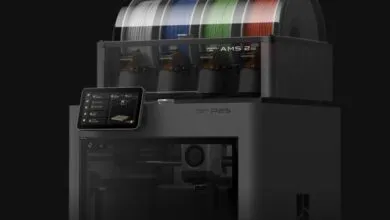
Bambu Lab H3C 3D printer with nine nozzles

▼ Summary
– Bambu Lab has announced the H3C, a $2,499 advanced 3D printer featuring a nine-tool Swaptek system for rapid nozzle swapping.
– The printer supports multi-material printing by mixing soft and hard filaments, such as TPU and PLA, to create complex items like wearable shoes.
– Color mixing is achieved using the PLA Palette system with cyan, magenta, yellow, and white filaments to emulate a full rainbow spectrum.
– While innovative, Bambu’s technology faces competition from cheaper alternatives like Snapmaker U1 and established brands like Prusa offering similar toolchanging capabilities.
– The article highlights that previous toolchanger models lacked adequate filament drying solutions, a feature implied to be important for print quality.
The landscape of home 3D printing is undergoing a significant transformation, moving beyond mere speed improvements to embrace complex material versatility. While the industry previously focused on reducing print times from days to minutes, the current frontier involves machines capable of swapping materials, mixing colors to create full spectrums, and combining soft with hard substances within a single object. This evolution allows users to switch between high-speed production and fine-detail work by altering nozzle sizes and filament diameters on the fly.
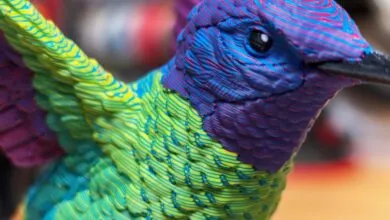
Bambu Lab has entered this arena with the H3C, a $2,499 machine designed to handle nine different filament rolls simultaneously. Even for those who may not purchase such an expensive device, the H3C serves as a clear indicator of where consumer-grade additive manufacturing is heading. The printer utilizes a proprietary “Swaptek” system that enables the toolhead to exchange nozzles in approximately six seconds. All nine tools are housed in a front-mounted rack, where each can preheat independently before being deployed. This capability allows for intricate projects, such as printing a bird feather using cyan, magenta, yellow, and white filaments to emulate a broader color palette, or creating a wristwatch with a rigid housing and a flexible band.
Despite these advancements, Bambu did not invent multi-nozzle technology. Competitors like Snapmaker released the U1 earlier this year, offering four-color swaps at a lower price point, while Prusa sells its INDX system for $2,249. However, previous toolchanger models often lacked adequate filament storage solutions, leading to moisture-related failures. The H3C addresses this with the AMS 3H, an airtight auto-loading container that includes two slots with built-in dryers capable of reaching 85 degrees Celsius. This feature aims to mitigate one of the most common causes of print defects: wet filament.
Early testing reveals both promise and growing pains. Initial experiences included software glitches with the beta version of Bambu Studio and hardware issues with the toolhead camera initialization. Users must also manually load flexible TPU filaments, and caution is required regarding slot placement. Specifically, loading flexible material into Slot #6 can cause jams because another printhead may snag the filament. The reviewer noted: “Bambu’s fine print actually warns reviewers not to put TPU in slot #6 for multi-material prints, and this is apparently why.” Additionally, the new system does not support the toolless nozzle swaps found in previous Bambu generations, requiring minor disassembly for maintenance.
Nevertheless, the H3C appears more reliable than earlier dual-nozzle models like the H2D. Aside from the specific TPU slot issue, which was documented in the reviewer guide, the printer produces high-quality results without generating excessive waste material during color changes. This efficiency mirrors the convenience of modern inkjet printers, offering a ready-to-use rainbow of colors without the need for pre-planning specific filament orders. Looking ahead, certification filings suggest a smaller variant, the P3C, will offer seven tools and filament slots. Furthermore, Bambu plans to enable dual-nozzle size printing on existing H2D, H2C, and X2D models by next spring, further expanding the utility of its ecosystem.
(Source: The Verge)