Vivo’s first Pro Max shows Ultra still leads

▼ Summary
– The Vivo X500 Pro Max is reviewed as a high-end smartphone that adopts many flagship features from its predecessor, the X300 Ultra.
– Despite sharing similar display specs, battery life, and telephoto capabilities with the Ultra, the Pro Max lacks the unique 35mm main camera focal length.
– The new model utilizes a smaller main sensor but compensates with Sony’s Lytia L910 sensor featuring LOFIC technology for superior dynamic range.
– The device represents a broader industry trend where Chinese manufacturers release ‘Pro Max’ variants to bridge gaps between Pro and Ultra models.
– Priced at €1,799, the phone sits slightly below the Ultra in Vivo’s hierarchy and is not considered a direct successor to the X300 Ultra.
Vivo’s X500 Pro Max represents a significant shift in the company’s flagship strategy, yet it falls short of capturing the unique magic that defined its predecessor. While the device boasts world-leading dynamic range and retains the exceptional telephoto lens found in the older X300 Ultra, it sacrifices the specific focal lengths that made the Ultra stand out. This new model is part of a broader trend among Chinese Android manufacturers, including Xiaomi, Oppo, and Honor, to release “Pro Max” variants that bridge the gap between standard Pro models and camera-centric Ultra devices. Whether these are genuine engineering advancements or marketing maneuvers to justify higher price points remains open to interpretation.
The hardware specifications are undeniably impressive. The phone features a 1440p, 144Hz OLED display and an enormous 7,800mAh battery that easily lasts two days on a single charge. It supports 90W wired and 40W wireless charging, offering convenience comparable to its more expensive sibling. Under the hood, the MediaTek Dimensity 9600 Pro chip delivers performance roughly equivalent to the Snapdragon processors used in previous flagships. At €1,799, it sits firmly in the ultra-premium bracket, competing directly with other high-end smartphones. However, despite sharing the same physical dimensions and periscope telephoto camera as the Ultra, the X500 Pro Max occupies a lower rung in Vivo’s hierarchy. It is not a true successor but rather a complementary product that misses some of the defining characteristics of its predecessor.
A Step Back in Focal Lengths
The most significant compromise lies in the main camera’s focal length. The X300 Ultra was praised for its 35mm narrow field of view, which offered a natural perspective ideal for portraits and purposeful framing. In contrast, the X500 Pro Max returns to the ubiquitous 24mm wide-angle lens found on iPhones and countless other smartphones. This wider angle is designed to capture expansive scenes, reserving the ultrawide lens for truly large landscapes. For many photographers, this default wide angle forces them to step back or rely on digital zoom, which compromises image quality.
“I’m stubborn about shooting with my cameras’ full focal lengths whenever I can, and you should be too.”
A 35mm main camera feels closer to traditional prime lenses, sitting evenly between the ultrawide and telephoto options. By reverting to 24mm, the Pro Max forces users to rely on digital cropping if they desire tighter compositions, rather than utilizing the full potential of the sensor’s optics. This decision undermines the artistic flexibility that made the Ultra so appealing to serious mobile photographers.
Compromises in Sensor Size
While the main camera benefits from Sony’s new Lytia L910 image sensor with LOFIC technology, enabling a 17-stop dynamic range, the sensor itself is smaller and lower resolution than the Ultra’s. This impacts overall image quality, particularly in challenging lighting conditions. Furthermore, the ultrawide camera has seen a notable downgrade. The X300 Ultra treated its ultrawide lens like a secondary main camera, featuring a large sensor and optical image stabilization. The X500 Pro Max, however, uses a much smaller 1/2.75-inch-type sensor.
This disparity becomes evident in low-light scenarios. During a nighttime Champions League match, the ultrawide lens struggled significantly compared to the main and telephoto lenses. Under bright stadium lights, the ultrawide blew out white details on player kits and left the crowd in comparative darkness. The main and telephoto lenses handled highlights better and retained more detail in dimly lit spectators, preserving the scene’s character. While the gap is clear, it is important to note that the X500 Pro Max’s camera system remains highly capable, especially in comparison to what is officially available in the US market.
Competition and Future Outlook
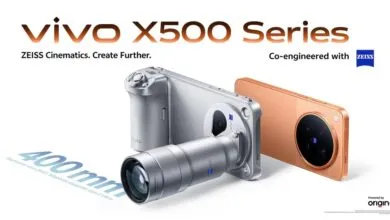
The X500 Pro Max still offers exceptional video capabilities, including Log recording and 4K at 240fps slow motion, along with support for Vivo’s teleconverter lenses, such as a massive 400mm option. Every lens benefits from Vivo’s naturalistic color-tuning developed with Zeiss. Yet, the absence of the Ultra’s unique focal lengths and superior ultrawide sensor leaves some enthusiasts wanting more.
Interestingly, rival devices like the Oppo Find X10 Pro Max appear to have addressed these shortcomings by incorporating a substantially improved ultrawide camera alongside a wide-angle main lens. This creates a more balanced experience where all three rear lenses deliver comparable quality. As Vivo looks toward the future, the hope is that the upcoming X500 Ultra will build on the success of the original Ultra, finding new ways to distinguish its cameras. Given the high price tag of the Pro Max, the Ultra will need to offer compelling reasons to justify a potentially higher cost.
(Source: The Verge)