Meta’s Mosseri: AI Negativity Will Worsen

▼ Summary
– Adam Mosseri acknowledges growing public anxiety and anger toward AI, particularly among creative professionals.
– He predicts that frustration over AI will intensify in the coming years, affecting various industries beyond just tech.
– Mosseri admits that Instagram struggles to rank high-quality AI content equally with non-AI material due to the prevalence of low-effort outputs.
– The platform is implementing mandatory labels for AI-generated accounts to help users distinguish between real and synthetic content.
– Key creator concerns include data privacy, model training on personal work, safety issues, and fears of job displacement.
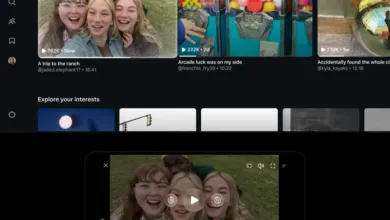
Adam Mosseri predicts rising public hostility toward artificial intelligence, suggesting that the current wave of skepticism is merely the beginning of a more intense period of friction. The Instagram head spoke candidly about this growing sentiment during an appearance on the Colin and Samir podcast, which was primarily focused on the rollout of widescreen and long-form video capabilities for the platform. When pressed regarding the phenomenon of students booing technology executives at university graduations, Mosseri confirmed that dissatisfaction with AI extends far beyond just young creatives or tech workers. He observed a clear trajectory of increasing anxiety and frustration surrounding these technologies, particularly within creative sectors.
The executive offered a stark forecast for the coming years, emphasizing that the negative sentiment is not peaking but accelerating.
“It’s not only getting worse, it’s going to continue to get worse. I think we’re going to see more frustration and anger, some of it founded, some of it unfounded, over the next couple of years, and that’s going to make it hard for a lot of people, not just in the industry.”
This acknowledgment of widespread discontent coincides with internal debates at Meta regarding content quality and algorithmic fairness. While Mosseri stated that Instagram does not explicitly penalize creators who use AI tools, he admitted that the sheer volume of low-effort material generated by these systems poses a challenge. He distinguished between high-quality AI-generated posts and what he termed “AI slop,” arguing that the platform currently struggles to rank AI content as effectively as human-created material. Furthermore, he suggested that the term “slop” is often applied too broadly, diluting its meaning when used to describe any automated output.
Navigating Misinformation and Deepfakes
The platform has taken concrete steps to address transparency issues, including a crackdown on AI-generated profiles that began in August. This move followed the introduction of mandatory labeling for accounts using AI tools earlier in the year. Despite these efforts, problematic content such as celebrity deepfakes continues to circulate, presenting significant moderation challenges. Mosseri noted that while the company is actively determining how to handle AI fakes, implementing a total ban on AI-generated content is neither feasible nor desirable.
The primary goal remains ensuring user awareness rather than suppression. By requiring accounts to identify themselves as AI-driven, Instagram aims to provide clarity about the authenticity of the media being consumed.
“I think people are concerned about a lot of things. I think they’re concerned about owning their content and models getting trained on their content. I think they’re concerned, there’s people who are concerned about safety. They’re concerned about job displacement, having AI displace whatever it is they do, if you’re a content creator or an engineer or a mathematician. I think there are concerns about, I mean, fundamentally what I think it comes down to when you really have, like, a heart-to-heart with someone is a fear of being left behind in some way.”
(Source: The Verge)