Volvo Adopts Nvidia Tech for Hands-Free Driving
▼ Summary
– Volvo plans to launch a hands-free, point-to-point autonomous driving system by 2030 using Nvidia’s AI technology.
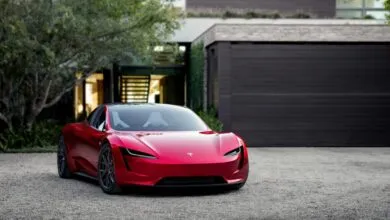
– The new Level 2++ system will handle complex urban environments without explicit driver control, resembling Tesla’s Full Self-Driving.
– Volvo will utilize Nvidia’s Hyperion platform and Alpamayo software, which uses reasoning models for navigation decisions.
– This partnership aims to correct past failures in automated driving projects, including regulatory issues with Ride Pilot Level 3.
– Volvo is integrating its proprietary safety expertise and connected technology to enhance hazard detection and driver trust.
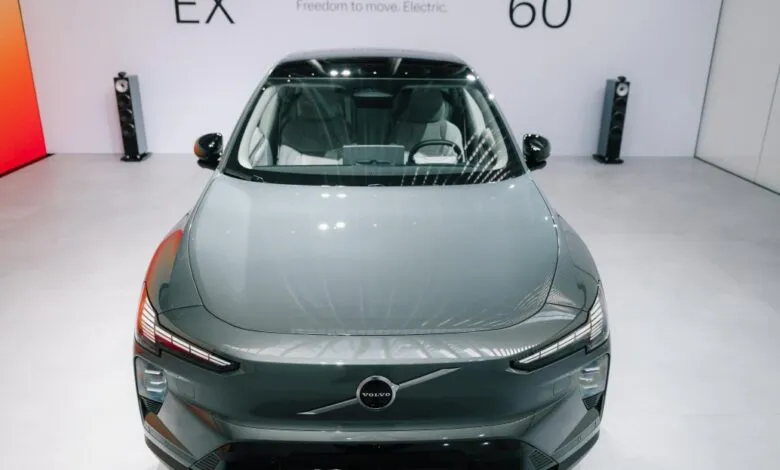
Volvo has announced a strategic partnership with Nvidia to develop a Level 2++ autonomous driving system, aiming to introduce hands-free, point-to-point navigation across its vehicle lineup by 2030. This collaboration marks a significant pivot for the Swedish automaker as it seeks to recover from previous setbacks in the automated driving sector while leveraging cutting-edge artificial intelligence to enhance passenger safety and convenience.
The new system will rely on Nvidia’s Hyperion platform, which integrates high-performance silicon with a comprehensive suite of external sensors to allow vehicles to perceive their surroundings without relying on lidar technology, although such sensors could be added later if deemed necessary. Central to this architecture is Nvidia’s Alpamayo software, which utilizes advanced reasoning models to interpret complex road scenarios. These algorithms enable the car to make real-time decisions regarding steering, braking, and acceleration in challenging urban environments, including navigating traffic lights, stop signs, and unprotected left turns without direct driver intervention.
Overcoming Past Regulatory Hurdles
This move represents an effort to correct course after Volvo faced significant challenges with its earlier autonomous initiatives. The company previously had to suspend its Ride Pilot Level 3 unsupervised autonomous driving system in the United States after failing to secure the required regulatory approvals. Additionally, plans to integrate lidar sensors into several models were abandoned after supplier Luminar filed for bankruptcy. By shifting focus to a supervised Level 2++ solution powered by Nvidia’s robust stack, Volvo aims to deliver a more viable and commercially feasible product that aligns with current legal frameworks.
Ali Kani, Vice President and General Manager of the automotive team at Nvidia, noted that the upcoming system shares similarities with Tesla’s Full Self-Driving (Supervised) feature, as well as the recently unveiled Nvidia-powered autonomous capabilities in the Mercedes-Benz CLA sedan. However, Volvo intends to differentiate itself through its long-standing reputation for safety. Alwin Bakkenes, head of global software engineering at Volvo Cars, emphasized that the automaker will contribute proprietary driver-understanding systems. These tools analyze driver behavior in far greater detail than standard monitoring setups, ensuring that the human remains engaged and aware even when the vehicle is handling complex tasks.
“Our brand Volvo is synonymous with safety, and safety is synonymous with trust,” Bakkenes stated in an interview. “People get into our cars not expecting anything bad to happen, but they feel intrinsically that if they’re ever in a situation … we will do our utmost to keep people safe, to protect them from harm.”
Connected Safety and Commercial Strategy
Beyond onboard processing, Volvo is integrating connected safety technology that allows vehicles to exchange data regarding hazards, roadworks, and other conditions ahead. This V2X (vehicle-to-everything) communication extends the system’s awareness beyond the physical limits of individual sensors, potentially improving the reliability of the self-driving functionality in unpredictable environments.
While specific details regarding which models will launch first remain undisclosed, Bakkenes confirmed that the technology will be available across the entire range, from entry-level to premium variants, before the decade ends. The partnership also carries broader commercial implications. Nvidia views this collaboration as a chance to help Volvo evolve its business model around recurring revenue streams derived from software-based offerings. According to Kani, point-to-point driving offers greater utility and value for consumers compared to highway-only assistance features, positioning Volvo competitively in the rapidly advancing market for semi-autonomous vehicles.
(Source: The Verge)