Bluesky aims to simplify buying, selling and fundraising
▼ Summary
– Bluesky plans to introduce payment features in the coming months as part of a strategy to monetize without relying on advertising.
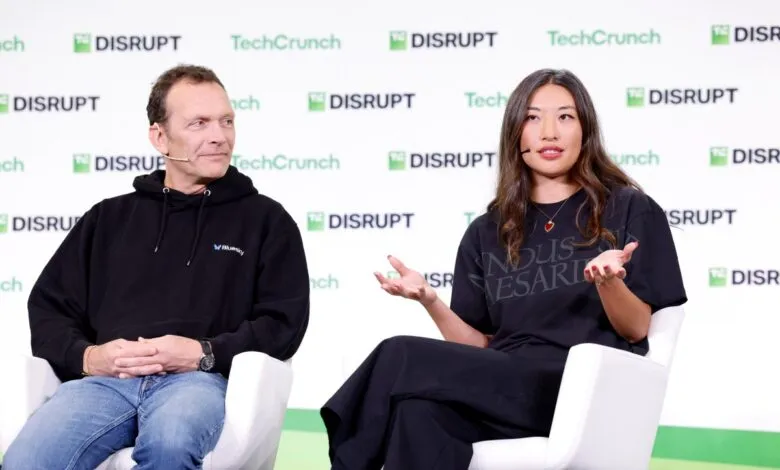
– CEO Toni Schneider and COO Rose Wang announced these plans at TechCrunch Disrupt, aiming to facilitate direct user-to-user commerce and fundraising.
– Schneider, who replaced Jay Graber, addressed user concerns about leadership changes by emphasizing accountability and the platform’s decentralized nature.
– The executives highlighted Bluesky’s status as a Public Benefit Corporation to argue that revenue should flow directly to content creators rather than landlords.
– The company aims to disrupt the infrastructure layer of social media by giving users ownership of their digital identities and control over their networks.
Bluesky is preparing to launch payment capabilities in the near future, marking a pivotal shift in its approach to generating revenue without relying on traditional advertising. During a presentation at TechCrunch Disrupt, CEO Toni Schneider and COO Rose Wang detailed how the decentralized social network intends to formalize and expand upon the commerce and fundraising activities that are already emerging organically among its users.
The platform’s leadership emphasized that the goal is to streamline transactions across the entire ecosystem, ensuring compatibility with various third-party applications. “People are actually selling things, fundraising very successfully, supporting each other on the network,” Schneider stated. “We want to make that easier, and the way we’re going to do this is if you see something on the network that you like and support, you can support that monetarily, and we want to do it in a way that works for Bluesky and for all the other apps out there as well, so that it works across the entire network.”
Schneider assumed the role of CEO in March following the departure of Jay Graber. He acknowledged the initial skepticism surrounding his appointment, noting that some community members humorously predicted the platform’s decline. However, he views user mobility as a safeguard for accountability. If the company implements features or changes that alienate its base, users have the freedom to migrate elsewhere, a reality that keeps the executive team focused on maintaining trust while rolling out new monetization tools.
Wang challenged the prevailing narrative that advertising is the only sustainable model for social media, arguing that such approaches often degrade user experience. She highlighted Schneider’s track record at Automattic, where he helped build a $10 billion business that directs significant profits back into the developer ecosystem rather than just the parent corporation. “I think there’s a story around monetization that feels like advertising is the inevitable thing we have to do that will ruin the network,” Wang explained. “What was really promising about having Tony join us is he built at WordPress Automatic a $10 billion business where a billion of it goes back to the parent company and the rest of it goes to the ecosystem.”
As a Public Benefit Corporation (PBC), Bluesky is legally bound to prioritize its mission alongside profit. Wang stressed that the company’s infrastructure prevents it from locking users into a walled garden, thereby ensuring that value flows directly to creators. She drew a sharp contrast between their model and the current digital economy, describing the latter as akin to a feudal system where landlords extract dues from those who generate content. “Yes, we need to make money, but because of our infrastructure, we cannot lock people in,” Wang said. “And so the thing that really matters for us is the people who are creating value on the networks these days are the ones who are getting the value that is coming in or the money that’s coming in. And I kind of think of it as like feudal society where we’re working for a few landlords and they dictate everything, and then we have to pay up our dues as tariffs.”
The ultimate objective is to disrupt the underlying infrastructure layer of social media, allowing for greater user ownership of digital identities and direct revenue streams. “First, we’ll start with payments, but I think it’s about disrupting the actual infrastructure layer, which is what we’re doing, and not just building another app,” Wang concluded.
(Source: TechCrunch)