Miro CEO: Redesign work for AI, don’t just bolt it on

▼ Summary
– Miro co-founder Andrey Khusid argues that companies must redesign workflows from first principles rather than simply adding AI to existing processes.
– He emphasized that spreading AI across current operating models fails to deliver expected productivity gains due to complex, fragmented contexts.
– Khusid noted that while AI helps quieter employees share ideas, it can overwhelm teams with excessive content if accountability is not maintained.
– The discussion highlighted a shift from hierarchical organizations to those centered around central intelligence infrastructure for faster decision-making.
– This statement followed news of Bending Spoons agreeing to acquire Miro for $1.355bn, pending regulatory approvals in the fourth quarter.
Redesigning Workflows for AI Integration
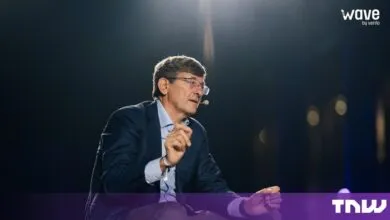
Miro CEO Andrey Khusid argues that merely appending artificial intelligence to established corporate structures fails to unlock its true potential. Speaking at the Wave by Vento conference in Turin, the co-founder and chief executive emphasized that organizations must rebuild their operational foundations from scratch rather than treating AI as an add-on feature. The goal is to design workflows based on first principles, ensuring that human intervention is reserved strictly for adding value atop these newly optimized systems.
> “One of the big challenges is how not to put AI on top of the existing teams or operational systems, but actually, from first principles, design the workflow and then only add humans to add value on top of that workflow,” Khusid said.
The discussion, moderated by Charlie Perreau, head of tech, media, and startups at Les Echos, was titled “Thinking Together in the Age of AI.” Khusid’s appearance in Italy follows a significant development in Miro’s corporate history: Bending Spoons, a Milan-based software company, agreed to acquire Miro for $1.355 billion. Expected to close in the fourth quarter pending regulatory approval, the deal values Miro significantly lower than its $17.5 billion valuation during its 2022 funding round. With approximately $600 million in annual recurring revenue, Miro represents a substantial asset for Bending Spoons. While Khusid declined to discuss specific details of the transaction, he expressed enthusiasm about the potential for Italy to become a new home for the platform.
Overcoming Operational Complexity
While individual employees frequently utilize tools like Claude or ChatGPT, scaling this usage across entire enterprises presents a unique challenge. Khusid noted that most companies operate through intricate workflows where context is fragmented among various team members. Effective integration requires consolidating this dispersed information so teams can collaborate on a unified foundation. Simply distributing AI tools within current operating models rarely yields the anticipated productivity boosts.
To address this, Miro experimented with parallel teams tasked with performing identical work using AI. By building processes around these specialized groups before rolling them out company-wide, the firm aimed to demonstrate tangible efficiency gains. However, increased output does not automatically equate to better results. Khusid warned that flooding teams with AI-generated content can create noise and slow down decision-making. This concern aligns with recent warnings from the Harvard Business Review regarding the rise of “workslop” in corporate environments. His solution centers on accountability; every employee must take ownership of the materials they introduce into the workflow, ensuring quality over quantity.
Centralized Intelligence and Future Vision
Traditional organizations rely on hierarchical structures where knowledge is siloed among individuals. In contrast, next-generation companies are built around a central intelligence system that aggregates nearly all operational data, allowing personnel to make rapid, informed decisions. Established firms face the urgent task of rebuilding their own intelligence infrastructure and redefining necessary roles to compete with the speed and precision of startups. Recent UK data indicates that while business adoption of AI has tripled, many companies still employ it superficially.
At 15 years old, Miro has already integrated AI assistance into much of its codebase and merged internal systems to provide better contextual data for its models. Khusid observed that recent advancements in AI capabilities have been incremental rather than disruptive, making it clear what these technologies can achieve over the next three years. Consequently, Miro focuses on building stable ecosystems around known capabilities rather than chasing every new release.
The future workplace will see humans and AI agents collaborating on shared digital canvases, though humans will remain ultimately accountable. Within three years, Khusid predicts a shift toward voice and conversational interfaces, with visual decision-making becoming the primary method for team collaboration. Reflecting on Miro’s journey from its 2011 founding to gaining traction in 2016, Khusid advised founders to pursue projects they are passionate about and to trust their intuition.
(Source: The Next Web)