Nikon Z5 II Review: Smaller, Prettier, and Capable
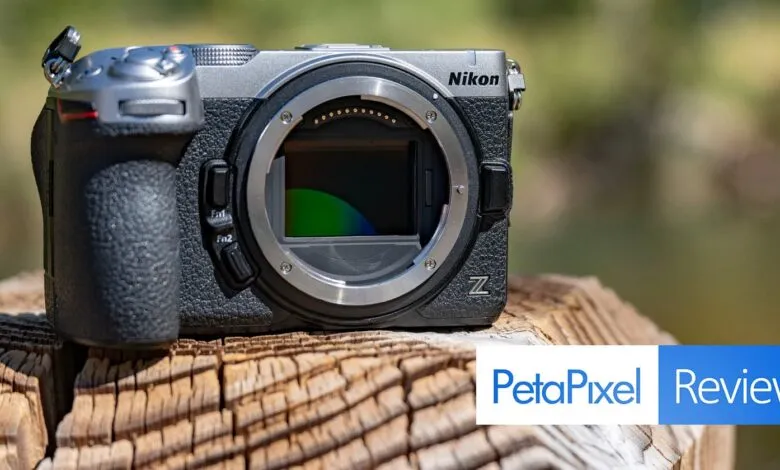
▼ Summary
– The Nikon Z5 IIC is a more affordable and lighter entry-level full-frame camera released in 2025, priced at $1,399.
– It features reliable video autofocus, effective IBIS, and excellent image quality but lacks an electronic viewfinder and professional controls.
– The design includes a flat top plate due to the missing EVF, resulting in a weight of 620 grams compared to the heavier Z5 II.
– Ergonomics are maintained with a large grip, though the removal of the AF joystick and dedicated AF-ON button requires user adaptation.
– Storage is limited to a single UHS-II SD slot, and the LCD resolution was significantly downgraded to 1.04M dots from the previous model.
A Compact Entry into Full-Frame Photography
The Nikon Z5 IIC ($1,399) enters the market as a streamlined, budget-conscious variant of the highly regarded Z5 II. While the original Z5 II launched in 2025 as a top recommendation for entry-level full-frame shooters, this newer iteration strips away certain professional features to lower the price point and reduce body size. The most significant omission is the electronic viewfinder (EVF), a decision that fundamentally alters the shooting experience. Despite this reduction, the camera retains core competencies such as robust video autofocus and an effective in-body image stabilization (IBIS) system, earning it a solid rating from PetaPixel.
Ergonomics and Physical Design
The physical distinction between the Z5 IIC and its predecessor is immediately apparent. The removal of the EVF allows for a flatter top plate, which lends a sleek aesthetic, particularly on the silver model. This structural change also contributes to a lighter weight; the Z5 IIC tips the scales at 22 ounces (620 grams), compared to the 24.7 ounces (700 grams) of the Z5 II. The substantial handgrip remains, offering better comfort than competitors like the Panasonic S9, though the control layout has been simplified.
Ergonomic adjustments include the absence of an AF joystick and a dedicated AF-ON button. Instead, users must rely on a reprogrammable Focus/Exposure Lock button and the central “OK” button to reset the autofocus point. While the lack of an AF joystick can be initially frustrating, the integration of 3D tracking mitigates this issue by allowing the camera to maintain focus on subjects without constant manual input. Power is supplied by the standard Nikon EN-EL15C battery, which offers a CIPA-rated life of 350 shots but often exceeds double that in real-world conditions. Storage has been reduced to a single UHS-II SD card slot, a trade-off for the lower price that may concern professionals requiring redundancy.
Display Limitations and Stabilization Strengths
The most noticeable compromise lies in the rear display. The Z5 IIC utilizes a 3.2-inch fully articulating LCD with a resolution of just 1.04 million dots, a significant downgrade from the 2.1 million dots found on the Z5 II. This lower resolution makes reviewing images and achieving critical manual focus more challenging, although the screen remains bright enough for outdoor use.
Conversely, the camera’s stabilization capabilities remain top-tier. The IBIS system provides up to 7.5 stops of correction in the center and 7 stops at the edges. During testing in low-light environments, such as a dark sunset, the camera produced sharp handheld images at shutter speeds as slow as 1/8th of a second using a 200mm lens. This performance underscores the value of the stabilization engine, even if the viewing method is less than ideal.
Autofocus and Burst Performance
The autofocus system carries over from the Z5 II, featuring subject detection and 3D tracking. In street photography scenarios, the tracking proved reliable for keeping human subjects in focus. The inclusion of a new Fish Detection mode adds niche utility, particularly for aquarium photography or wildlife enthusiasts focusing on aquatic life.
For action photography, the Z5 IIC supports burst rates of 14 frames per second (fps) with the mechanical shutter in JPEG mode, 11 fps in RAW, and up to 30 fps with the electronic shutter. However, users should be aware that the sensor readout speed is not exceptional, leading to potential rolling shutter artifacts when using the electronic shutter. Additionally, the camera introduces Scene Modes for beginners, offering automatic presets for landscapes and portraits to simplify operation for those intimidated by manual controls.
Image Quality and Video Capabilities
At the heart of the Z5 IIC is the same 24-megapixel full-frame sensor used across various Nikon, Sony, and Panasonic models. This sensor delivers excellent dynamic range and low-light performance, preserving detail in shadows even at base ISO 100. JPEG outputs benefit from Nikon’s renowned color science, including specialized Picture Controls like Rich Tone Monochrome and Rich Tone Portrait, which are easily accessible via a dedicated dial.
Video performance is a strong suit for this compact body. It records full-width oversampled 4K video at up to 30p, maintaining high detail and cleanliness in dim lighting. Higher frame rates of 60p require an APS-C crop, which reduces quality. Notably, the camera supports N-RAW video recording directly to the SD card, offering greater flexibility in post-production for white balance and noise reduction. While the sampling method for N-RAW can introduce noise and reduce sharpness, the availability of professional tools like histograms, waveforms, and focus peaking ensures that serious videographers have the aids they need. A tally lamp on the front of the camera also indicates when recording is active, a feature appreciated by many creators.
Verdict: Who Is the Z5 IIC For?
The existence of the Z5 IIC raises questions about necessity. For photographers who depend on an EVF for composition and stability, the lack of one and the downgraded LCD can make the experience frustrating. The inability to comfortably shade the screen in bright sunlight and the difficulty in verifying focus due to the low-resolution display are significant drawbacks. For these users, spending an additional $450 for the Z5 II is likely justified.
However, the camera targets a specific demographic: those who prefer shooting with the rear LCD and prioritize portability and cost. Similar to the success of the Fujifilm X-M5 and Panasonic S9, there is a viable market for smaller, EVF-less cameras. For shooters who do not use a viewfinder, the Z5 IIC offers outstanding value, with savings that could be reinvested in higher-quality lenses. While the author of the review remained personally unenthusiastic about the EVF-less design, the camera successfully democratizes full-frame benefits for budget-conscious creators. Alternatives like the Canon R8 or Sony a7 III offer EVFs at similar prices, but for those committed to an LCD-only workflow, the Nikon provides a refined and capable experience.
(Source: PetaPixel)