Xiaomi 18 Pro boosts Samsung-style privacy display
▼ Summary
– Xiaomi has launched the 18 Pro and 18 Pro Max in China, featuring rear screens and advanced privacy display technology.
– The devices utilize Qualcomm’s Snapdragon 8 Elite Gen 6 chips and include dual 200-megapixel camera systems for high-resolution photography.
– Privacy features are hardware-level and context-aware, activating based on apps, locations like airports, or detection of prying eyes via the selfie camera.
– The two models differ in screen size, battery capacity, and specific chip variants, with prices starting at approximately $900.
– A global launch is scheduled for later this year, following similar flagship announcements from competitors Vivo and Oppo.
Xiaomi has officially unveiled the 18 Pro and 18 Pro Max in China, introducing a sophisticated iteration of privacy display technology that rivals Samsung’s recent innovations. While Samsung debuted this hardware-level privacy feature on the Galaxy S26 Ultra, Xiaomi’s execution offers greater flexibility. The new devices also reintroduce the distinctive rear-facing secondary screen, pair dual 200-megapixel cameras, and utilize Qualcomm’s latest processors. A global release is scheduled for later this year, marking a significant shift from last year’s 17 Pro models, which were restricted to the Chinese market.
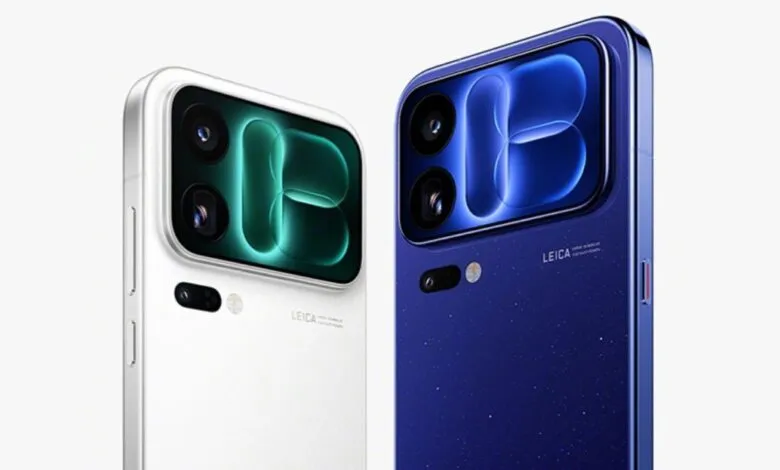
The physical design remains consistent with its predecessor, featuring compact front displays positioned around the rear camera array. This rear panel serves multiple functions, including displaying notifications, facilitating selfies, and running lightweight games. However, the primary advancement lies in the front screen’s intelligent privacy controls. Unlike simpler implementations, Xiaomi’s system activates when specific apps are opened and extends to notifications, floating windows, and split-screen modes without obscuring the rest of the interface. Users can configure location-based triggers to enable privacy mode at work or disable it at home, with automatic detection for sensitive environments like airports or elevators. Additionally, the device uses the selfie camera to detect nearby observers and suggest enabling privacy features.
Hardware Specifications and Variants
The two models cater to different preferences through distinct size and power configurations. The standard 18 Pro features a 6.4-inch display paired with a 7,000mAh battery, while the larger Pro Max boasts a 6.9-inch screen and an 8,500mAh battery. Both units employ high-density cells with a 32 percent silicon content to maximize energy storage within their frames. Processing power is handled by the Snapdragon 8 Elite Gen 6, with the Pro model using the standard Elite chip and the Pro Max utilizing the Extreme variant. Although the chips differ slightly in branding, their performance capabilities remain closely matched.
Imaging capabilities are anchored by a 200-megapixel main sensor, identified as the Light Fusion 960 in the Pro and the 960L in the Pro Max. These sensors appear nearly identical in performance. They are complemented by a 200-megapixel telephoto lens using Samsung’s HP5 sensor, offering a 75mm focal length and a minimum focus distance of 12cm. A 50-megapixel ultrawide camera completes the triple-camera setup. Visually, the phones retain their familiar aesthetic, with the rear screen wrapping around the camera bump similarly to flip-phone designs. The standout color option for this generation is “starry river blue.”
Market Positioning and Future Releases
Xiaomi’s announcement coincides with similar flagship reveals from competitors Vivo and Oppo, specifically the X500 and Find X10 series. Pricing for the 18 Pro starts at ¥5,999 (approximately $900), positioning it alongside the newly announced 18 Fold in Xiaomi’s premium lineup. Despite these launches, consumers are still awaiting details on the standard Xiaomi 18 and the 18 Ultra, which are expected to arrive next spring. While an international rollout for at least one 18 Pro variant is confirmed, it remains unclear whether the 18 Fold will eventually expand beyond China.
(Source: The Verge)