Netherlands Selects Groningen for €201M AI Supercomputer
▼ Summary
– SURF announced that the Netherlands’ national AI supercomputer will be installed at Eurofiber’s data center in Groningen, with operations expected by early 2028.
– The decision to use an existing campus over new construction was highlighted as a sustainable choice, utilizing waste heat for district heating and avoiding water cooling.
– The €201 million public contribution is funded by EuroHPC JU, the Dutch government, and Nij Begun, which addresses regional earthquake recovery costs.
– Hardware costs have surged due to high global demand from tech companies, leading to increased prices for processors and memory compared to initial plans.
– Despite budget constraints and rising component costs, the consortium maintains the project schedule while the hardware tender process determines the final GPU allocation.
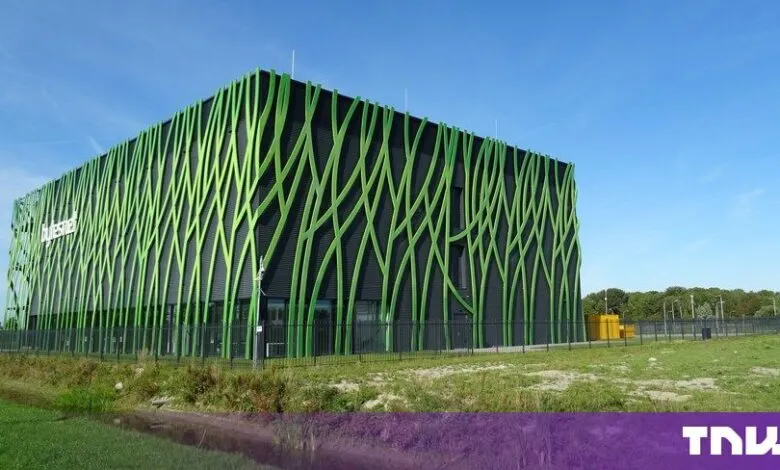
The Netherlands has officially designated Groningen as the home for its national AI supercomputer, marking a significant milestone in the country’s digital infrastructure strategy. On Monday, SURF, the IT cooperative responsible for supporting Dutch education and research institutions, confirmed that the powerful machine will be housed within Eurofiber’s data center complex on the Zernike Campus. This strategic decision moves the project from planning to physical realization, with installation set to begin in 2027 and full operational status expected by early 2028.
The selection process narrowed down three potential locations, including an annex of the former De Halm strawboard factory in Hoogkerk, but ultimately favored leveraging existing infrastructure over new construction. This choice was highlighted during a visit by Willemijn Aerdts, the state secretary for digital economy and sovereignty, who underscored the government’s commitment to efficient resource use. By opting for Eurofiber’s established campus, authorities avoided the environmental and financial costs associated with building a dedicated facility from scratch. SURF emphasized the site’s strong sustainability credentials, noting that nearly all waste heat is redirected into WarmteStad, Groningen’s district heating network. Furthermore, the cooling system relies entirely on air rather than surface or drinking water, and because the site is already grid-connected, the supercomputer’s energy demands will not exacerbate local network congestion.
Funding Structure and European Collaboration
The Dutch AI factory project represents a substantial investment totaling €201 million, funded through a collaborative effort between national and European entities. The financial breakdown includes €70 million from the Dutch government, €71 million from EuroHPC JU, the EU’s supercomputing agency, and €60 million from Nij Begun. The latter fund was specifically created to aid recovery in Groningen and northern Drenthe following decades of seismic activity induced by gas extraction. The European contribution was secured in October 2025 when EuroHPC selected six new AI factory sites across Czechia, Lithuania, the Netherlands, Poland, Romania, and Spain.
Originally, the timeline aimed for the supercomputer to reach full capacity in early 2027, aligning with the cabinet’s June 2025 funding commitment. However, global market dynamics have shifted significantly since those initial plans were drafted. In August, Axel Berg, who oversees the tender process for SURF, noted that the €64 million allocated for hardware procurement no longer stretches as far as originally anticipated.
“The situation in the world in which the supercomputer is being purchased is very different from the one that existed when the initial plans were drawn up,” Berg told RTV Noord. He pointed out that heavy investments by major tech firms in AI infrastructure have driven demand for processors, memory, and storage well beyond supply, causing component prices to double or triple in a short period. This inflationary pressure on hardware costs has forced the consortium to reassess both the scale and schedule of the system.
Operational Impact and Future Outlook
While the final hardware specifications remain pending due to ongoing tenders, the project is already making strides in academic collaboration. The expertise center, located in the former Niemeyer tobacco factory, is currently facilitating initial projects by connecting researchers to other European AI factories with available computing resources. Once fully operational, the Groningen facility will provide startups, small and medium-sized enterprises, researchers, and public organizations with access to high-performance computing for developing and training AI models.
The initiative is driven by a consortium comprising SURF, TNO, Samenwerking Noord, and the Dutch AI Coalition (AIC4NL). For these stakeholders, the project is about more than just raw processing power; it is about fostering innovation across critical sectors.
“AI offers enormous opportunities for our healthcare, education, security and the entire economy,” Aerdts said in a statement released by SURF.
Despite this progress, the Netherlands’ ambitions are modest compared to broader European trends. EuroHPC’s call for AI gigafactories, which involve vastly larger chip counts, closes on November 12, with French companies already preparing multi-billion euro bids. The Dutch government has indicated there is no budgetary room to support such a massive domestic bid, leaving the Groningen supercomputer as the primary pillar of the nation’s sovereign AI compute strategy. As the market continues to drive up hardware prices, the success of this €64 million allocation will hinge on navigating an increasingly competitive and expensive global supply chain.
(Source: The Next Web)