Australia bans smart glasses for councils
▼ Summary
– Western Australia’s education minister Sabine Winton announced a comprehensive ban on smart glasses in public schools, effective October 12.
– Director General Jay Peckitt issued a legal instruction under the School Education Act 1999 prohibiting students, staff, and visitors from wearing or charging these devices.
– The ban addresses risks including privacy violations, child safety concerns, unauthorized recording, cyber security threats, teaching disruption, and exam integrity issues.
– Although no incidents of irresponsible use have been recorded in WA schools, the measure aims to prevent potential harms driven by growing community concern.
– Principals retain discretion to approve exceptions for medical, accessibility, or authorized educational purposes while enforcing strict penalties for policy violations.
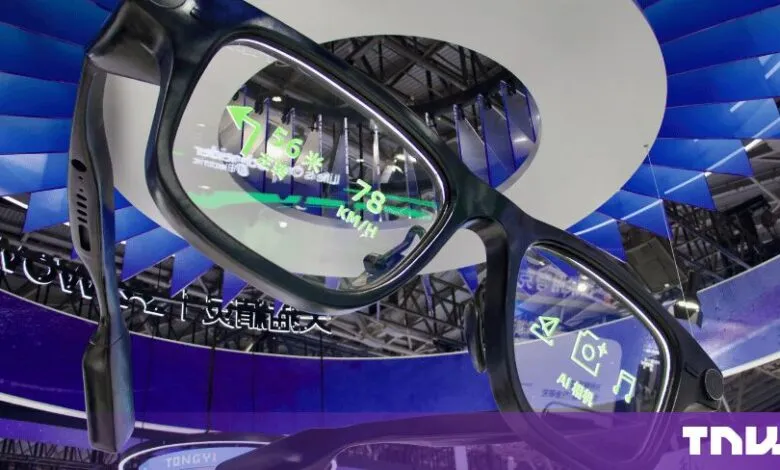
Smart glasses are now prohibited in Western Australian schools, marking a significant escalation in the regulatory response to wearable technology. Education Minister Sabine Winton announced that the state has implemented what she described as the nation’s most thorough ban on these devices. This is not merely a suggestion; it is a binding directive issued by Department Director General Jay Peckitt. The instruction takes effect on 12 October, aligning with the start of Term 4, and applies to every public school principal in the state.
The directive carries legal weight under section 233 of the School Education Act 1999. It empowers principals to enforce regulations 69 and 70, which allow them to direct conduct on school grounds and prohibit specific items from entering premises. Schools must publicly display these orders to ensure compliance. The rules are comprehensive: they forbid students and staff from wearing, using, charging, or storing smart glasses on school property or at any organized school event. Crucially, the ban extends to parents, carers, visitors, and contractors, effectively closing loopholes that might allow the devices to be charged or hidden in lockers. Government residential colleges are also subject to similar restrictions through separate mechanisms.
Redefining the Risk Profile
The instruction outlines six specific risks associated with smart glasses. While privacy, child safety, unauthorized recording, and cybersecurity are standard concerns, two additional categories highlight the unique threat posed by this hardware. The fifth risk is disruption to teaching, while the sixth is examination and assessment integrity. This latter point reframes the device entirely. The definition provided in the instruction goes far beyond simple photography. It encompasses audio recording, video, artificial intelligence functionality, live streaming, internet connectivity, facial recognition, information retrieval, and communication capabilities.
Despite the strict measures, Minister Winton noted that the education department has recorded no instances of irresponsible use of smart glasses in WA schools. The ban is driven by prevention rather than reaction to specific incidents. Community concern stems from fears of careless, criminal, or malicious use, rather than events that have occurred within classrooms. However, educators have felt the pressure firsthand. Kya Graves, who leads the WA Principals Federation, told ABC News that principals had been drafting their own policies in the absence of a central decree. Some schools had already experienced incidents and implemented local measures before the statewide order.
Academic experts have raised alarms about the potential for harm. Tama Leaver, an internet studies teacher at Curtin University, warned the ABC that the worst-case scenario involves the indecent recording of children. He highlighted the danger of deepfakes, noting that rudimentary tools can create convincing fake videos from just 30 seconds of footage. These concerns underscore why the government views the technology as a significant liability in educational settings.
Federal Inaction and Local Action
While Western Australia moved decisively, the federal government has taken a different path. Attorney-General Michelle Rowland ruled out an import ban on 31 August, according to reports by Erin Handley for ABC News. Although she did not rule out other measures, she stated the government was not consulting on an import prohibition. Instead, Canberra is pursuing a privacy overhaul that includes a right to erasure from large platforms, stricter data collection tests, and meaningful consent rules. A new identity document service called IDLock is scheduled for release in 2027.
Rowland encouraged local councils to restrict the glasses in their own facilities and suggested retailers could police change rooms. This invitation has spurred action across several major municipalities. The City of Sydney and Canterbury-Bankstown have joined Brisbane and Yarra in banning the devices from pools and fitness centers. Councillor Matthew Thompson introduced a motion in Sydney directing the chief executive to update conditions of entry for leisure centers, libraries, childcare centers, and community centers. While pools had already excluded the glasses, the update ensures broader coverage.
Canterbury-Bankstown acted first, incorporating enforcement clauses into its policy. Staff are authorized to order patrons to remove the eyewear, confiscate it, and eject anyone who refuses. These measures were largely driven by concerns raised by women and parents. Brisbane banned non-consensual use of camera-enabled devices at its 21 public pools, a category that includes phones and traditional cameras. Other cities are following suit. The Gold Coast is considering adopting the Brisbane model, Adelaide is reviewing its own approach, and the City of Vincent in Perth ordered a report last week.
Councillor Thompson criticized the federal government for leaving the problem to local councils. He told TechRadar that Canberra declined to impose an import ban, despite crossbenchers in Parliament calling for one in late August. This fragmentation highlights the gap between federal reluctance and local urgency.
Workplace Implications and Global Trends
The trend is extending beyond education and local government into the corporate sector. Employment lawyers are advising Australian employers to establish their own rules regarding smart glasses. Paul O’Halloran, a partner at Dentons, told Lawyers Weekly that the technology exists in workplaces primarily to record people without their knowledge or consent. He argued for an outright ban, describing the technology as insidious because, unlike a phone or camera, there is no obvious moment of recording. This lack of visibility is, he said, the feature rather than the flaw.
O’Halloran emphasized that employers already face significant risk. Privacy laws and work health and safety codes obligate them to protect staff from harm, including covert surveillance. An employee could be recorded throughout the day in meetings, break rooms, or even bathrooms, without the employer or the subject being aware. Michael Byrnes, a workplace relations partner at Swaab, advised employers to ban the glasses without hesitation, stating that instructing staff not to wear them is a reasonable and lawful direction. His primary concern is audio, as secretly recording private conversations may breach surveillance devices legislation.
Byrnes noted two exceptions where usage might be justified. Employees with visual impairments should be allowed to use the glasses as required for their work. Additionally, if the glasses reduce a genuine safety hazard, their use may be permitted, provided there are clear rules on retaining and managing any recordings. These workplace dynamics are governed by existing statutes, including the NSW Workplace Surveillance Act 2005, the Privacy Act 1988, and the Fair Work Act 2009.
Evidence of Harm and International Precedent
Recent research provides empirical backing for these restrictive measures. A study by the University of Sydney analyzed 350 public Instagram videos shot on smart glasses. The findings revealed that approximately 60% of the clips could potentially constitute harassment. The study also highlighted how algorithms promote such content. Further independent testing published recently uncovered another vulnerability: hackers can access some ultra-cheap smart glasses without a password. In response, users are developing countermeasures, such as a Polish app that detects the glasses via Bluetooth.
Australia is not alone in addressing this issue. Courts in England and Wales barred smart glasses in August, while New York state courts did the same in July. In the United States, cinemas, schools, and Immigration and Customs Enforcement have all imposed restrictions. Domestically, Australia has already banned social media for users under 16. Victoria is set to bar wearables in schools from January 2027. Meanwhile, South Australian Attorney-General Kyam Maher is seeking advice on whether current state laws are adequate and has been discussing the need for nationally consistent rules with Rowland. As the debate continues, the consensus among regulators, educators, and legal experts is shifting toward strict containment of this pervasive technology.
(Source: The Next Web)