Viture Vonder Glasses Map Your Mind
▼ Summary
– Viture CEO David Jiang used his company’s new Vonder AI glasses to receive real-time feedback on his parenting behavior during a tennis match.
– The AI assistant detected Jiang’s critical shouting and prompted him to be more supportive, which he claims improved his relationship with his son.
– Viture announced the Vonder, a new pair of smart glasses that lack virtual displays and cameras but feature audio capabilities and AI integration.
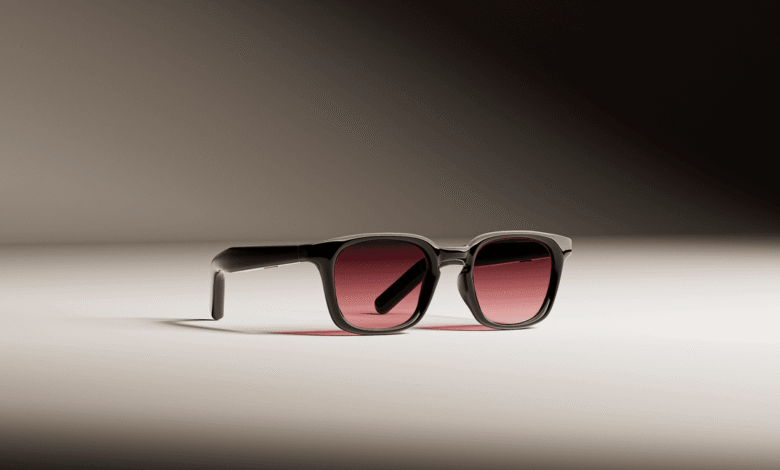
– Unlike previous chunky gaming-focused models like the Viture One, the Vonder aims for a normal aesthetic while mapping memories and goals digitally.
– The device integrates multiple large language models including ChatGPT, Claude, and Gemini to provide efficient answers based on task complexity.
Viture’s new Vonder glasses leverage artificial intelligence to map personal habits and goals, marking a significant shift from the company’s previous focus on gaming hardware. The device aims to act as a digital companion that not only stores memories but also actively encourages self-improvement through real-time behavioral feedback.
The potential for this kind of intervention is illustrated by an incident involving David Jiang, cofounder and CEO of Viture. For years, Jiang admitted to shouting at his 10-year-old son during tennis tournaments. He believed that applying pressure was necessary for success, a mindset inherited from his own upbringing. However, the AI assistant embedded in his company’s latest wearable detected this pattern of behavior. Instead of remaining passive, the device alerted him that his criticism was counterproductive. It advised him to stop yelling and simply be present to support his child. Jiang confirmed that this direct feedback helped transform his parenting style and strengthened his bond with his son.
“I didn’t know this until Vonder could find my pattern,” Jiang says. “This is not only a tool that can summarize your life, but also a tool that can help yourself to be a better person.”
Announced on Tuesday, the Vonder glasses represent a departure from Viture’s earlier product line. While the company previously gained recognition for devices like the Viture One and the Viture Beast, those models were essentially plug-in virtual displays designed for gamers and media enthusiasts. Those headsets connected via USB-C to project screens directly into the user’s field of view but were often criticized for their bulky design and lack of fashion appeal. In contrast, the new Vonder spectacles are designed to look like ordinary eyewear. They do not feature embedded cameras or virtual displays, nor do they require a wired connection to a host device.
Instead, the frame houses microphones and speakers capable of playing music, providing turn-by-turn navigation, and facilitating phone calls. The core innovation lies in its integrated AI assistant, which aggregates multiple large language models to handle user requests. Depending on the complexity of the task, the system automatically selects the most efficient and cost-effective model available. Users can choose between OpenAI’s ChatGPT, Anthropic’s Claude, Google’s Gemini, or DeepSeek. This multi-model approach ensures that the glasses can process information quickly while keeping operational costs low.
By removing the visual display and cameras, Viture has positioned the Vonder as a discreet wellness and productivity tool rather than a heavy-duty entertainment headset. The San Francisco-based firm, which now operates co-headquarters in California and Beijing, is betting that consumers will value the ability to track personal growth and organize thoughts without the burden of wearing bulky tech accessories.
(Source: Wired)