Insta360’s $298m Chip Spend vs GoPro’s $285m Buyout
▼ Summary
– Insta360 opened its first US store in Times Square, marking a strategic expansion while facing significant memory chip costs.
– GoPro merged with Starman Optical to survive a severe financial crisis caused by skyrocketing memory chip prices due to AI data center demand.
– The merger allows GoPro to reposition towards government and defense markets, leveraging the same AI infrastructure that disrupted its consumer business.
– DJI faces sales restrictions in the US after being added to the FCC’s covered list due to incomplete security audits mandated by Congress.
– The article highlights how supply chain shocks are reshaping the action camera industry, benefiting financially resilient firms while forcing others into restructuring or regulatory freezes.
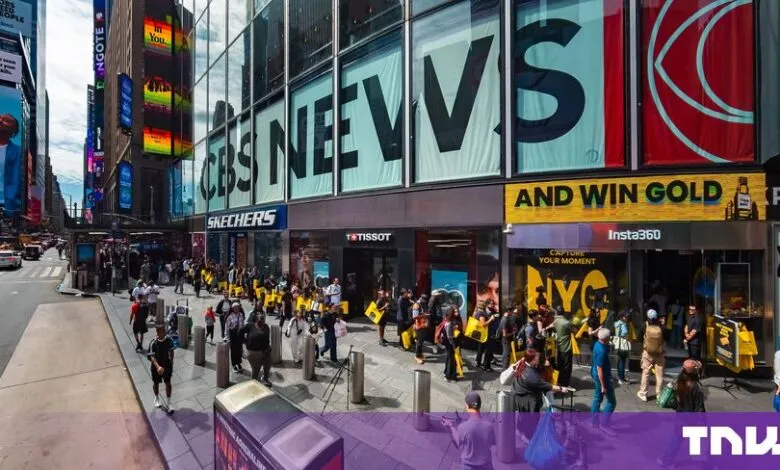
Insta360’s aggressive capital allocation stands in stark contrast to the struggles of its primary competitor, GoPro, as the action camera industry undergoes a turbulent restructuring. The Shenzhen-based firm recently celebrated the opening of its first American retail location at 1515 Broadway in Times Square. This marks only the second self-operated store outside of China, following a launch in Tokyo earlier this year. However, the physical storefront is merely a symptom of deeper financial shifts reshaping the market.
The most striking indicator of this shift is the disparity in how the two companies are handling supply chain pressures. In the first half of this year, Insta360 spent nearly 2 billion yuan, approximately $298.4 million, on strategic procurement of memory chips. Co-founder Max Richter noted that similar expenditures will be unavoidable in coming quarters, with no clear end in sight for the current component shortage. Conversely, GoPro agreed to merge with Starman Optical on September 1. Under the deal, GoPro shareholders receive $285 million in cash at $1.14 per share, retaining roughly 10% of the merged entity. Starman also assumes approximately $92 million of GoPro debt, making the total consideration significantly higher than the headline figure. The comparison remains telling: one company’s six-month inventory cost is roughly equivalent to the entire valuation of its rival.
Balance Sheet Resilience vs. Fragility
Both companies faced identical headwinds, yet their outcomes diverged sharply due to financial strength. AI data center demand diverted wafer capacity away from consumer electronics, causing chip prices to surge vertically. Insta360 absorbed the shock and remained profitable, albeit barely. While revenue grew by 50%, net profit fell 94%, and research spending increased by nearly 80%.
GoPro lacked the liquidity to weather the storm. Citing memory price increases between 80% and 115%, alongside a 26% revenue decline and expected covenant breaches, the company announced it might not survive. It reduced staff by 23% and sought a buyer. This highlights that the memory crunch acts as a sorting mechanism, filtering out firms that cannot fund inflated input costs.
GoPro’s Strategic Pivot
The rescue deal creates a closed loop for GoPro’s future. The company will remain listed on Nasdaq but reposition toward AI data centers, government, defense, and aerospace markets. Nicholas Woodman described the combined business as an American imaging and optical company focused on national security. The AI buildout that starved GoPro of affordable memory is now the very market it targets. The transaction is pending regulatory and shareholder approval, expected to close by year-end. Until then, the former incumbent is effectively in transition.
DJI’s Regulatory Freeze
Meanwhile, DJI faces a different kind of barrier. Added to the FCC’s covered list in December 2025 after failing to complete a mandated security audit, the company can no longer obtain radio approval for new products. Existing models remain on shelves, but the pipeline is frozen. The FCC has even proposed revoking approvals for existing drones equipped with thermal imaging, LiDAR, or docking systems. When asked about this competitive advantage, Richter declined to call it a windfall. He stated that Insta360 currently faces no US restrictions and did not want the situation to unfold this way. Strategically, this cautious stance avoids over-reliance on geopolitical friction while maintaining a focus on product excellence.
Market Dynamics and Retail Strategy
IDC data shows DJI holds 65% of the global handheld smart camera market in Q1, with Insta360 at 22%. However, Insta360’s growth rate of 66% year-on-year outpaces DJI’s 38%. In the 360-degree segment, Insta360 commands 68% share, having shipped 10 million units since 2015. The Times Square lease represents a multi-year bet on this momentum.
Richter emphasized that the store serves an educational purpose rather than purely sales-driven goals. Demonstrating the “invisible selfie stick” effect requires physical interaction, which online listings cannot replicate. He also stressed escaping price wars through innovation, particularly against DJI in the Chinese domestic market. Expansion continues with plans for stores in Munich or Amsterdam by year-end, with potential acceleration in 2027 and partnerships with local retailers.
Key Indicators to Watch
Investors and observers should monitor several critical factors. First, the memory expenditure line item, as Richter confirmed another 2 billion yuan is likely required. Second, the source of chip procurement, noting that domestic Chinese DRAM manufacturers are beginning to supply Western products, giving Insta360 a potential logistical edge. Finally, keep a close eye on the FCC covered list. As restrictions widen to include foreign robots and inverters, Insta360’s current unrestricted status is a temporary advantage that could shift rapidly.
(Source: The Next Web)


