FAA Clears Pilotless Cargo Plane for Flight at Active Airport
▼ Summary
– Elroy Air successfully completed the first uncrewed autonomous flights under a federal program using its Chaparral aircraft in Louisiana.
– The flights demonstrated the vehicle’s ability to carry mundane cargo like medical supplies and water without requiring a runway or charging infrastructure.
– Regulators including FAA Administrator Bryan Bedford endorsed the operation as a safe step toward integrating self-flying aircraft into national airspace.
– The initiative is part of the eVTOL Integration Pilot Program, which pairs manufacturers with state agencies to inform future aviation policy.
– This event highlights a broader trend of the FAA rapidly clearing diverse autonomous systems, from cargo drones to military laser weapons, for domestic use.
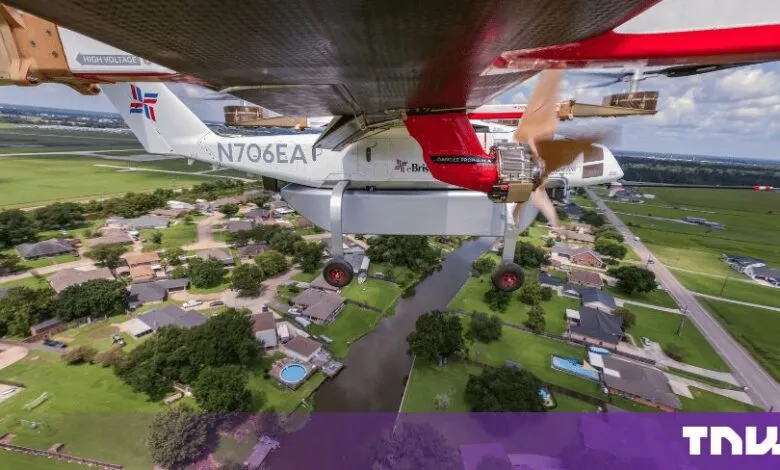
Elroy Air’s Chaparral drone completed the first uncrewed autonomous flights within an active American airport, marking a significant milestone in the integration of self-flying aircraft into national airspace. The hybrid-electric cargo plane operated without any personnel on board during a week-long trial at Houma-Terrebonne Airport in Louisiana. This facility is recognized as one of the busiest rotorcraft airports in the United States, making the successful navigation of air traffic alongside conventional helicopters a notable operational achievement.
The aircraft, known as the Chaparral, took off vertically and carried a payload exceeding 500 pounds over populated areas. Its route included flying directly over residential neighborhoods while transporting mundane items such as spare parts, medical supplies, food, and jerry cans of water. Elroy Air selected these ordinary goods to demonstrate that the technology can handle repetitive, low-value logistics tasks that currently require expensive helicopter crews. The company aims to prove reliability in dull, routine work rather than showcasing exotic capabilities.
Regulatory Endorsement and Program Context
What distinguishes this event from a typical corporate demonstration is the explicit involvement of federal regulators. FAA Administrator Bryan Bedford endorsed the trials, stating they illustrate how autonomous systems can enhance cargo delivery networks across the country. He emphasized that such operations would strengthen overall logistics infrastructure.
“FAA Administrator Bryan Bedford said the flights showed how such aircraft could expand cargo delivery to communities nationwide. They would also improve logistics infrastructure, he said.”
This initiative operates under the eVTOL Integration Pilot Program, established by the executive order titled Unleashing American Drone Dominance. The program connects manufacturers with state and federal agencies to gather data for future aviation policy. Elroy Air joined the program in March 2026 through a Louisiana application, claiming its Chaparral is the only purpose-built heavy-payload cargo drone participating in this specific federal effort.
State officials also provided strong support. Josh Duplantis of the Louisiana Department of Transportation and Development observed the operations firsthand.
“He said he watched it happen, and called it a disciplined, safe operation.”
Dual-Use Technology and Defense Contracts
While the public-facing tests focused on civilian logistics, the underlying technology has deep military roots. Kratos Defense and Security Solutions holds exclusive US manufacturing rights for the Chaparral and is expanding its Sacramento facility to produce the aircraft. The first production model is scheduled for late 2026.
The connection to defense spending is substantial. Elroy Air secured a $46 million multi-year Army contract in August for an autonomous vertical takeoff and landing (VTOL) aircraft designed for modular payloads. Additionally, the company developed three unattended delivery modes for the Chaparral under a separate Army agreement earlier in the year. The firm describes the design as dual-use, with tactical resupply identified as a key application. Consequently, the same airframe delivering water to Houma residents is being funded by the Pentagon for battlefield logistics.
Investors include Lockheed Martin Ventures, Shield Capital, and Marlinspike Partners. However, potential investors have been issued cautionary warnings regarding the company’s financial outlook. Elroy Air states that its reported commercial demand pipeline of more than 1,400 aircraft, valued at over $5 billion, consists entirely of non-binding letters of intent and memorandums of understanding. The company explicitly notes there is no assurance these will convert to firm orders and advises against treating the figure as an indicator of future revenue. This disclosure accompanies the company’s draft registration statement with the SEC as it prepares to go public via a merger with Inflection Point Acquisition Corp VII.
Market Position and Future Certification
The push toward autonomous cargo delivery is accelerating across the industry. In July, DoorDash received FAA clearance for its drone operations, and Zipline continues to fly medical deliveries in partnership with the Cleveland Clinic. Earlier this year, the eVTOL Integration Pilot Program facilitated flights carrying transplant organs, though those missions still involved pilots aboard. The recent Houma trials represent a shift toward fully uncrewed operations.
Commercial viability remains the next major hurdle. Bristow Group, a partner in the trial, highlighted that energy and government customers seek low-risk methods for moving cargo across the Gulf Coast. Offshore platforms are costly and dangerous to access, creating a clear market for replacing manned helicopters.
Despite the successful test, a timeline for transitioning from pilot programs to routine service has not been established. The FAA has not yet outlined the certification path required for widespread adoption. The current phase serves primarily as a data-gathering exercise, with Louisiana providing the initial operational metrics. While residents of Houma did not volunteer for the trial, the endorsement from top regulatory officials signals a growing institutional readiness to integrate autonomous systems into busy, shared airspace.
(Source: The Next Web)