AI agent identity crisis? Oak exits stealth with $60M to fix it
▼ Summary
– Oak is an Israeli startup emerging from stealth with a unified control plane for identity management, backed by $60 million in seed funding and already deployed by enterprise clients.
– The company’s AI-native solution replaces legacy IAM tools by using a connector framework to map access to actual app usage and remove unneeded permissions in real time.
– Co-founder Shai Morag, a serial entrepreneur with three exits including Secdo and Ermetic, co-founded Oak with Tal Marom after leaving Tenable.
– Oak’s $60 million round was co-led by Accel, CRV, and Greylock, with Accel partner noting Morag’s track record and the need for experience in complex identity management sales.
– The startup faces competition in a space with deep vendor lock-in, and Morag aims to scale fast, stating he will “go big or go home” with this final company.
Physical badges once sufficed for identity management inside a company. But now that humans work alongside machines and AI agents in digital environments, even the identity tools built for the cloud era are falling short.
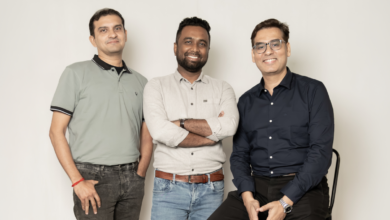
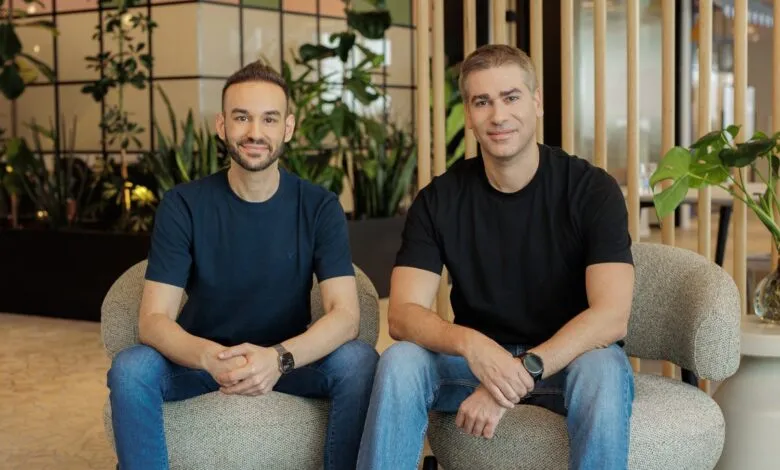
That is the void Israeli startup Oak aims to fill as it exits stealth mode. Co-founded by serial entrepreneur Shai Morag, the company has quietly developed a unified control plane for governing identity across an entire organization. Oak is now publicly launching with its product generally available and already deployed by enterprise clients, backed by $60 million in seed funding raised late last year.
The startup did not name its clients but confirmed the solution is live and in use by enterprise customers.
Outdated credentials and poor identity access management (IAM) , the systems that govern who and what can access company data , represent a common security weakness. AI is expected to make these vulnerabilities even easier for attackers to exploit. Oak describes itself as AI-native, positioning its platform as a replacement for legacy tools that were already showing their limits but lacked a consolidated alternative.
According to Oak’s other co-founder and chief product officer, Tal Marom, the startup spent months interviewing 100 CISOs and IAM leaders before building its product. The result is an AI connector framework that maps access to actual app usage and removes unnecessary permissions in real time, rather than only during periodic reviews.
“Right now, the whole process is too manual, and it’s operations-based, not risk-based , for instance, there’s no trigger when an employee logs in from an unusual location,” said Morag, a former army major with more than two decades in cybersecurity. He previously sold cyber startup Secdo to Palo Alto Networks in 2018 and has had three exits overall.
That track record helped Oak raise what is a very large round by local standards, one that matches its ambitions to invest heavily in R&D and growth, Morag said. “Our vision is to be born as a giant,” he told TechCrunch.
Morag’s résumé already includes time at a giant organization. After public cyber company Tenable acquired his cloud identity and security startup Ermetic for $265 million in 2023, he stayed on as CPO. But after CEO Amit Yoran became ill and passed away, Morag left and told his wife he would retire.
Instead, he co-founded Oak with Marom, a product team lead he met at Tenable who had previously held similar roles at Salesforce and in the Israeli military. While in stealth, the two also built a team of 50 people and are actively hiring, especially in the U. S., where a majority of Oak’s staff will soon be based, Morag said.
Oak’s $60 million round was co-led by Accel, CRV, and Greylock Partners, with participation from AlphaDrive Ventures, Hetz Ventures, and angel investors. Morag told TechCrunch that VC interest was strong from the start.
Accel partner Andrei Brasoveanu said Morag’s track record alone was a compelling argument. Accel had led Ermetic’s Series A when it was pre-revenue. When Tenable acquired it, Accel gave Morag an informal standing offer to back whatever he built next, Brasoveanu said. “I knew he had it in him to build another company, but this time even bigger and even better.”
With AI acting as “a democratizing force,” Accel has been backing founders right out of high school, Brasoveanu noted. But when it comes to identity management, experience still matters. “There’s complexity in the product, and there’s also complexity in the organizations you have to navigate to figure out how to sell something like this,” he said.
Both Brasoveanu and Morag expect Oak will face plenty of competitors trying to use AI as a catalyst for change in a space where vendor lock-in runs deep. That makes it critical for Oak to scale quickly. Morag, who has told his wife this will be his last company, says he will not retire until he has given it everything he has: “I will go big or go home.”
(Source: TechCrunch)