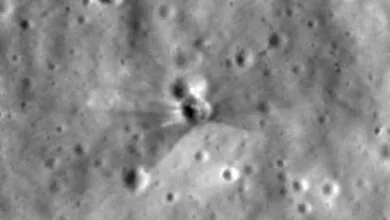
NASA Chief Warns China May Block Moon South Pole Access

▼ Summary
– China has postponed the launch of its Chang’e 7 lunar mission to early next year, a delay welcomed by NASA Administrator Jared Isaacman.
– Isaacman expressed concern that Chang’e 7 might target the Shackleton crater, a key area for water ice exploration at the Moon’s south pole.
– The lunar south pole is considered valuable real estate due to permanently shadowed regions that may contain water ice and other resources.
– Both China and NASA view this region as critical for establishing long-term settlements and developing techniques for deeper space exploration.
– There are growing US concerns that China could establish exclusion zones in these areas, potentially limiting access for future robotic and human missions.
NASA Administrator Jared Isaacman has raised alarms that China’s upcoming lunar ambitions could restrict international access to the Moon’s south pole, specifically targeting the scientifically vital Shackleton Crater. The concern intensified last month when Beijing postponed its Chang’e 7 robotic mission from this year to early next year. While officials in Beijing did not offer a detailed justification for the delay, the shift in timeline was viewed by Washington as a strategic reprieve.
Isaacman highlighted the timing during a speech at the Off World conference in Houston on Wednesday evening. He noted that both nations are aiming for identical coordinates in the permanently shadowed regions of the lunar south pole. “They are targeting the exact same location on lunar south pole,” Isaacman said. “We may have dodged a bullet with the Chang’e 7 mission a couple of weeks ago because that would have gone to the Shackleton crater.”
The Shackleton Crater is considered prime real estate due to its unique geological features. The high rims of the crater create permanently shadowed regions, often referred to as “cold traps.” These areas are believed to hold significant deposits of water ice and other volatile materials that have accumulated over billions of years. For any nation seeking a long-term foothold on the Moon, these resources are critical for sustaining human presence and supporting further exploration into the Solar System.
Despite the vastness of the lunar surface, only a small fraction of the south pole holds strategic value for both NASA and the Chinese National Space Administration (CNSA). Both agencies view this region as the foundation for establishing an enduring presence that will test technologies needed for deeper space travel. However, US officials are increasingly worried that China might declare exclusion zones around these sites. Such measures could effectively block American robotic probes and future crewed missions from accessing the most scientifically interesting locations.
The potential for conflict stems from the advanced capabilities of the Chang’e 7 lander. Unlike previous missions, it will carry rovers and hopper drones, providing unprecedented mobility on the lunar surface. This equipment allows for extensive surveying and resource extraction, potentially enabling China to secure dominance over key areas before other nations can arrive.
Isaacman emphasized the competitive nature of these developments. “It has rovers, it has hopper drones like we now have in development but didn’t eight months ago, and could have potentially denied access to some of the most interesting spots,” he explained. “They want to interact with the water ice, and they want to get really good at the skills for where they’ll want to go next for their Neil Armstrong-like moment. Except it won’t be on the Moon, it’ll be on Mars.”
(Source: Ars Technica)