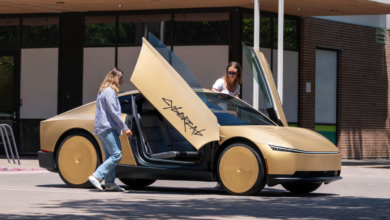
Tesla invites select buyers to purchase Cybercab for personal use
▼ Summary
– Tesla is offering select customers the ability to purchase the Cybercab for personal use, restricted to areas with existing Robotaxi service.
– The vehicle has a base price of $29,990 but requires a mandatory $299 monthly Autonomy Subscription, significantly increasing the total cost of ownership.
– Unlike standard Teslas, canceling the subscription renders the Cybercab unusable because it lacks manual driving capabilities without autonomous software.
– Initial availability is limited, and buyers must pay a $1,000 non-refundable deposit for a potential December delivery window.
– Owners are prohibited from using the Cybercab for commercial purposes like ride-sharing or food delivery, contradicting earlier promises of passive income generation.
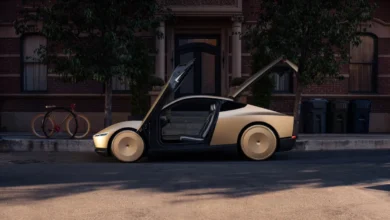
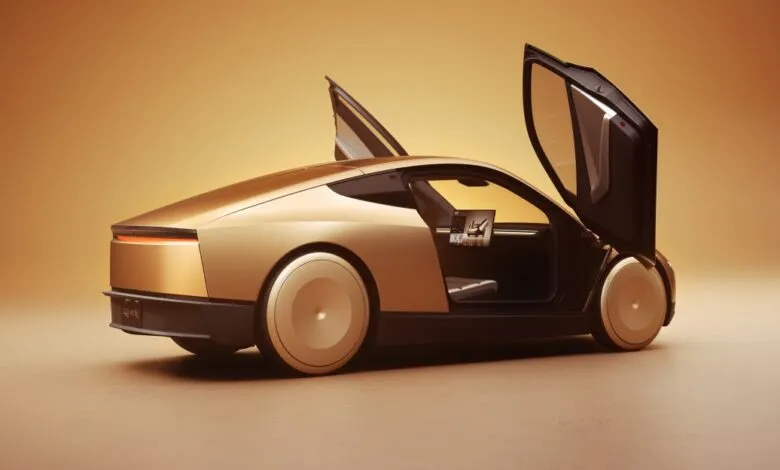
Tesla is expanding its autonomous vehicle strategy by offering select customers the opportunity to buy the Cybercab for personal ownership, a move that signals a significant shift in how the company plans to integrate self-driving technology into private lives. However, this new purchasing option comes with strict geographic and financial constraints. The steering-wheel-free, two-seater vehicle is restricted to “supported service areas,” meaning potential buyers must reside in cities where Tesla currently operates its Robotaxi network. This limitation ensures that early adopters are confined to specific urban zones rather than enjoying nationwide driving freedom.
The financial commitment required for this exclusive access is substantial. The base price of the Cybercab is listed at $29,990, but this figure does not reflect the true cost of ownership. Prospective buyers are required to pay a mandatory Autonomy Subscription fee of $299 per month. This recurring charge was announced via Tesla’s official Robotaxi account on X, which shared screenshots of the order interface and invitation emails. While the initial sticker price appears competitive, the long-term expenses significantly alter the value proposition. Over a standard five-year ownership period, the subscription adds approximately $17,940 to the total cost, bringing the baseline expense to roughly $47,600 before taxes, insurance, or charging fees. This final figure exceeds the cost of a fully functional Model 3 or Model Y, which can be driven anywhere in the country without such restrictions.
The Hidden Costs and Functional Limitations
The structure of the Autonomy Subscription introduces unique risks for owners compared to traditional Tesla purchases. In standard models, canceling the Full Self-Driving (FSD) package simply reverts the vehicle to manual operation. In contrast, the Cybercab lacks physical controls like steering wheels and pedals, making it impossible to drive manually. Consequently, if an owner cancels the $299/month subscription, the vehicle becomes entirely unusable on public roads, effectively turning into a stationary object. Furthermore, securing a spot in the limited December delivery window requires a $1,000 non-refundable deposit, adding further financial risk given that availability is explicitly described as “limited” in the invitation communications.
This pricing model contrasts sharply with the original vision presented by Elon Musk during the 2024 “We, Robot” event. At that time, Musk introduced the Cybercab with promises of affordable, driverless travel but did not mention any mandatory monthly subscription fees. The inclusion of this fee mirrors the $99/month charge for Tesla’s current FSD feature, yet it represents a significant escalation in ongoing costs for consumers who may have anticipated a one-time purchase. Critics argue that this approach ranksle fans who envisioned owning a $30,000 driverless car, highlighting a disconnect between early marketing claims and the final commercial terms.
Commercial Restrictions and Regulatory Hurdles
One of the most compelling aspects of Musk’s initial pitch was the potential for owners to monetize their vehicles by joining Tesla’s Robotaxi network to earn passive income. However, the current order terms strictly prohibit commercial use. Owners are barred from using the Cybercab for services like Uber or DoorDash, nor can they add the vehicle to Tesla’s own fleet to offset the monthly subscription costs. Although Ashok Elluswamy, Tesla’s AI chief, has suggested that customer cars might join the network as early as Q2 2027, early buyers currently have no pathway to generate revenue from their assets. This restriction leaves owners paying full freight with zero return on investment, undermining the economic appeal of the purchase.
Beyond the business model, the Cybercab faces significant regulatory scrutiny. The vehicle does not comply with current Federal Motor Vehicle Safety Standards that mandate traditional controls such as steering wheels and pedals. Tesla has submitted a legal justification to the National Highway Traffic Safety Administration (NHTSA) in October, requesting that the response remain confidential while the agency conducts a formal audit. This pending ruling creates uncertainty for buyers who are already providing deposits for a vehicle whose street legality has not been officially confirmed.
Liability and insurance concerns also remain unresolved. Tesla’s subscription covers autonomous driving, maintenance, and towing, but explicitly excludes auto insurance. The company has not clarified how personal insurers will underwrite a car with no human driver or how liability is distributed between the owner and Tesla in the event of an accident. These ambiguities persist even as Elon Musk continues to frame regulatory approval as the primary external bottleneck, shifting focus away from technological challenges. Meanwhile, Musk has engaged in public banter with YouTuber Marques Brownlee, who bet his hair on the delivery of a sub-$30,000 Cybercab before 2027, suggesting that safety and legal questions are secondary to brand promotion in this rollout phase.
(Source: The Verge)