Pocket is shutting down: 7 best read-it-later alternatives
▼ Summary
– Mozilla shut down Pocket in May 2025, prompting users to seek alternatives like Matter, Instapaper, and Raindrop.io, with Pocket exports available only until October 8, 2025.
– Matter offers a free iOS app and browser extensions with article listening and podcast transcription, plus a $79.99/year premium tier for advanced features and an AI co-reader.
– Instapaper, a long-standing free app on iOS and Android, provides unlimited saving and a $59.99/year premium option with notes, text-to-speech playlists, and Kindle support, and it allowed Pocket imports with a three-month free trial.
– Raindrop.io functions as a bookmark manager with mobile reading apps, offering free unlimited bookmarks and a $33/year plan with AI organization, full-text search, and reminders.
– Alternatives include niche tools like Burn 451, which deletes unread articles after 24 hours, and AI-driven apps like Recall and Omphalis that summarize content, alongside open-source options like Wallabag and Readeck.
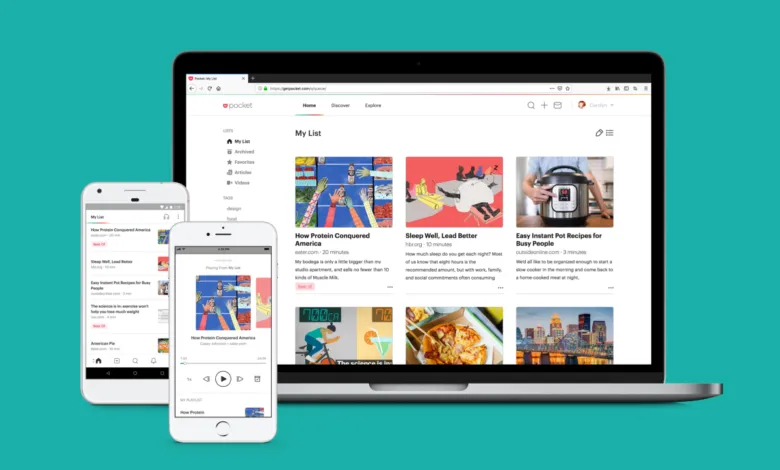
In May 2025, Mozilla announced it was retiring Pocket, the popular read-it-later app it had acquired in 2017. That decision, driven by shifting web browsing habits, sent users scrambling for alternatives. The resulting surge in demand has benefited established players like Instapaper and Matter, while also giving rise to a wave of new indie apps.
Fortunately, most of these services support data imports. However, Pocket users had a hard deadline of October 8, 2025, to export their saved articles, lists, archives, favorites, notes, and highlights. If you missed that window, your data is gone. For everyone else, here are the top read-it-later alternatives ready to fill the void.
Matter
Backed by GV, Matter offers a polished iOS app alongside browser extensions for Chrome, Safari, and Firefox. Beyond saving articles, it can read them aloud to you and even transcribe your favorite podcasts. The core app is free, but a $79.99 annual subscription unlocks enhanced transcriptions for podcasts and YouTube, reading speed controls, and deeper integrations with tools like Gmail, Kindle, and note-taking apps. In March 2025, Matter also introduced an AI co-reader that can answer questions about the content you’re viewing.
Instapaper
A true veteran of the space, Instapaper was founded by Marco Arment in 2008 and later acquired by Pinterest in 2016. It remains one of the most straightforward options, available on iOS and Android, and lets you save unlimited articles and videos for free. The $59.99 yearly premium tier adds features like note-taking, a permanent archive, text-to-speech playlists, full-text search, and Kindle delivery. Instapaper made it easy for Pocket users to migrate their accounts, even offering a three-month free trial of Premium to those who did.
Raindrop.io
Raindrop.io functions primarily as a robust bookmark manager for browsers, but its iOS and Android apps also provide a clean reading experience for saved articles and PDFs. The free tier offers unlimited bookmarking and integrations with automation tools like Zapier and IFTTT. For $33 per year, you unlock AI-powered organization suggestions, full-text search, bookmark reminders, a duplicate and broken link finder, and 10GB of monthly file uploads.
Plinky
Created by former Twitter engineer Joe Fabisevich, Plinky is designed for saving and categorizing any type of link, from articles and videos to recipes and memes. It works across all Apple platforms and offers browser extensions for quick saving. You can organize your links with folders and tags, and even set reminders to revisit them later. The free version allows 50 links, three folders, and five tags. To go unlimited, you can pay $3.99 monthly, $39.99 annually, or a one-time $159.99 fee for lifetime access.
Paperspan
Paperspan keeps things minimal, offering a cross-device reading list with note-taking and text-to-speech capabilities. The app is free, but an $8.99 monthly subscription adds advanced search, playlist creation, reading stats, and Kindle support. A caveat: the app hasn’t seen updates in some time, which may raise questions about its long-term viability. It is available on both iOS and Android.
Readwise Reader
Readwise, known for its note and highlight tools, launched the Reader app in 2021. It aggregates content from RSS feeds, YouTube, Twitter threads, and more into one readable stream. Its integration with Readwise makes it a standout for annotation, and it also includes offline text search and an AI assistant. You can connect Reader to knowledge management apps like Obsidian, Notion, Roam Research, Evernote, and Logseq. After a 30-day free trial, access requires a $9.99 monthly Readwise subscription. Readwise allowed Pocket users to import their entire archive, highlighting that Reader supports features like PDFs, ePubs, X posts, AI, and filtering that Pocket never offered.
DoubleMemory
DoubleMemory is a newer indie app built specifically for the Apple ecosystem, with native apps for Mac and iOS. On Mac, you can save any link or content by pressing Cmd + C twice. Saved items appear in a visually appealing Pinterest-style tile layout. The app supports offline reading and lets you search through text, notes, and tags. No account is required, and syncing is handled through your iCloud account. DoubleMemory is free with in-app purchases, including a $3.99 monthly subscription or a $17.99 annual plan.
Recall
Recall operates as a browser extension with a companion mobile app, designed to save articles, PDFs, blog posts, podcasts, Wikipedia pages, YouTube videos, and recipes. What sets it apart is its use of AI to automatically summarize and categorize content, then resurface it when you’re exploring related topics. It’s built to enhance memory retention, letting you review summaries on a spaced repetition schedule. The free version includes up to 10 AI-generated summaries. Beyond that, you can use it as a standard read-it-later tool or upgrade to a $7 monthly plan for unlimited AI summaries and additional features.
Wallabag
Wallabag is a robust open source read-it-later app available on iOS, Android, and the web, with support for e-readers like Kindle and Kobo. It allows offline reading and exports your data in multiple formats, including PDF, ePUB, .mobi, JSON, CSV, TXT, and HTML. The interface is straightforward, offering highlighting and tagging, plus a reader mode. It also supports importing data from Pocket, Instapaper, and other services. If you prefer a managed solution, a hosted subscription is available for €11 per year, which helps fund the project’s open source development.
Readeck
Readeck is an open source web app designed to organize any web content you want to revisit, whether that’s articles, videos, or photos. You can highlight text, export articles to e-book formats, and save video transcripts. It works as a browser extension for easy bookmarking while you browse. Users can self-host Readeck, and the company plans to offer a hosted version in 2025, with a mobile app also in development.
Obsidian Web Clipper
Obsidian’s Web Clipper extension lets you capture web pages and highlight text with a single click. It uses templates to customize how different types of content are saved. For example, articles are saved with citations and footnotes, while recipes include ingredients, steps, and nutrition info. You can also build custom templates for your favorite sites. As an open source tool, it’s completely free, and it integrates seamlessly with the Obsidian note-taking app.
Karakeep
Karakeep is a bookmarking app that saves links, notes, and images, then uses AI to automatically tag items for faster retrieval. It comes with features like list support, bulk actions, dark mode, and full-text search. The open source app is available on iOS and Android, with browser extensions for Chrome and Firefox. You can support its developer directly through their site.
Dewey
Dewey is a “save everything” app that handles web links, videos, and images, including posts from social platforms like X, TikTok, Bluesky, Threads, Reddit, Instagram, and LinkedIn. It offers organizational tools such as folders and tags, AI bulk tagging, keyboard shortcuts, automatic syncing to Notion, export options, and a personalized RSS feed. Plans start at $7.50 per month, with an annual option that saves you $30.
Folio
Folio’s design will feel familiar to former Pocket users, and that’s no coincidence. Its creator, Nick Chapman, previously served as head of product at Pocket. The interface is clean, with tabs for tagged, favorites, short reads, and long reads. You can add articles via the Chrome extension, share sheet, or manual URL entry, and importing from apps like Instapaper is straightforward. Currently, premium features like text-to-speech, highlights, custom fonts, and full-text search are free. Folio also includes a discovery section for exploring new content. It’s available on the web, iOS, and Android.
Burn 451
We all know the tendency to hoard articles without ever reading them. Burn 451 is designed to break that habit. You can save an article, but you must read or tag it within 24 hours, otherwise it’s permanently deleted. The app is available on the web and iOS. For AI enthusiasts, it also offers a model context protocol (MCP) server to analyze your reading habits.
Omphalis
Omphalis takes an AI-first approach to the read-it-later category. You can save articles, documents, podcasts, and videos, and the app transforms them into more digestible formats with summaries, key points, and a chapter-like structure. The free version provides limited AI-powered comprehensions, subscribed sources, and transcription minutes. Pro plans start at $9 per month, offering higher limits and features like key moment recaps and read-alongs.
This list is by no means exhaustive, and we’ll continue to update it as new tools emerge.
(Source: TechCrunch)