Google Ads Decoded: AI’s Impact on Search Behavior
▼ Summary
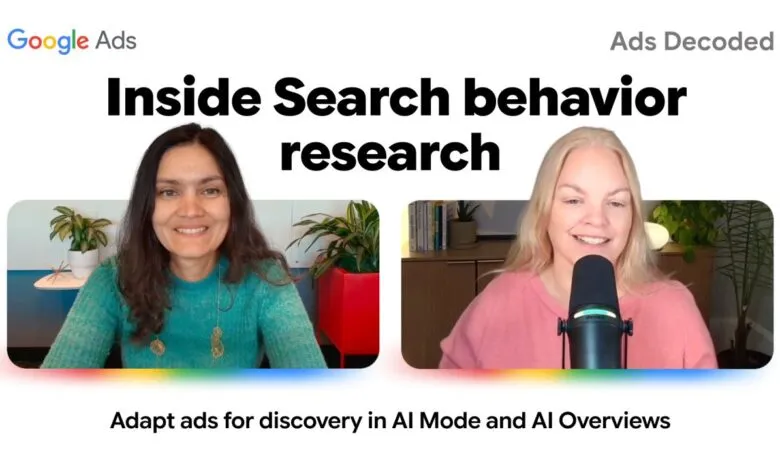
– Google Ads Product Liaison Ginny Marvin and Search VP Shivani Mohan discuss how AI-powered search is becoming more conversational and exploratory in the latest Ads Decoded episode.
– Users are asking significantly longer questions in AI Mode, with queries being three times longer than traditional searches, indicating earlier engagement in the decision-making funnel.
– One in six searches in the U.S. using AI Mode are multimodal, allowing users to incorporate voice and images for complex decision-making alongside personal nuance.
– Advertisers are advised to consider that discovery and evaluation often happen within the same conversation, revealing specific customer concerns beyond initial search phrases.
– Longer query lengths provide richer context about user needs but do not inherently signal stronger buying intent or improved conversion rates without further analysis.
The Shift Toward Conversational Discovery
Google’s latest Ads Decoded episode, released on October 28, highlights a significant evolution in how users interact with the search engine. According to Ginny Marvin, Google Ads Product Liaison, and Shivani Mohan, Search Vice President of Data Science and User Experience Research, individuals are increasingly using AI-powered features to explore decisions earlier in their journey. This shift means that discovery is moving up the funnel, with users engaging in conversational searches for brainstorming long before they reach a purchase decision.
Marvin outlined three critical takeaways for advertisers developing strategies for 2027. First, curiosity is expanding significantly. Queries made within AI Mode are three times longer than traditional searches, indicating a deeper level of engagement. Additionally, one in six searches is now multimodal, allowing users to include personal nuance through voice and images. Second, while AI provides streamlined answers, users still crave human perspectives. As Mohan noted, people actively seek the “rich detail, lived experience, and earned authority of the open web” found in forums, podcasts, and video reviews. Finally, discovery and evaluation often occur within the same conversation, allowing users to weigh options and tradeoffs as they learn more.
Interpreting the Data for Ad Strategy
The official announcement cites a U. S. AI Mode report from May 2026, which confirms the 3x longer query length statistic. However, advertisers must interpret these figures with care. While longer questions provide more context about user needs, the data does not inherently prove stronger buying intent or higher conversion rates. Furthermore, the claim that one in six searches are multimodal specifically applies to AI Mode in the U. S., not all Google searches globally.
This distinction is vital for campaign planning. The extended queries reveal concerns that standard product descriptions may not address. For instance, a user might ask detailed follow-up questions about compatibility or limitations. Advertisers can leverage this by ensuring their content answers these specific nuances. Mohan emphasized that users want to know how products perform in practice, not just what they do. Consequently, relying solely on brand copy is insufficient; demonstrating real-world application through reviews or demonstrations becomes essential.
Preparing Paid Search Campaigns for 2027
In response to community questions following the episode, advertisers sought clarity on adapting campaigns to these behavioral shifts. Md Jihad asked how small businesses should adjust ad copy for exploratory intent, while Ana Trujillo Martin inquired about signals retail teams should monitor, such as impressions and click-through rates. While Google did not provide specific technical settings, the discussion offers strategic guidance for 2027 planning.
Advertisers should focus on addressing pre-purchase concerns. This involves analyzing customer questions, sales conversations, and search terms to identify recurring problems. Messaging should then be tested to address these needs clearly. Landing pages must also be optimized to provide comparative information regarding price, setup, and limitations. If visitors require this data before proceeding, it must be easily accessible.
Furthermore, connecting supporting content to the main decision path is crucial. Linking relevant reviews, demonstrations, and customer stories from landing pages helps build trust. Advertisers should also assess whether research-driven traffic leads to later purchases. Since changes in impressions or click-through rates alone may not reflect success, evaluating results over the full purchase timeline is necessary. By focusing on unanswered customer questions and providing comprehensive resources, brands can better guide users toward conversion.
(Source: Search Engine Journal)