Illinois Passes Nation’s Toughest AI Safety Bill
▼ Summary
– The Illinois House passed SB 315, requiring frontier AI labs to have their safety practices audited by a third party; Governor Pritzker plans to sign it.
– The bill would make Illinois the leading state check on major AI companies, going beyond California and New York by mandating independent verification of safety claims.
– State legislatures have become a battleground for AI regulation due to a lack of federal laws, with OpenAI now supporting state-level bills like SB 315.
– Under SB 315, AI labs could use Big Four accounting firms or the AI Evaluator Forum to audit adherence to their own safety standards.
– Illinois state representative Daniel Didech says such state laws act as a testing ground for potential federal AI legislation.
The Illinois House of Representatives has approved a groundbreaking bill that would compel leading artificial intelligence companies , including OpenAI, Anthropic, and Google DeepMind , to undergo independent audits of their safety protocols. If signed into law, experts tell WIRED, it would represent the most stringent state-level check on the power of major AI developers in the nation.
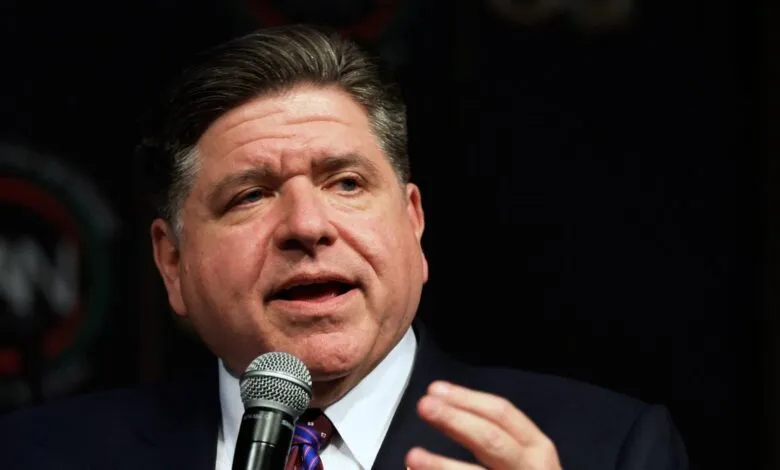
The legislation, known as SB 315, now awaits the signature of Governor JB Pritzker. In a social media post on Wednesday, Pritzker indicated his intention to sign it, emphasizing the need to hold Big Tech accountable.
With Congress still failing to pass any significant federal AI safety measures, state lawmakers have increasingly stepped into the void. They are pushing bills designed to reassure constituents that Silicon Valley is being kept in check. As AI tools grow more pervasive and the companies behind them rush toward massive IPOs, polls show that American voters are demanding more regulation of the technology.
This dynamic has turned state legislatures into the primary battleground for shaping AI policy. Chris Lehane, OpenAI’s chief of global affairs, told WIRED last week that the company’s AI policy strategy now centers on passing a series of similar laws across multiple states.
Currently, California and New York have some of the strongest AI safety laws, requiring tech firms to disclose model guardrails and publish reports on safety incidents as they occur. Illinois’ SB 315 goes further by mandating that an independent auditor verify whether an AI lab is actually following its own stated safety standards. Previously, no outside body was required to hold these companies accountable to their own claims.
“We’re in a situation where the AI companies grade their own homework,” says Scott Wisor, policy director at the Secure AI Project, a nonprofit supporting SB 315. “Should SB 315 become law, Illinois would require an independent auditor to check whether the AI labs in fact adhere to their safety commitments.”
Wisor notes that, under the bill, AI labs would likely turn to the Big Four accounting and auditing firms , Deloitte, EY, KPMG, and PwC , to conduct these safety audits. Alternatively, they could tap members of the AI Evaluator Forum, a coalition of smaller research organizations such as METR, Transluce, and Averi, to assess compliance.
Illinois state representative Daniel Didech, a sponsor of SB 315, tells WIRED that state legislatures are playing a vital role by shaping national AI policy and serving as a testing ground for any future federal laws. “Laws like this create a world where it’s more likely for the federal government to pass something,” Didech says.
Illinois has become a key battleground in the fight over state AI regulation. OpenAI previously backed a different Illinois bill that would have shielded AI labs from liability if their models caused catastrophic harm. Lehane has since called that blanket support a mistake, clarifying that the company never supported the liability shield. More recently, OpenAI has endorsed SB 315.
“The Illinois General Assembly has shown real bipartisan leadership in advancing SB 315 and developing a thoughtful framework for frontier AI safety,” Lehane said in a statement to WIRED. “As AI systems become more capable, clear expectations around safety, transparency, incident reporting, and accountability matter.”
(Source: Wired)