Topic: federal preemption
-
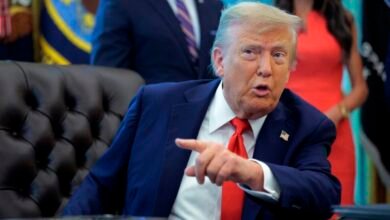
Trump personally moves to block state AI laws after Congress inaction
President Trump issued an executive order directing federal agencies to challenge state AI laws, aiming to prevent a conflicting regulatory patchwork and promote a single national standard. The order follows failed legislative efforts to block state regulations and is justified by claims that sta...
Read More » -
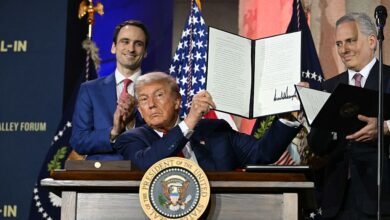
Trump's AI Order: 'One Rulebook' or Startup Limbo?
A new executive order aims to establish a single national AI regulatory framework by challenging state laws, but critics warn it creates prolonged legal uncertainty for startups instead. The order directs federal agencies to contest state rules and explore federal standards, but it does not itsel...
Read More » -

Trump's AI Order Challenges State Regulations
The federal government issued an executive order to establish national primacy in AI governance, aiming to override state-level regulations by leveraging federal authority and funding to pressure states into alignment. The order specifically targets laws like Colorado's consumer protection act, c...
Read More » -

Republicans Remove Trump-Era AI Law Block from Defense Bill
A proposal to block state-level AI regulations for a decade, championed by former President Trump, failed to be included in a major defense bill due to a lack of Republican consensus. Opposition from a coalition including some Republicans and Democrats argues that states need flexibility to addre...
Read More » -

Leaked AI Order Exposes Big Tech's Power Grab
A leaked draft executive order from the Trump administration aims to centralize federal control over AI policy, using funding and legal pressure to discourage states from enacting their own AI regulations. The order directs federal agencies to penalize states with conflicting AI laws, including w...
Read More » -

David Sacks' Bid to Block AI Laws Backfires Spectacularly
A proposed executive order to centralize AI regulation under federal authority collapsed due to bipartisan opposition, which would have stripped states of their regulatory power and concentrated influence in the White House, empowering tech billionaire David Sacks as the de facto AI policy gateke...
Read More » -

Trump's Draft Order Challenges State AI Regulations
The Trump administration is preparing an executive order to centralize AI governance by legally challenging state AI regulations that conflict with federal statutes, particularly those protecting free speech and interstate commerce. An "AI Litigation Task Force" would be established to sue states...
Read More » -

GOP Pushes to Reinstate AI Development Moratorium
House Republicans are renewing efforts to establish a federal AI regulation standard to override state laws, potentially attaching it to the must-pass National Defense Authorization Act. Supporters, including former President Trump and tech industry groups, argue a single federal standard is need...
Read More » -

Far Right Targets Trump's AI Czar David Sacks
A potential executive order from President Trump to establish federal preemption over state AI laws is causing significant political controversy, even within his own party and base. The draft order, which could grant substantial authority to AI czar David Sacks, is seen as a heavy-handed power gr...
Read More » -
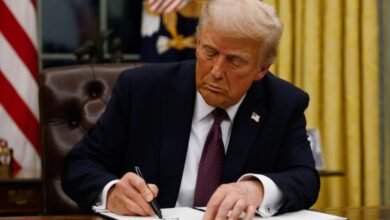
Trump's Executive Order to Block State AI Regulations
The Trump administration is preparing an executive order to centralize AI regulation at the federal level, challenging state laws on algorithmic bias and safety. A key component includes an "AI Litigation Task Force" to challenge state regulations deemed obstacles to industry growth, such as thos...
Read More » -

Unmasking Compliance Risk: Privacy & Email Laws Today
The U.S. lacks a comprehensive federal privacy law, forcing businesses to navigate a complex and growing patchwork of conflicting state regulations, making proactive compliance with the strictest standards essential. This regulatory fragmentation mirrors the pre-2003 email marketing landscape, bu...
Read More » -
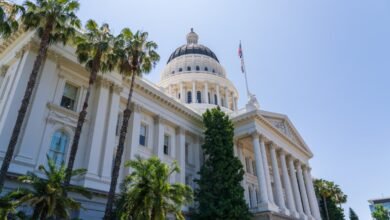
California's AI Safety Law: Proving Innovation and Regulation Can Coexist
California's SB 53 mandates that major AI labs disclose safety protocols and adhere to security standards, particularly for catastrophic risks, enforced by the Office of Emergency Services. The law reinforces existing industry practices to uphold corporate safety commitments and prevent cutting c...
Read More » -

Trump's Push to Penalize States with AI Regulations
The Trump administration's proposed executive order aims to create a uniform national AI regulatory standard to override state laws, arguing that conflicting regulations hinder innovation and burden developers. It would establish an AI Litigation Task Force to sue states with AI regulations deeme...
Read More » -

NY AI Bill Sponsor Defies a16z Super PAC Targeting Him
Assembly member Alex Bores is targeted by a super PAC, Leading the Future, backed by major tech investors with over $100 million, opposing his support for AI regulation in his congressional campaign. Bores sponsors the bipartisan RAISE Act in New York, which would require large AI labs to impleme...
Read More »