Agentic PPC: The Future of Performance Marketing in 2030

▼ Summary
– AI agents will evolve into personalized marketing assistants that learn individual decision-making styles and become digital twins of marketers.
– These agents will collaborate through universal protocols like A2A, enabling them to share expertise and solve problems across different marketing specialties.
– Agents can generate revenue by monetizing their specialized knowledge through payment protocols, turning them into earning team members.
– Key challenges include trust verification, control over agent decisions, competitive advantage, and data privacy in agent networks.
– By 2030, successful marketers will train agents to run campaigns, collaborate, and earn income, while human creativity may regain value for authentic brand connections.
The marketing world buzzes constantly with artificial intelligence updates, making it challenging to stay current with every development. While AI agents are gaining attention, most remain experimental or lack widespread practical use. Let’s project forward to 2030 and explore a plausible future for performance marketing. Imagine waking up to find that your AI agent optimized dozens of campaigns, negotiated media purchases with other automated systems, and earned revenue overnight by solving marketing challenges globally. This scenario represents the next evolution in pay-per-click advertising, moving beyond simple automation toward truly intelligent, collaborative assistance.
Current PPC tools operate on predefined rules and scheduled scripts, executing tasks without genuine understanding. They lack the intuition human marketers possess, knowing which creative will resonate, when to pause a campaign during a competitor’s product launch, or how to allocate budget to top performers. A personal marketing agent changes this dynamic by learning your unique approach. By analyzing your historical campaigns, performance data, decision logs, and informal notes, it gradually becomes your digital counterpart, replicating your strategic thinking.
Consider Sarah, a performance marketer at a technology startup. She trains her agent by demonstrating her decision-making patterns: structuring ad groups according to user intent, applying a conservative-then-aggressive bidding strategy, testing headlines before other creative elements, and reallocating budgets from underperformers within two days. Over months, the agent recognizes Sarah’s tendency to increase spending on weekends while exercising caution during the first week of each month. It also notes that she consistently monitors competitor activity before major launches. Eventually, the agent manages campaigns exactly as Sarah would, embodying her professional style.
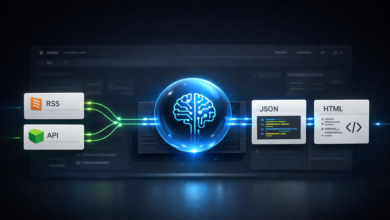
The real breakthrough occurs when these agents begin collaborating. Sarah’s agent excels in ecommerce but lacks expertise in business-to-business lead generation. Marcus’s agent, conversely, specializes in B2B but struggles with shopping campaigns. Through the Agent2Agent protocol, they exchange knowledge. Sarah’s agent requests assistance optimizing a B2B effort, and Marcus’s agent shares its lead scoring model and keyword expansion methods. Both systems learn and improve, engaging in negotiation and problem-solving much like human experts. This interoperability relies on A2A as a universal communication standard, allowing agents built on different platforms, whether Google’s ADK, CrewAI, AutoGen, or custom frameworks, to work together seamlessly.
Operating these agents involves costs for API usage and third-party tools, but they can also generate income. Using the Agent Payments Protocol, Sarah’s ecommerce agent charges others for its product feed optimization expertise, while Marcus’s B2B agent earns fees for sharing account-based marketing tactics. Your agent transforms from an assistant into a revenue-generating team member, monetizing its specialized knowledge while you rest.
A typical day for Sarah in 2030 might begin with a morning briefing from her agent, detailing overnight actions: pausing three underperforming ad groups, increasing budgets on two high-performing campaigns, and earning $500 by assisting other agents with creative testing challenges. At 9 a.m., the agent alerts her to a competitor’s unusual budget surge and proposes three counterstrategies based on similar past incidents. By 2 p.m., Sarah approves a collaboration where her agent exchanges audience insights with a fashion brand’s agent for seasonal trend data. At 4 p.m., the agent presents three campaign ideas for the upcoming month, complete with creative concepts and budget allocations, all derived from Sarah’s historical successes. After reviewing and approving these, Sarah ends her day while her agent continues working.
As marketers worldwide train their personal agents, a global network emerges where these digital assistants share insights, tackle complex problems collectively, and enhance overall intelligence. The entire advertising ecosystem grows more efficient and profitable. However, this future faces significant hurdles. Trust remains a concern, how can you verify an agent’s performance claims or ensure collaboration partners are worthwhile? Establishing a reliable review system resistant to manipulation becomes essential. Control issues arise when agents make questionable decisions, raising questions about accountability. Competitive advantage may diminish if everyone employs equally capable agents, forcing marketers to balance knowledge sharing with retaining unique expertise. Privacy considerations also loom large, as data exchange through agent networks introduces risks involving intermediaries.
Regional differences will influence development; for instance, European agents may operate under stricter GDPR guidelines, potentially creating competitive disparities. Despite these challenges, progress continues. Technical foundations like Google’s Agent2Agent and Agent Payments Protocol are already taking shape, supported by platforms such as the Agent Development Kit and open-source frameworks. Forward-thinking marketers are preparing by documenting decision processes, building comprehensive performance databases, experimenting with existing AI tools, and considering which expertise their future agents could monetize.
By 2030, top performance marketers will not merely manage campaigns, they will train agents to handle them, collaborate across networks, and generate income through expertise sharing. Your personal marketing agent won’t replace you; it will extend your capabilities, operate continuously, and convert your knowledge into ongoing revenue. The future of PPC transcends automation, focusing on creating digital extensions of ourselves that think, cooperate, and earn independently.
Looking further ahead to 2040, as agent-driven marketing becomes standard, campaigns may grow increasingly similar due to uniform optimization for identical metrics. When perfect optimization is universal, it ceases to provide a competitive edge. This could spark demand for human-exclusive marketing, akin to the craft movement in other industries. Brands might promote “No AI agents used” or “100% human creativity,” accepting higher costs and lower metric performance in exchange for authentic emotional connections that algorithms cannot replicate. Marketing could split into two tracks: a performance track where AI agents manage 80% of spending for efficiency, and a brand track where human-driven creativity receives 20% of budgets to build long-term value through cultural relevance. New roles may emerge, such as culture interpreters who identify emotional trends agents miss, and authenticity auditors who certify AI-free campaigns. Success will belong to those who skillfully balance AI efficiency with genuinely human creativity, knowing when each approach delivers the greatest value.
(Source: Search Engine Land)