▼ Summary
– Elon Musk lacks traditional academic credentials but has significant influence on technology and innovation.
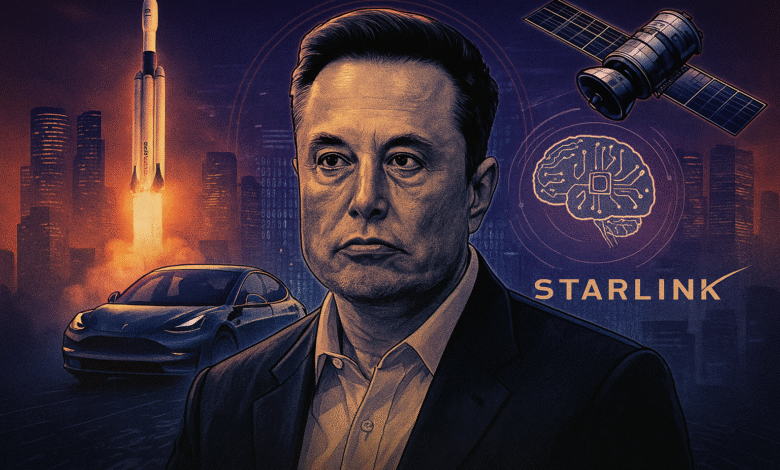
– He drives ambitious projects like Tesla, SpaceX, and Neuralink, pushing industries toward new standards and scalability.
– Musk’s approach involves first-principles thinking, leading to breakthroughs in areas such as battery tech and space launch economics.
– He is a polarizing cultural figure who shapes public discourse on AI ethics, free speech, and future technologies.
– His ventures have tangible impacts, like accelerating electric vehicle adoption and expanding global internet access via Starlink.
Elon Musk is not a scientist in the academic sense. He doesn’t publish peer-reviewed research, hold advanced degrees, or lead university labs. Yet his influence on science, technology, and global innovation discourse is undeniable. From electric vehicles and reusable rockets to brain-computer interfaces and AI ethics, Musk has positioned himself at the center of some of the most consequential technological shifts of the 21st century.
Vision Without Credentials: How Musk Shapes Innovation
His relevance lies in his ability to set ambitious goals, mobilize capital, and push engineering teams toward outcomes that reshape industries. Tesla didn’t invent the electric car, but it made it desirable, scalable, and mainstream. SpaceX didn’t pioneer rocketry, but it redefined cost-efficiency, reusability, and private-sector ambition in space. Neuralink isn’t the first to explore brain-machine interfaces, but it’s among the most aggressively marketed and technically daring.
Musk’s ventures often operate at the edge of feasibility, where innovation meets controversy. Critics point to missed deadlines, labor disputes, regulatory clashes, and erratic public behavior. Supporters cite his willingness to tackle existential risks, from climate change to AI alignment, and his ability to accelerate technologies that governments and legacy corporations have struggled to move forward.
Influence Beyond Engineering: Culture, Ethics, and Controversy
What makes Musk matter isn’t just what he builds, it’s how he reframes the conversation around technological possibility. His companies are often structured around first-principles thinking, a method that challenges assumptions and rebuilds solutions from the ground up. This approach has led to breakthroughs in battery technology, autonomous driving, and launch economics, even if not all promises materialize on schedule.
But Musk’s impact goes beyond engineering. He’s a cultural figure, shaping how people imagine the future. His social media presence, media appearances, and polarizing statements have made him a lightning rod for debates on tech ethics, free speech, and corporate responsibility. Whether he’s discussing Mars colonization, AI risks, or cryptocurrency, Musk commands attention, and often sets the agenda.
This influence comes with consequences. His public statements can move markets, sway public opinion, and pressure regulators. His leadership style, described by insiders as intense, demanding, and sometimes erratic, has sparked both admiration and concern. Employees have described a culture of urgency and innovation, but also burnout and unpredictability. These tensions reflect the broader challenge of balancing visionary leadership with sustainable execution.
Importantly, Musk’s role in shaping AI discourse deserves scrutiny. As a co-founder of OpenAI, he initially advocated for safe artificial intelligence. Later, he distanced himself from the organization, citing disagreements over direction and transparency. His current stance on AI, often critical of its unchecked development, contrasts with his own investments in autonomous systems and neural augmentation. This duality reflects the complexity of his position: both a driver of innovation and a vocal critic of its potential dangers.
In the context of climate technology, Musk’s contributions are more tangible. Tesla’s success has forced legacy automakers to accelerate their EV roadmaps, while SpaceX’s Starlink project is expanding internet access in underserved regions. These are measurable impacts, not just speculative ambitions.
Still, Musk is not without alternatives. Other tech leaders, like Fei-Fei Li, Tim Berners-Lee, or Ardem Patapoutian, offer models of innovation grounded in academic rigor, ethical frameworks, and collaborative science. Comparing Musk to these figures helps clarify his unique role: not as a researcher, but as a catalyst, someone who moves fast, breaks norms, and forces institutions to respond.
Timeline of Impact: Elon Musk’s Key Milestones
| Year | Milestone |
|---|---|
| 1999 | Co-founds X.com, which later becomes PayPal |
| 2002 | Founds SpaceX, aiming to reduce space launch costs |
| 2004 | Joins Tesla Motors as chairman, later becomes CEO |
| 2006 | Launches SolarCity, a solar energy company |
| 2015 | Co-founds OpenAI, focused on safe artificial intelligence |
| 2016 | Founds Neuralink, exploring brain-computer interfaces |
| 2016 | Launches The Boring Company, focused on tunnel infrastructure |
| 2020 | Tesla becomes the world’s most valuable carmaker by market cap |
| 2022 | Acquires Twitter, sparking global debate on free speech and platform governance |
| 2023–2025 | Expands Starlink, begins Neuralink trials, and pushes for Mars colonization roadmap |
For DigitrendZ readers, Musk’s story is less about personality and more about pattern recognition. He embodies the tension between disruption and accountability, vision and execution, innovation and ethics. His ventures are case studies in how entrepreneurial ambition can accelerate change, but also how unchecked influence can raise new risks.
That’s why Elon Musk matters. Not because he’s flawless, or even consistent, but because his presence forces a reckoning with the pace, direction, and values of modern innovation. He is a mirror to our technological ambitions, and a reminder that progress, while thrilling, must be examined with clarity and care.