From Station Platforms to Smart Hospitals: How Hong Kong’s Tech Projects Are Quietly Reshaping Daily Life
▼ Summary
– Hong Kong’s smart city transformation integrates connected technologies into daily life to enhance efficiency, health, and cleanliness for residents.
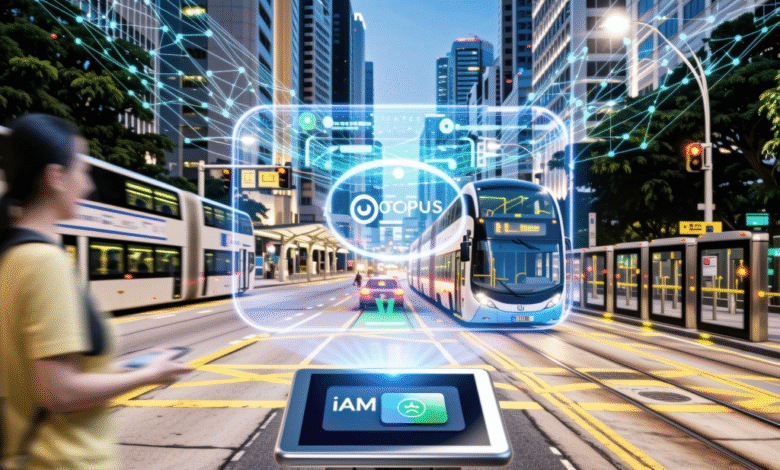
– Mobility improvements include contactless Octopus payments, real-time bus data, AI traffic signals, and electric or autonomous vehicle trials.
– The iAM Smart platform provides a single digital identity for accessing over 200 government services, reducing paperwork and in-person visits.
– Healthcare innovations feature electronic patient records, AI diagnostics, and smart hospitals with IoT and real-time monitoring for better accessibility.
– Environmental and innovation efforts include IoT air quality sensors, smart waste management, and tech hubs like Cyberport and HKSTP fostering startups and research.
On a weekday morning in Sha Tin, commuters tap their Octopus cards, electric buses hum past, and traffic lights adjust in real time based on live sensor data. None of it feels futuristic to the people using it , yet each interaction is part of a coordinated network of technologies that Hong Kong has been building for years.
This is the city’s smart transformation in practice: not a single grand project, but a web of connected systems designed to make life more efficient, healthier, and cleaner for its 7.5 million residents.
Mobility: Data-Driven Transport for a Dense City
Hong Kong’s public transport network moves millions daily, and technology is now embedded in almost every stage of the journey.
- Octopus Holdings Limited has expanded its contactless payment system beyond the MTR to buses, ferries, retail outlets, and even residential building access.
- Kowloon Motor Bus (KMB) and Citybus provide live arrival times and occupancy data via their apps, helping passengers avoid overcrowded services.
- The Transport Department uses AI‑driven traffic signal control to ease congestion in busy corridors.
- Bravo Transport has introduced electric double‑deckers, while the Hong Kong Science and Technology Parks Corporation (HKSTP) is running autonomous shuttle trials in Tai Po in partnership with vehicle tech firms.
These upgrades are not just about speed , they aim to reduce emissions, improve reliability, and make commuting less stressful.
Digital Identity: iAM Smart as a Single Access Point
The iAM Smart platform, managed by the Office of the Government Chief Information Officer (OGCIO), gives residents a single digital identity for over 200 services.
With it, citizens can renew driving licences, pay taxes, book public sports facilities, and access health records without repeating logins. The platform’s e‑signature function has cut down on in‑person visits to government offices, a change that proved critical during pandemic restrictions.
Healthcare: Smart Hospitals and AI in Practice
The Hospital Authority (HA), which manages 43 public hospitals, has embedded digital systems into patient care. Its Clinical Management System integrates electronic patient records, lab results, imaging, prescriptions, and appointment booking across the territory.
Flagship projects include:
- CUHK Medical Centre (CUHKMC) , Hong Kong’s first fully digitalised smart hospital, operated by the Chinese University of Hong Kong. It uses paperless records, IoT‑enabled equipment tracking, and real‑time patient monitoring.
- Queen Elizabeth Hospital, Tin Shui Wai Hospital, and Tseung Kwan O Hospital , pilot sites for AI‑assisted diagnostics and robotics in ward management.
- HA Go and eHealth apps , allowing patients to manage appointments, prescriptions, and health records remotely.
- Hong Kong Applied Science and Technology Research Institute (ASTRI) , developing AI tools for early detection of diseases such as lung cancer from CT scans.
These systems aim to improve efficiency, reduce errors, and make healthcare more accessible, especially for elderly and mobility‑impaired patients.
Environmental Monitoring: Sensors and Smart Infrastructure
The Environmental Protection Department (EPD) operates a network of IoT‑based air quality monitoring stations, feeding real‑time data into the Air Quality Health Index (AQHI) app.
Other initiatives include:
- Smart waste bins with fill‑level sensors, developed with local IoT startups, to optimise collection routes.
- Electrical and Mechanical Services Department (EMSD) programs promoting smart meters and building energy management systems, adopted by developers such as Sino Group and Swire Properties.
- Energy‑efficient retrofits in public housing estates, using data analytics to track and reduce consumption.
Innovation Hubs: Cyberport and HKSTP
Two major hubs anchor Hong Kong’s tech ecosystem:
- Cyberport , home to over 1,800 startups, including fintech firm WeLab and blockchain gaming company Animoca Brands.
- HKSTP , supporting over 1,000 companies in biotech, AI, robotics, and green tech, with partnerships involving City University of Hong Kong and The University of Hong Kong.
Both hubs provide funding, mentorship, and prototyping facilities, and act as bridges between research and commercial deployment.
Open Data and Public Participation
The data.gov.hk portal offers thousands of datasets for public and commercial use, from weather patterns to transport statistics.
Citizen engagement tools include:
- Tell me@1823 , an app for reporting municipal issues with photos and GPS coordinates.
- Hackathons such as CityHack , encouraging developers to create apps for local needs, like mapping barrier‑free routes for wheelchair users.
Challenges: Privacy and Inclusion
As digital identity systems expand, data privacy remains a public concern. The government has pledged to strengthen cybersecurity frameworks and transparency.
Digital inclusion is another priority. NGO‑run Elderly IT Learning Centres, supported by government funding, aim to ensure older residents can access online services.
Looking Ahead
The Smart City Blueprint for Hong Kong 3.0 outlines plans for 5G‑enabled applications, wider autonomous transport adoption, and deeper AI integration in public services. The city’s approach , linking government, academia, and industry , is positioning it as a model for practical, citizen‑focused urban technology.
This article is based on verifiable information from the Smart City Blueprint for Hong Kong 3.0, the Hospital Authority Strategic Plan 2022–2027, official releases from OGCIO, EPD, EMSD, HKSTP, Cyberport, Octopus Holdings Limited, MTR Corporation, KMB, Bravo Transport, and public statements from CUHK Medical Centre and ASTRI. Additional details are drawn from the Legislative Council Research Office and HKTDC Research.