Europe Demands Its Own AI as Frustration Grows
▼ Summary
– European leaders at Vivatech fear being forced to use American AI trained on American values, as US and China lead the AI race.
– Europe receives far less AI investment than the US, with Anthropic’s $65 billion fund-raise exceeding all European and UK AI startup investment last year.
– Optimism at Vivatech came from new funding, collaborations, and potential benefits from Donald Trump’s policies.
– French President Macron’s “Choose France” initiative secured over 100 billion euros in AI infrastructure pledges, including a 75 billion-euro Softbank commitment.
– Efforts to build sovereign AI include Cohere’s multinational partnerships and Yann LeCun’s Project Tapestry for an open, free foundation model.
Earlier this month, I walked the floors of Vivatech, Paris’s sprawling tech conference, and the anxiety was palpable. The central worry was clear: the prospect of being locked into American-built AI, trained on American cultural values. While the US and China dominate headlines in the artificial intelligence arms race, economic powerhouses like France and Germany,nations that pride themselves on world-class engineering,feel increasingly sidelined. They are no longer just asking for a seat at the table. They are drafting their own blueprints. If the word “sovereignty” appeared in a drinking game, you would have been intoxicated within the first three hours.
Over decades of covering technology, I have watched numerous countries try to recreate the Silicon Valley magic. While individual startups have succeeded, no single market has replicated the ecosystem or the risk-tolerant mindset that produced giants like Google, OpenAI, and Anthropic. American firms attract tidal waves of capital, while European ventures receive comparatively modest sums. A statistic I heard repeatedly at Vivatech drives this home: Anthropic’s recent $65 billion fundraising round exceeded the total investment in all European and UK AI startups for the entire previous year. Official EU data supports this grim reality.
Despite the bleak numbers, the mood at Vivatech was surprisingly hopeful. Optimists pointed to record-breaking funding pledges, new cross-border collaborations, and emerging technologies that might not require the massive computational resources of today’s leading large language models. And then there was the wild card, a factor many believe could be the biggest catalyst for European tech in decades: Donald Trump.
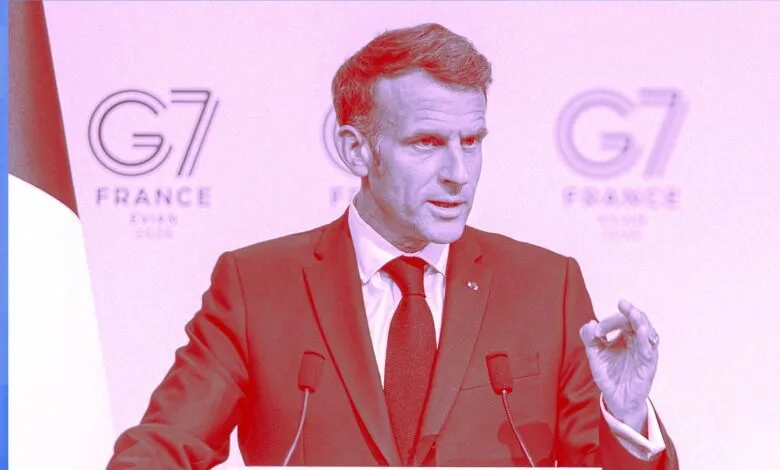
The conference coincided with the G7 summit in Evian-les-Bains, where French President Emmanuel Macron delivered a pointed lecture to AI executives. If the US continued its nationalistic approach to AI, he warned, France would pursue an independent path. Aiden Gomez, CEO of Toronto-based Cohere, echoed that sense of urgency. “We need to ensure that a democracy occupies the number two position, and that’s not true today,” Gomez told me. “The G7 understands that we need a diverse supply chain of AI providers.”
The idea that Europe could build the world’s second-best AI ecosystem might seem far-fetched, even delusional. It would require more than twenty nations to cooperate seamlessly, overcome their instinct to strangle innovation with regulation, and attract unprecedented investment. Above all, Europe would need to shed its risk-averse culture and adopt a moonshot mentality. Still, Macron has made tangible progress. His “Choose France” initiative has secured pledges exceeding 100 billion euros for AI infrastructure, anchored by Softbank’s 75 billion-euro commitment to build massive data centers in France,pending regulatory approvals.
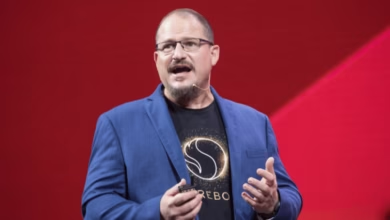
Collaboration is also gaining traction. Gomez says Cohere is weaving together a multinational network of partnerships, starting with Germany’s Aleph Alpha. The strategy is to share engineering talent and infrastructure under a “sovereign-first” model. “A few weeks ago, I was with the king of Spain to sign an MOU with Indra, the largest tech company in Spain,” he noted.
Meanwhile, Yann LeCun, the AI pioneer who recently stepped down as Meta’s chief AI scientist, is spearheading Project Tapestry. This ambitious initiative aims to unite governments and private companies to build a state-of-the-art, open-source foundation model. “The governments of the world all want AI sovereignty,” LeCun says. “The only way I can see this happening is if there’s an open, free foundation model, on top of which anybody can build their own specialized assistant for their own language, culture, value system, and political biases.”
(Source: Wired)