Solar E-Bike: Innovation or Future E-Waste?
▼ Summary
– The Phosgo Go5, marketed as the “world’s first AI solar e-bike,” is a new brand from China launching via a global crowdfunding campaign with prices starting at $1,999.
– The bike’s 200W solar panels are positioned inefficiently, requiring the bike to be laid on the ground for optimal charge, and realistically produce only a few watts when riding or parked.
– The solar panels are claimed to add up to 17 miles between charges under ideal conditions, but actual range will likely be far less in typical urban or shaded environments.
– The “advanced speech-to-speech AI” feature is criticized as unnecessary and unlikely to function well, such as recommending a decent restaurant.
– The author advises against backing the crowdfunding campaign due to risks with global fulfillment, sensitive electronics, and servicing, recommending waiting or using a portable solar generator instead.
The concept of a solar-powered electric bike is appealing, but the Phosgo Go5 , marketed as the “world’s first AI solar e-bike” , is not a purchase anyone should rush into. This new Chinese brand claims to eliminate range anxiety through a direct-to-consumer global crowdfunding campaign, but the warning signs are abundant.
Phosgo, according to a promotional kit sent from a generic Gmail address, is a joint venture between Jiaxing Dazhe Solar Energy and Shenzhen Honglianda Technology. Dazhe contributes flexible solar technology developed by someone simply referred to as “Dr. Li,” while Honglianda brings supply chain and e-commerce expertise. The company is selling two 8-speed, aluminum-frame models in the US and Europe, both built around Bafang mid-drive motors , though some photos show a motor from Ananda instead. The base Go5 has a “super early bird” price of $1,999, and the Go5 Ultra starts at $2,799. Those prices are expected to double later, a classic FOMO marketing tactic. The Kickstarter launch is set for Saturday, July 27th.
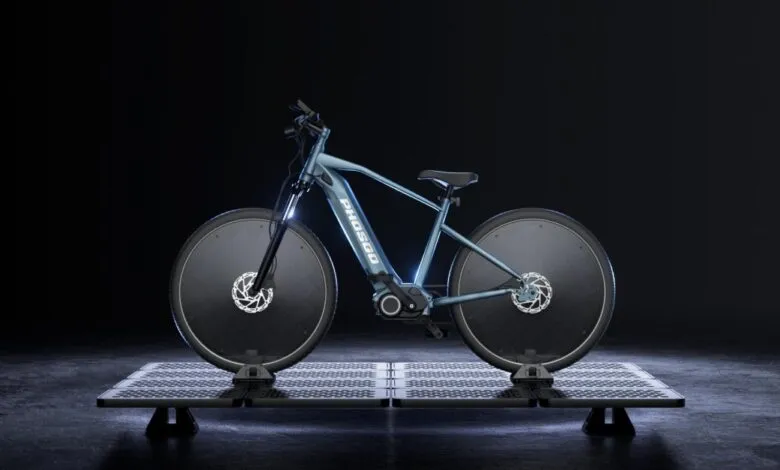
Each bike features four 50W circular solar panels embedded in the wheels, using BC (back contact) cells. This design moves electrical contacts to the interior, creating a sleek, grid-free appearance. BC panels also handle partial shading from cars, buildings, trees, the bike frame, and the rider better than conventional panels. The solar components add about 8 pounds to these roughly 50-pound bikes.
Here is the fundamental problem: all 200W of solar panels face the wrong direction. To get a meaningful charge, you would need to lay the bike on the ground , and even then, only half the panels would be exposed to direct midday sun. In reality, when riding or parked on the kickstand, you will generate only a few watts.
Phosgo’s range claims are inconsistent. Buried in the media kit, a table indicates the solar panels add 17 miles between charges from a wall outlet. It does not explain how that was measured, but it likely represents the maximum under perfect, unshaded daylight. You will get far less anywhere outside the Sahara, especially when parked next to other bikes in a city rack. The bottom line: you will still have charging concerns.
Then there is the “advanced speech-to-speech AI assistant.” No e-bike needs an integrated AI assistant. The likelihood of it successfully recommending a decent hamburger shop is negligible, and it certainly will not be properly integrated.
I hope I am wrong. I hope the Phosgo Go5 series delivers on its promises. Everyone roots for an underdog. But do not back this crowdfunding campaign unless you have money to burn. Global fulfillment is difficult even without giant batteries and sensitive electronics that require servicing over their lifetimes. If you are genuinely interested, wait for the final product.
Alternatively, consider a general purpose solar generator and portable solar panel. They can charge your e-bike, drone, power tools, laptop, and phone, and keep the fridge and PS5 running during the next blackout.
(Source: The Verge)