Google Home Speaker: Great Sound and Design, but Finicky
▼ Summary
– The Google Home Speaker reliably detects the “Hey, Google” wake word even at full volume, only failing once during a whisper test from another room.
– The speaker delivers big, rich sound with strong bass for its size, performing better than the Amazon Echo Dot Max but not as loud as the older Nest Audio.
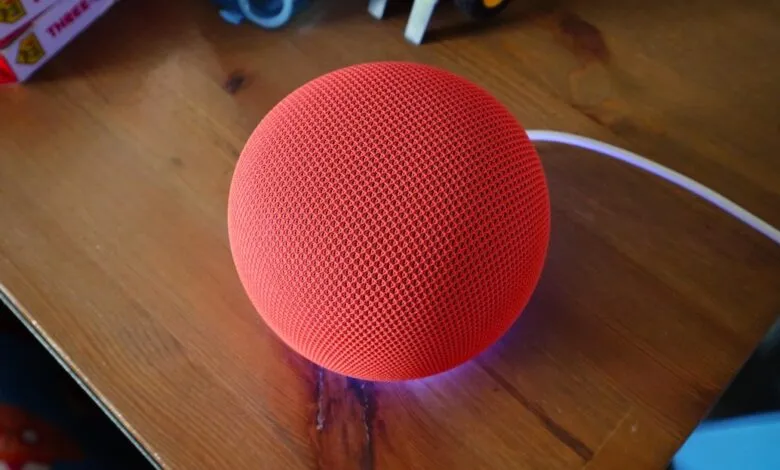
– Its design is minimalist and colorful, resembling a softball-sized ball of yarn, but lacks intuitive controls like visible buttons or a prominent light ring.
– The speaker cannot function as a standard Bluetooth device but supports Google Cast for streaming and can be grouped with others for multi-room audio.
– While audio quality is impressive for $99, the speaker’s full value depends on the performance of its Gemini AI assistant, which still requires extensive testing.
Unboxing Google’s latest smart speaker, the first impression is immediate and impressive. Cranked to maximum volume with music thumping, the device still flawlessly drops the audio and responds to “Hey, Google” every single time. Over two days of testing, its trio of microphones never missed a wake word, except for one staged whisper from another room while trying not to disturb a sleeping baby. That might not be a fair benchmark. Setting it up in the bathroom and chatting from the shower? Google heard me clearly, even over running water, a feat Siri rarely manages.
These fundamental interactions are essential for any smart speaker, yet they are not always guaranteed. For the Google Home Speaker, designed not merely to control music or smart home devices but as an ambient gateway to all things Gemini, reliability is critical. This assistant aims to plan your day, manage tasks, access information, and help you get things done. My colleague Jen Tuohy and I have units in our homes, but our full evaluation of both the hardware and the AI is forthcoming.
What I can share now is that this is a remarkably capable little speaker. It delivers big, rich sound from its mesh-covered body, getting plenty loud for a device this size. In a kitchen or for background ambiance, you will likely never need full volume. I don’t have the older Nest Audio handy for a direct comparison, but I recall it being louder, better, and significantly larger.
For years, my go-to portable speaker has been the UE Wonderboom. The Home Speaker holds its own against that similarly sized Bluetooth powerhouse. The Wonderboom gets slightly louder and emphasizes vocals and highs, while the Home Speaker pushes more bass. (To be clear, “more” does not mean “a lot.” Small speakers produce small thumps.) A track like “Sugar, We’re Goin Down” by Fall Out Boy reveals the difference: bass and drums drive the Home Speaker, while the Wonderboom highlights vocals and lead guitar. Preference will be personal. Against the Amazon Echo Dot Max, however, there is no contest. The Home Speaker is cleaner, louder, and sharper across the board, making the Dot Max sound like an oversized phone speaker.
The design is a standout. Shaped like a colorful, softball-sized ball of yarn, the red unit I tested is a delight. With no visible buttons or controls, and only a white USB-C cable trailing from the back, the vibrant color avoids screaming “look, a speaker!” while adding personality.
The trade-off for such minimalism is a lack of intuitive controls. You tap the right or left side to adjust volume, but the touch targets are small, and it is not obvious which side is which on a round object. (Tapping the top pauses or plays music, which works fine.) The light ring, which glows when Gemini is listening, is hidden beneath the speaker. You will only see it if the device is above eye level. That feedback is crucial for a smart speaker, and Google should have made it more prominent. I would prefer the Echo Dot’s straightforward physical buttons.
You cannot use the Home Speaker as a standard Bluetooth device, but Google Cast allows streaming from other gadgets. You can group multiple units for synced audio throughout your home, or pair two with a Google TV Streamer for improved TV sound. A collection of Home Speakers will not replace a Sonos system or soundbar, but they will likely outperform your TV’s built-in speakers.
So far, this little speaker impresses, especially at $99. But audio is only part of the story. Google built this device to bring Gemini into your home, offering a new way to control your environment and manage your life through its AI assistant. The company has not shipped a smart speaker in six years. Whether this one was worth the wait depends entirely on Gemini. We have plenty of testing ahead.
(Source: The Verge)