AI Goes Loopy: The Latest Trend in Tech
▼ Summary
– Boris Cherny stated at Meta’s @Scale conference that agentic loops are “for real” and as significant a step as the transition from hand-written code to AI agents.
– Cherny runs continuous loops in his own work, where one agent improves code architecture and another unifies duplicated abstractions, submitting pull requests indefinitely.
– Agentic loops authorize a swarm of AI agents to work continuously in the background, representing a major trust shift beyond managing discrete agent tasks.
– These loops use non-deterministic logic, where a subagent decides when to stop, differing from classic recursive loops with clear stopping conditions.
– AI loops burn tokens faster than simple chatbots with no cost ceiling, but their benefits could outweigh expenses for problems like incremental code improvement.
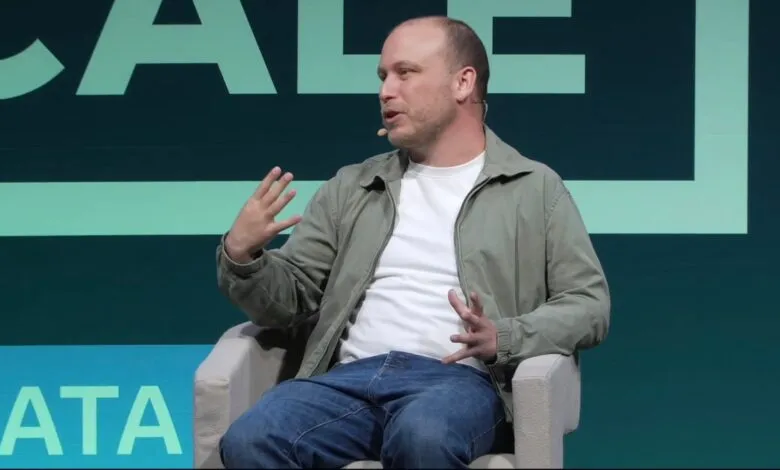
On Friday, Claude Code creator Boris Cherny took the stage at Meta’s @Scale conference, and the very first audience question caught him off guard , not about scaling models or safety, but about loops.
“Are loops the next hype cycle, or are they for real?” the questioner asked.
Cherny didn’t hesitate. “Yes, they’re for real,” he replied with conviction.
“Two years ago, we wrote source code by hand. We started to transition so agents write the code. And now we’re transitioning to the point where agents are prompting agents that then write the code,” Cherny explained. “As big as the step from source code to agents was, loops are just as important and as big a step.”
Later in the talk , around the 32-minute mark in the YouTube video , Cherny got into the specifics of the loops he runs in his own workflow. One agent constantly scans for ways to improve code architecture, while another hunts for duplicated abstractions that could be unified. They submit pull requests like any human coder, and because the codebase is always evolving, these agents never stop running.
It’s a bold concept, especially with someone of Cherny’s stature championing it. As agentic AI gains traction, most users have focused on managing their agents carefully: set clear goals, check progress at discrete intervals, and prevent them from wandering too far from the prompt. The loop takes things further by authorizing a swarm of agents to work continuously in the background, endlessly. That requires a significant amount of trust in AI , but as models improve rapidly, this could be the next logical step toward AI handling real, sustained work.
Let’s be clear: this isn’t entirely new. Recursive loops , functions that call themselves to repeat an action, with a condition to stop , are a staple of introductory computer science. These agentic loops follow a non-deterministic logic, where a subagent decides when to halt instead of relying on a fixed condition. But the core idea is the same. As soon as programmers began using AI to complete tasks, some version of the recursive loop, with AI overseeing AI, was inevitable.
Unlike traditional computing, agentic loops can be surprisingly simple. One popular technique is the Ralph Loop (named after Ralph Wiggum), which essentially sums up everything the model has done and asks whether it has achieved its goal. It’s a way to deal with AI models that lose focus over long runs , bouncing the model back and forth until the task is complete.
Another way to think about loops is as part of the broader push for more test-time compute. As OpenAI researcher Noam Brown noted earlier this month, modern models can solve nearly any problem if you give them enough compute. That means one approach is to simply keep throwing compute at a problem until it’s solved. This is especially true for hill-climbing problems like improving a codebase, where the model can keep making incremental improvements until it reaches a certain threshold. Or, as in Cherny’s example, it can keep making those improvements for as long as there’s compute to spend.
If that sounds expensive, it should. Like agentic AI before it, AI loops burn through tokens much faster than simple Q&A chatbots , and since the goal is to keep the loop running continuously, there’s no cap on spending. That’s fine for Anthropic, which is ultimately in the token-selling business, but for everyone else, it could be a pricey way to work.
Still, depending on the problem the agentic loop is trying to solve , and with the right setup for overseeing token spend, drift, and other classic AI issues , the benefits could be staggering enough to justify the costs.
(Source: TechCrunch)