Tesla Cybercab becomes its lightest, most efficient vehicle
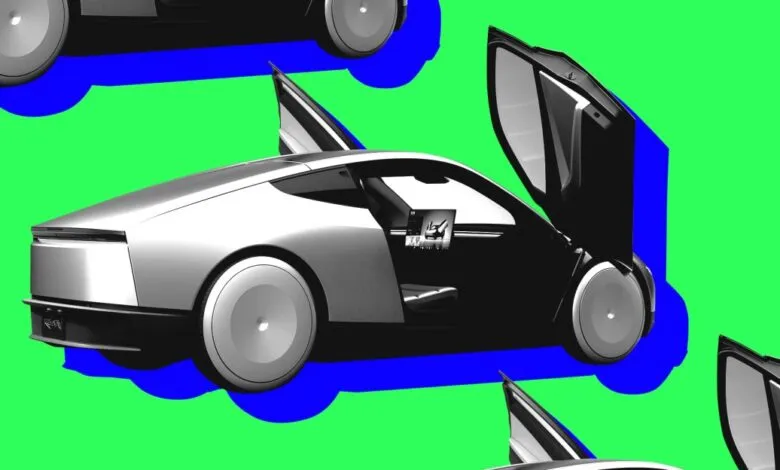
▼ Summary
– Tesla’s Cybercab is now in production, and EPA filings reveal it is the lightest and most range-efficient vehicle Tesla has ever made.
– The Cybercab weighs 3,113 pounds and uses a 48 kWh battery pack with a single front-mounted 219 horsepower motor, making it about 700 pounds lighter than the lightest Model 3.
– Its weight is reduced partly because Tesla removed the steering wheel and traditional controls, as the vehicle is designed for full autonomy.
– The Cybercab achieves an efficiency rating of 165 Wh/mi, allowing it to travel about 6 miles per kWh, far better than standard EVs.
– Despite these specs, Tesla still lacks a clear operational plan, currently running fewer than 60 robotaxis in Texas and seeking permits in other states.
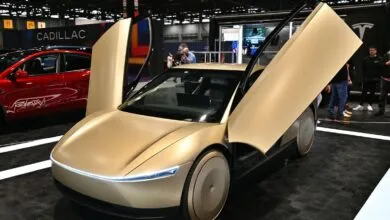
Despite lingering questions about Tesla’s commercial strategy, the Tesla Cybercab has officially entered production. While Elon Musk’s company may lack a fully coherent rollout plan for its compact, autonomous two-seater, it is nonetheless progressing through the regulatory steps needed to certify the vehicle. Recently, Tesla submitted documentation to the Environmental Protection Agency (EPA) that reveals key specifications, including the Cybercab’s weight, battery capacity, and preliminary range estimates.
What emerges from these filings is the lightest, most range-efficient vehicle Tesla has ever built , and potentially one of the most efficient electric vehicles on the market today.
According to the EPA documents, the Cybercab is powered by a single 219-horsepower permanent magnet motor driving the front wheels. It carries a compact 48 kWh battery pack operating at 326 volts, and tips the scales at a curb weight of just 3,113 pounds. That makes it approximately 700 pounds lighter than the lightest Model 3 currently available. The certificate, filed on May 21 and first flagged by Car and Driver, is a mandatory step before any vehicle can be sold in the United States.
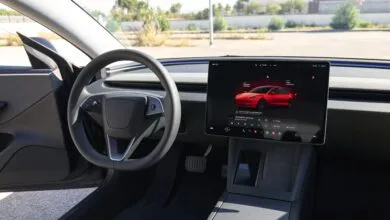
The Cybercab’s low weight is a standout achievement. Tesla achieved this by eliminating the steering wheel and many conventional controls that are unnecessary in a vehicle designed for full autonomy. Most EVs are notoriously heavy due to the large battery packs required to deliver 300-plus miles of range. The Cybercab, however, manages to weigh about the same as a gas-powered compact car while still carrying a substantial lithium-ion battery.
This weight reduction also enables exceptional efficiency. The raw EPA lab numbers list the Cybercab with 418 miles of range. After standard EPA testing adjustments, real-world range is expected to settle around 290 to 300 miles, which aligns with Tesla’s stated targets for the vehicle.
The Cybercab achieves a remarkable 165 watt-hours per mile efficiency rating, making it the most efficient EV currently available. For context, the Lucid Air , previously the efficiency leader , rates at 230 Wh/mi. With this efficiency, the Cybercab can travel roughly 6 miles per kilowatt-hour of energy. That’s a critical advantage for a vehicle Tesla plans to operate for up to 20 hours a day. Most standard EVs manage only 3 to 4 miles per kWh.
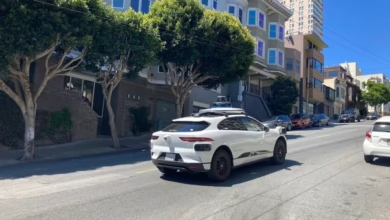
Still missing from the picture is a concrete operational plan. As of now, Tesla is running fewer than 60 Model Y robotaxis across a handful of Texas cities, despite Musk’s earlier claim that they would be available to half the U. S. population by the end of 2025. The company is actively seeking permits to launch services in Las Vegas and several Florida cities, but has yet to announce when the Cybercab itself will begin commercial operation.
(Source: The Verge)