How 3D Body Scans and Sensors Are Ending Blown Calls
▼ Summary
– The 2026 World Cup will use advanced tech like VAR and SAOT, including digital twins of players for precise positioning to aid officiating.
– Digital twins are created from body scans of each player, allowing virtual simulations to determine exact positions relative to the ball and boundaries.
– Despite the technology, human referees remain on the field but can use the systems to correct subjective errors with objective data.
– The systems are primarily used to catch major errors, like offside calls on game-deciding plays, but teams can also review minor infractions.
– Upgrades include 16 high-resolution cameras (up from 12 in 2022) and a ball sensor with ultrawide-band and IMU, placed on the interior wall via a vulcanized bladder for stability.
At the 2026 World Cup, referees and sideline officials will have an unprecedented arsenal of technology at their disposal to call penalties, detect offside violations, and make other high-stakes decisions. While VAR and semi-automated offside technology (SAOT) have been fixtures in soccer for years, this summer’s tournament showcases some of the most cutting-edge adjudication tools ever deployed in any major sport.
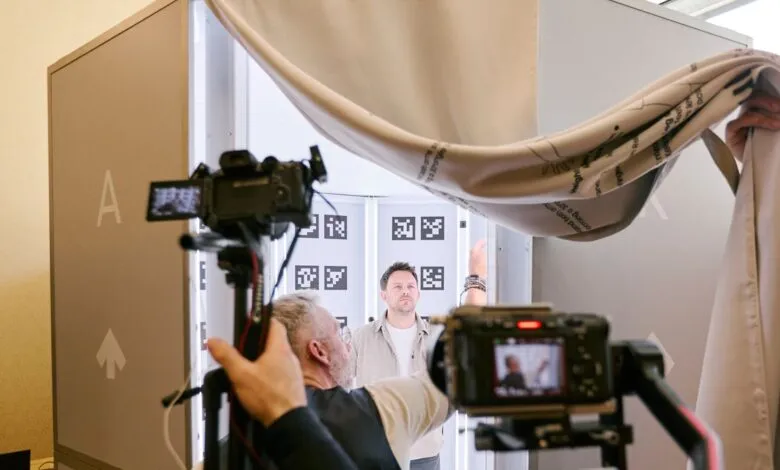
The pitch will be saturated with sensors, cameras, and advanced computer vision software throughout every match. A standout innovation this year is the use of digital twins. Every player competing in the World Cup has undergone a full-body computer scan. These digital replicas, which precisely mirror each athlete’s height, limb length, and shoe size, can be inserted into a virtual simulation of the game. Officials can then determine exact positions relative to the ball, boundary lines, and other players, using this data to identify infractions, assess penalties, and refine the flow of the game.
Despite the system’s ability to scrutinize action beyond human capability, human referees remain essential. But when officials make mistakes,and as any fan will attest, they do,the technology offers a corrective lens. Subjective calls can be replaced with objective truths, allowing the game to correct its most glaring errors.
These systems are primarily aimed at catching major blunders, such as confirming whether a player was offside during a play that leads to a decisive goal. Yet teams often request reviews for minor plays as well. This raises a fundamental question: does the system’s true value lie in bringing impartiality to critical moments, or in enabling leagues to police tiny infractions down to the inch? FIFA and global soccer bodies have made their stance clear,they want the big errors eliminated, but those inches matter deeply, too.
The Eyes Have It
This year’s setup builds on the 2022 World Cup’s foundation, with notable upgrades. Hawk-Eye returns as the optical tracking provider, using computer vision to capture over two dozen skeletal points on each player constantly. This time, the system employs 16 high-resolution cameras, up from 12 in 2022, says FIFA director of innovation Johannes Holzmüller.
As in 2022, optical data will merge with advanced sensors inside the match ball. Kinexon, a leader in sports wearables, again provides the ball’s digital brain. The new setup includes an ultrawide-band and IMU sensor (featuring both an accelerometer and gyroscope, with the gyroscope crucial for capturing spin) that tracks the ball’s precise location and distinct touches, recording data 500 times per second.
The 2022 version housed the sensor in the ball’s center, suspended by a string-based sling from Adidas, the ball’s manufacturer. This year, Adidas has created a small bladder placed along the ball’s interior wall to hold the sensor. “It’s vulcanized inside the bladder with a little plastic pouch,” explains Maximillian Schmidt, Kinexon’s cofounder and managing director. “That vulcanization is just way more stable than those strings, which had hooks that could break easier.”
Placing the sensor along the wall instead of the center required counterbalancing to prevent the added weight from causing wobble. Schmidt notes the entire setup weighs just 13 grams, but his team had to calibrate everything to ensure even tracking of every touch or movement. Since the sensor now sits where it could be kicked directly, more robust impact testing was essential to the process.
(Source: Wired)