Skeptic’s guide to viral humanoid robots
▼ Summary
– Humanoid robot demonstrations often create misleading assumptions because people anthropomorphize them, assuming they can perform all tasks a human with similar abilities can.
– Jonathan Hurst notes that startups may exploit this anthropomorphism to raise money, despite the robots lacking the broad capabilities suggested by their humanoid form.
– A major challenge is developing robots that can generalize skills across different conditions and environments, as humans do, which is not captured in single demonstrations.
– Sergey Levine highlights that tasks like pouring wine from any bottle into any glass are far harder than staged stunts like backflips.
– The true measure of robotic capability requires quantitative, large-scale evaluations in real-world settings, as demos often overstate actual robot abilities.
It is easy to watch a video of a humanoid robot flipping through the air or folding laundry and believe that a future of tireless, all-purpose mechanical helpers is just around the corner. However, a wide gulf still exists between these polished demonstrations and the reliable, repeatable performance required for real-world deployment. The hype can be dangerously misleading.
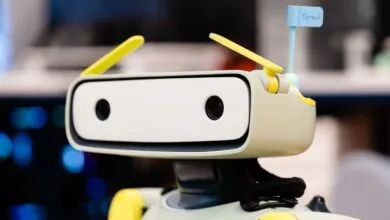
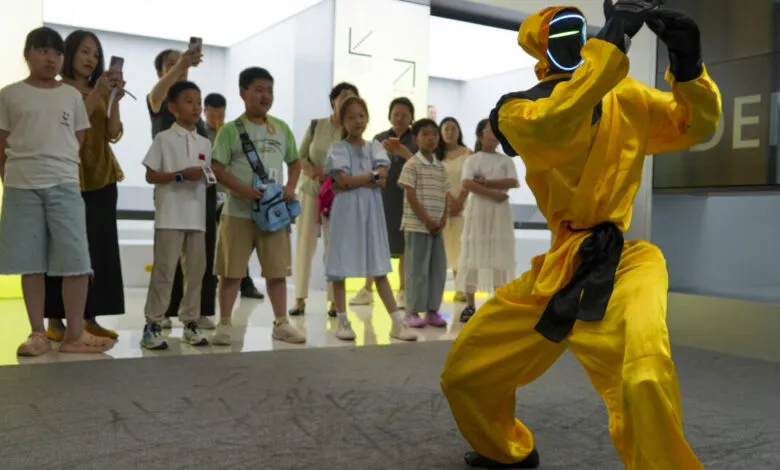
This latest wave of robot footage is especially deceptive because of our innate tendency to anthropomorphize anything with a human shape. While a robotic arm performing a dance move might be dismissed as a novelty, a humanoid robot executing the same motion triggers far more profound assumptions. “People automatically extrapolate and assume that the robot that looks like a person can do all the things that a person who can dance could do,which is not true,” said Jonathan Hurst, cofounder of Agility Robotics and a robotics researcher at Oregon State University. He noted that some startups actively exploit this cognitive bias: “A lot of the startup companies do kind of prey on that for being able to raise a lot of money.”
A core technical hurdle is creating robots that can generalize their skills across diverse conditions and environments, just as humans do. Sergey Levine, a computer scientist at the University of California, Berkeley, and cofounder of Physical Intelligence, explained that this level of adaptability is nearly impossible to prove with a single, staged video. “Maybe the robot can pour a glass of wine, but can it pour it out of any bottle and into any glass in any environment?” Levine said. “That’s actually a lot harder than having a robot do a backflip in one stage demo.”
The true benchmark for robotic progress, Levine argued, is not a viral clip but quantitative, large-scale evaluations conducted in messy, unpredictable real-world settings. “There’s always a gap between the kind of things that somebody can show in a demo and what the real capability of the robot is,” he cautioned. Until these rigorous tests become the standard, a spectacular backflip is no substitute for a robot that can reliably get the dishes done.
(Source: Ars Technica)