Bose sleep chief’s startup SOND exits stealth with $7M
▼ Summary
– SOND introduced Dreambuds, a closed-loop in-ear system that captures 12 physiological signals and acts on them in real-time to improve sleep.
– The earbuds track signals like respiration, heart rate variability, and sleep staging, streaming data to a cloud-based AI sleep coach that selects or generates audio programs.
– Users can interact with the AI coach by speaking, requesting sleep insights or specific programs from a library of over 500 audio options.
– The system runs end-to-end without a phone, with a charging case that includes Wi-Fi, Bluetooth, an OLED display, and a speaker for alarms.
– SOND emerged from stealth with $7 million in funding, co-founded by MIT grads including Bose’s former Head of Sleep Products, and aims for mass production by Q2 2026.
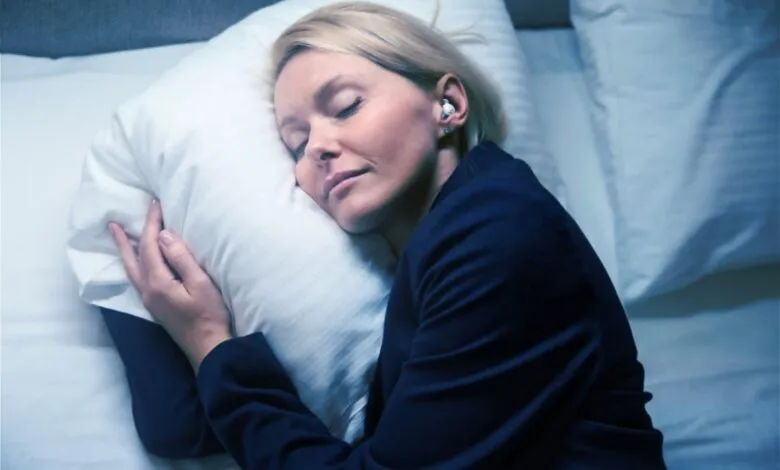
A Boston-based startup called SOND is redefining what sleep earbuds can do. Emerging from stealth on Wednesday with $7 million in seed funding, the company introduces Dreambuds, a closed-loop in-ear system that doesn’t just mask noise but actively intervenes to improve sleep quality in real time.
Founded by two MIT graduates, including Bose’s former Head of Global Sleep, SOND’s debut device captures 12 physiological signals from the wearer , including respiration, heart rate variability, cardiorespiratory coupling, sleep staging, body position, snoring, and seismocardiography (the mechanical vibrations of the chest wall from the heartbeat). This sensor data streams instantly to a cloud-based AI sleep coach, which selects or generates personalized audio programs. Over time, the system learns which sounds work best for each user.
The $7 million investment comes from E14 Fund (an MIT-affiliated fund), Crosslink Capital, Ubiquity Ventures, Alumni Ventures, Meach Cove Capital, and Boston Scientific co-founder John Abele.
Users can interact with the AI coach by speaking , asking for sleep insights or specific programs from SOND’s library of over 500 audio options. The coach can also generate custom content on demand, such as a sleep story with a particular theme. For those who prefer podcasts, the charging case supports streaming as well.
CEO Yadid Ayzenberg previously led Bose’s sleep products division, launching Sleepbuds 2 and managing the company’s sleep portfolio. When Bose decided to exit the sleep business, Ayzenberg saw an opportunity to build a dedicated startup in this space. He founded SOND in February 2022.
“I had spent a significant amount of time around physiology, sensors, and audio… I was meant to do this,” Ayzenberg told TechCrunch, sitting alongside co-founder and CTO Amir Lazarovich, a former senior software engineering manager at Google.
The co-founders met at MIT over a mattress , Lazarovich had just moved into a family dorm without one, and Ayzenberg offered his spare. That chance encounter 14 years ago led to a lasting friendship. After MIT, Ayzenberg founded The Sync Project, which mapped music to physiological factors like heart rate and heart rate variability. Bose acquired that startup after four years, leading to his work on Sleepbuds II.
Bose customers frequently wanted more than noise cancellation , they wanted sensors to track and improve their sleep. At the time, technology couldn’t pack many sensors into a small, AirPods-like form factor while preserving battery life. By the time Bose exited sleep wearables, that had changed.
Ayzenberg cautions that Dreambuds shouldn’t be seen as what might have been Bose’s Dreambuds III. He acknowledges that competitor Ozlo’s earbuds are more likely what would have followed. “We did something entirely different. Maybe the form factor is an earbud, but that’s where it ends,” he said.
The system runs end-to-end without requiring a phone. Dreambuds’ charging case includes Wi-Fi, Bluetooth, an OLED display, physical buttons, and a speaker. The speaker helps wake you via alarm even if you fall asleep before inserting the earbuds. The goal is to eliminate the need to pick up a phone to control sleep tech.
“We have a running joke , we say giving an insomniac a phone is like running an AA meeting in a liquor store,” Ayzenberg says with a laugh. “The idea here is that all you do is take the buds out and they’ll resume your sleep plan. You can also switch to other sleep plans. And you can talk to the coach, just double-tap and say, ‘I’m having trouble sleeping. I want this, or I want that.’”
The AI coach draws on data about what has worked for you before, whether that was a breathing exercise, a calming track, a soundscape, or binaural beats. Ayzenberg confirms the coach will never speak unless you engage it with a double-tap gesture, to avoid startling or creeping out users.
Lazarovich adds that the AI coach responds based on context. “For example, if you engage right before bedtime, it would ask you, ‘Are you ready to wind down?’ But if you engage after you woke up, it would ask you ‘How was your night?’”
Dreambuds owners can also review their data and hypnograms (sleep cycle graphs) in the companion app to better understand their sleep patterns.
The earbuds feature a distinctive design , the team placed sensors facing outward, creating an artistic pattern rather than hiding the technology. They include wide-frequency drivers for high-fidelity audio, along with microphones and motion sensors.
SOND has completed comfort studies and betas, and aims to begin mass production by Q2 2026, following a crowdfunding campaign to raise additional funds. Reservations are now open on the company’s website.
(Source: TechCrunch)