Neurable seeks to license mind-reading tech for wearables
▼ Summary
– Neurable announced it will license its non-invasive brain-computer interface technology to consumer wearables, distinguishing itself from surgical BCI firms like Neuralink.
– The technology uses EEG sensors and AI to scan brain activity and provide data on a user’s cognitive performance.
– Neurable raised $35 million in Series A funding in December to scale commercialization and is licensing its tech for integration into headphones, hats, glasses, and headbands.
– The company has existing partnerships with HP’s HyperX for gaming headsets and iMotions for human behavior research, and aims to expand into health, productivity, and gaming industries.
– Neurable ensures user data is protected and anonymized, following HIPAA standards, and only trains its AI on neural data with explicit user consent for specific experiments.
Brain-computer interface technology has long been the stuff of science fiction, but today it represents a fiercely competitive sector within the tech world. One company actively pushing to bring BCI to the mainstream is Neurable, which recently announced plans to license its “mind-reading” technology to makers of consumer wearables.
Neurable focuses on non-invasive BCI, setting it apart from ventures like Neuralink, Elon Musk’s brain-chip startup that requires surgical implantation. The key difference: Neurable’s solution does not demand that users undergo any medical procedure to tap into its capabilities.
The system relies on a combination of EEG sensors and advanced signal processing. It scans a user’s brain activity, analyzes the data with AI, and delivers insights into cognitive performance,essentially revealing how well a person’s brain is functioning during specific tasks.
Back in December, Neurable closed a $35 million Series A funding round, earmarked for scaling its commercial operations. Now, the company is actively seeking to license its technology to a wide range of consumer-facing businesses. The goal is to embed mind-reading capabilities into everyday wearables across industries like health and fitness, productivity tools, and gaming.
“Through Neurable’s licensing platform, OEMs can directly integrate its AI-powered brain-sensing technology into existing hardware, such as headphones, hats, glasses, and headbands, while maintaining full control over product design, user experience, and distribution,” the company stated in a press release this week.
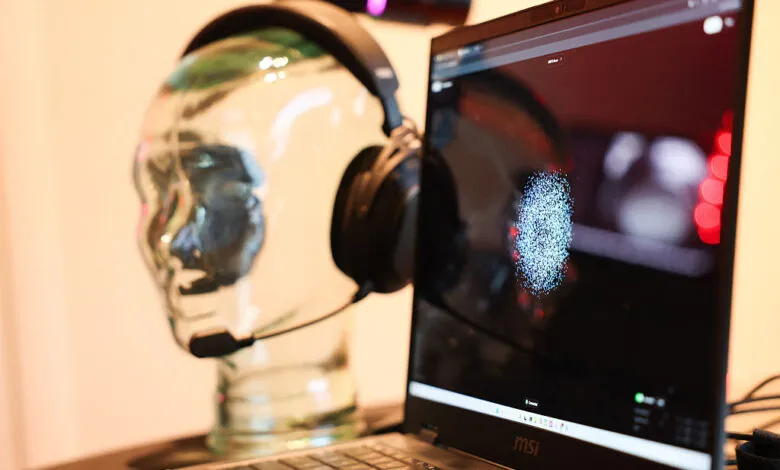
Neurable has already tested its technology through partnerships with several notable firms. One collaboration with HP Inc.’s HyperX gaming brand produced a headset designed to help players “level up their game play by optimizing focus and performance.” Another partnership with iMotions, a software platform specializing in human behavior research, supports that company’s research initiatives.
In a recent interview, CEO Ramses Alcaide declined to reveal any new partnerships in the pipeline but confirmed that Neurable is aiming to broaden its reach across multiple domains.
“In the past, we were very specific about our partnerships,” Alcaide explained. He noted that the startup previously concentrated on proving a single commercial application with one partner. Now that the company has demonstrated its technology works across several fronts, the focus has shifted to scaling up.
“What we’re doing now is we’re basically saying, like, ‘Hey, we’ve demonstrated that we’re getting great traction’,” Alcaide said. “Like, let’s make this as ubiquitous as heart rate sensors on your wrist, right?”
But brain data is inherently more sensitive than heart rate information. So what privacy protections does Neurable offer? Alcaide emphasized that all user data is “protected and anonymized.” The company’s privacy policy outlines clear guidelines for when and how data can be accessed or used. “We make sure we follow HIPAA standards, like we’ve gone above and beyond where a lot of startups would be at our stage to make sure that we protect the data, we encrypt it, and that we anonymize it,” he said.
When asked whether Neurable uses user neural data to train its AI models, Alcaide responded, “We can with user consent, right? But we do it in a very specific way.” That process involves explicitly asking users if their data can be used for particular experiments. “We are not collecting the data, just training on it willy nilly,” he clarified, stressing that data usage is highly targeted.
Alcaide believes the neuro-technology industry is at an “inflection point,” where a “real business model in neuro-technology that is scalable” now exists. The big question remains: what comes next after that inflection point?
(Source: TechCrunch)