Ex-AirPods Engineer Now Designs Heat Pumps
▼ Summary
– California has installed about 2.3 million heat pumps toward a 2030 goal of 6 million, requiring an average of 2,000 installations daily for the next five years.
– Startup Merino Energy has developed a simplified, single-unit heat pump called the Merino Mono that costs $3,800 and claims a one-hour installation process.
– The Merino Mono plugs into a standard 120-volt outlet to avoid major electrical upgrades and combines indoor and outdoor components into one indoor unit.
– While simpler and cheaper, the Merino Mono trades some efficiency, with a SEER2 rating of 15.2, making it more suitable for smaller spaces like apartments.
– The company is initially focused on the California market, is installing units in a low-income housing development, and is taking pre-orders for delivery later this year.
California’s ambitious goal to install six million heat pumps by 2030 faces a steep climb. With roughly 2.3 million installed to date, the state would need to average about 2,000 installations every day for the next five years. This pace is challenging given that a standard mini-split system often requires a full day of labor and costs between $4,000 and $6,000 per zone. A new startup, emerging from stealth mode, believes a radical redesign is the key to accelerating adoption.
“We’ve got to do something different,” says Mary-Ann Rau, co-founder and CEO of Merino Energy. Her company is introducing the Merino Mono, a simplified heat pump priced at $3,800, which includes an installation process the company claims takes about one hour. Rau’s background includes engineering roles at Apple, where she helped introduce AirPods, and at another heat pump startup. Her personal experience trying to electrify her San Francisco home led to a revelation. After installing solar panels and an induction stove, she balked at the cost of a traditional heat pump system. “That’s when I realized that if it was inaccessible for me,and I’m privileged,it’s out of reach for the vast majority of Californians and Americans,” she explains.
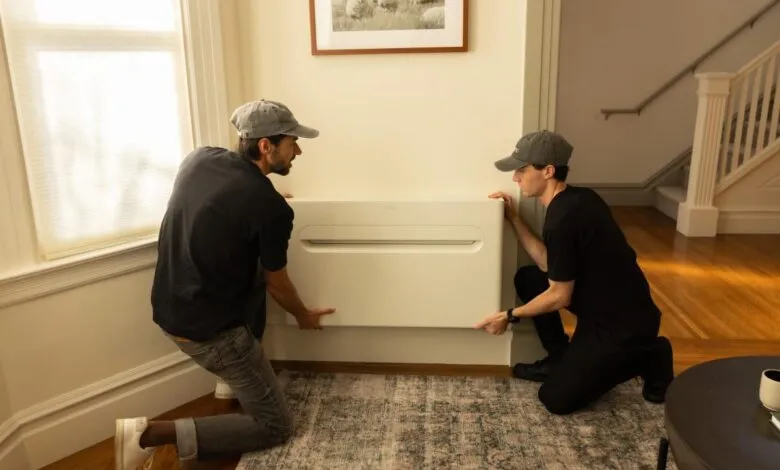
The Merino Mono fundamentally rethinks the appliance’s architecture. Conventional systems separate an indoor air handler from an outdoor condenser. Merino consolidates everything into a single indoor unit, roughly the size of a window radiator. It plugs into a standard 120-volt outlet, potentially eliminating the need for costly electrical panel upgrades. “If you can plug in a microwave and it works on that outlet, then the Merino Mono is going to work on that outlet,” Rau states.
The unit includes modern features like Wi-Fi connectivity, occupancy sensing, and the ability for multiple units in a home to coordinate for efficiency. The company is even developing an integration with Oura Rings to slightly lower the room temperature when it detects the wearer is in REM sleep. Installation involves cutting two holes in an exterior wall for air intake and exhaust, along with a condensate drain line. By housing all components indoors, the design avoids the complex, labor-intensive process of connecting and charging refrigerant lines between indoor and outdoor units.
This miniaturization and simplification involves a trade-off in efficiency. The Mono has a SEER2 rating of 15.2, lower than some premium multi-zone systems that can exceed 25. Larger outdoor condensers simply perform better. However, Merino argues that for many applications, particularly in apartments and dense urban housing, the benefits of an all-indoor, plug-and-play solution outweigh that compromise. “It is a solution where the cost is proportional to the problem that we’re trying to solve,” Rau says.
Merino is currently installing 48 units at a low-income housing development in Richmond, California. Initially focused on its home state, the company plans to expand to markets like Hawaii, Oregon, and Washington. It has signed up six installers in the Bay Area and Los Angeles and is now taking pre-orders for delivery later this year. Rau’s vision is that by drastically reducing installation time and complexity, her company can help scale heat pump adoption and make a meaningful dent in that formidable statewide goal.
(Source: TechCrunch)