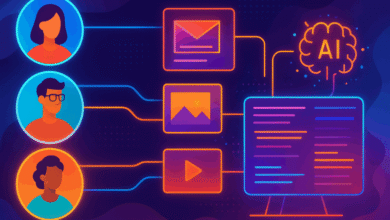
AI Boosts B2B Marketing, But Are Marketers Benefiting?

▼ Summary
– AI is widely used in B2B tech marketing, with 90% of marketers employing it daily, but only 4.7% have received a raise or promotion for these skills.
– Most marketers are self-funding their AI training, as 70% rely on personal resources, while only 22% receive employer-supported learning.
– Marketers are optimistic that AI skills will soon command a salary premium, with over half expecting a 5% or higher increase within 1-2 years.
– The most valued AI proficiency is its strategic application for business impact, such as improving productivity and generating customer insights.
– Despite adaptation, many marketers feel less career security due to AI, though those using it to focus on strategy and creativity feel more secure.
Artificial intelligence is fundamentally reshaping B2B marketing, driving significant gains in efficiency and productivity across the industry. Yet, a profound disconnect exists between these operational benefits and the financial rewards for the marketing professionals implementing the technology. A recent industry survey reveals that while an overwhelming majority of tech marketers now use AI daily, only a tiny fraction have seen this expertise translate into a raise or promotion. This gap highlights a critical tension in the modern workplace, where technological adoption races ahead of traditional compensation models.
Marketers are overwhelmingly adopting AI, with ninety percent reporting daily use in their workflows. However, the anticipated career and salary boosts have largely failed to materialize. A mere 4.7% of professionals state their AI skills have directly led to a promotion or increased pay. This stagnation persists even as individuals invest considerable personal time and resources into building their competencies. Seventy percent of those surveyed are self-funding their AI education or relying on free materials, with only about one-fifth receiving employer-supported training. This self-driven upskilling creates a scenario where companies reap the productivity rewards without covering the associated development costs.
The survey data points to a sense of cautious optimism mixed with underlying career anxiety. More than half of marketers believe AI proficiency will command a salary premium of at least five percent within the next year or two. Nearly a quarter anticipate premiums of ten percent or higher. For now, however, these are future expectations rather than current realities. Fewer than thirteen percent report that their AI skills have indirectly contributed to better opportunities, such as selection for key strategic projects. This waiting period creates financial uncertainty for many.
The strategic application of AI is what employers truly value, according to the findings. The most sought-after skill is using AI tools to boost productivity and cut costs, cited by seventy-six percent of respondents. This is followed by leveraging AI for analytics and customer insights, and for leading integration initiatives. The data suggests that mastery of the tools alone is insufficient; professionals must demonstrate how AI drives concrete business outcomes. Those who successfully pair technical skill with strategic impact are beginning to be recognized, with seventeen percent noting rewards for this combined value.
This dynamic contributes to a complex emotional landscape for marketing teams. While a segment feels confident about the opportunities AI will unlock, a larger portion, close to forty percent, reports feeling less secure in their careers than they did just one year ago. The professionals who appear most secure are those using AI to automate routine tasks, thereby freeing themselves to focus on higher-level strategy and creative brand building. They are not just using the technology; they are using it to fundamentally elevate their roles and insulate their value.
The core issue challenges a long-held assumption of the labor market: that increased skill inherently leads to increased pay. Current economic conditions, including a stagnating job market and intense pressure to maximize shareholder value, are disrupting this equation. Furthermore, the widespread automation of entry-level white-collar work by AI adds another layer of uncertainty for career progression. These factors combine to create a precarious environment, even as investment in AI capabilities continues to grow.
Ultimately, the future relationship between AI skill and compensation remains unwritten. Marketers are betting on their own development, hoping their investment will pay future dividends. For now, they are caught in a period of adaptation, waiting for organizational recognition and financial reward to catch up to the reality of their daily contributions and the new skills they bring to the table.
(Source: MarTech)