Indie News Queen Still Challenging the Powerful
▼ Summary
– The documentary *Steal This Story, Please!* follows Amy Goodman, the longtime host of the independent news outlet Democracy Now!, as she aggressively questions political figures.
– The film traces the growth of Democracy Now! from a small radio show to a widely distributed outlet that has succeeded by avoiding corporate sponsorship and covering social movements.
– Goodman participates in the documentary as an interview subject, which she finds uncomfortable but sees as a way to promote the necessity of independent, adversarial journalism.
– The documentary highlights the outlet’s reporting on major global events, emphasizing its focus on “trickle-up journalism” that centers activists and affected communities over pundits.
– Democracy Now! operates on an audience-supported, no-paywall model, which Goodman states has been a key engine for its growth and remains sustainable.
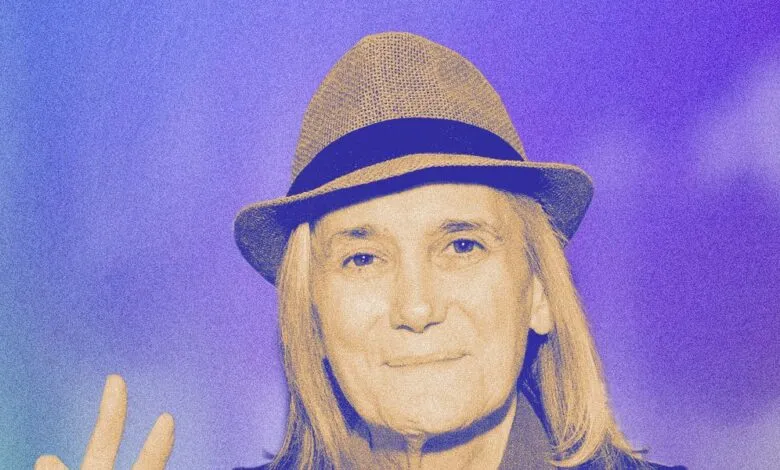
For three decades, Amy Goodman has been the relentless voice behind the independent news program Democracy Now!, a journalistic institution built on confronting power. A new documentary, Steal This Story, Please!, captures this ethos in action, following Goodman as she doggedly pursues a Trump administration official at a climate conference, refusing to be silenced even when a door is shut in her face. This tenacity has defined her career, earning her a reputation that makes some officials flee and once prompted former President Bill Clinton to label her approach as hostile. The film, opening in theaters, chronicles both her journey and the unlikely rise of her media outlet.
Steal This Story, Please!, directed by Oscar-nominated filmmakers Tia Lessin and Carl Deal, offers an affectionate portrait that parallels Goodman’s evolution into a progressive icon with the growth of her organization. From its beginnings on a handful of public radio stations, Democracy Now! has expanded to thousands of radio and TV outlets and a major online presence, all while maintaining its original, grassroots vision. It remains proudly free of corporate sponsorship, focusing instead on covering global social movements. For Goodman, participating in the documentary meant an unfamiliar role reversal. “It’s painful,” she admitted. “A taste of my own medicine.”
She embraced the discomfort, viewing the project as a vital platform to advocate for independent journalism. The provocative title itself reflects a core tenet of her philosophy. “We see an exclusive story as a failure,” Goodman stated, framing it as a call to action for ethical reporting. In a media landscape often characterized by caution, she believes her outlet’s success proves a public hunger for reporting that is adversarial to power and centered on community-driven stories from around the world.
The documentary serves as a powerful highlight reel of the program’s impactful on-the-ground reporting. It spans from early coverage of genocide in East Timor, where Goodman was beaten by Indonesian soldiers, to reporting from New York on 9/11, and later to documenting the Standing Rock protests and violence in Gaza. A key to the program’s enduring relevance is its commitment to amplifying voices from within these movements, a practice Goodman terms “trickle-up journalism.” This approach prioritizes interviews with activists, affected communities, and genuine experts over pundits. “I think it’s that authentic voice that drives people to support Democracy Now!” she explained.
As traditional media contracts and independent platforms proliferate on Substack and TikTok, the audience-supported model that fuels Democracy Now! has become increasingly common. Goodman expresses no concern about competing for support in this crowded field. The program’s steadfast refusal to implement a paywall, she argues, has been a catalyst for its growth. “We haven’t had an issue,” Goodman noted confidently, underscoring her belief that accessible, principled journalism will always find its audience.
(Source: Wired)