Digital Devices Threaten Your Privacy Rights
▼ Summary
– The author argues that smart consumer devices like doorbell cameras and smart speakers function as surveillance tools that users voluntarily purchase.
– He notes that while police surveillance has historically targeted specific groups, its scope has now expanded to include more privileged individuals.
– The author expresses concern that personal data from these devices could be used against protesters, journalists, or anyone the government might target.
– He emphasizes the need to reinterpret the Fourth Amendment’s protections against unreasonable search and seizure for the digital age.
– The core legal principle remains relevant, as the founders feared the abuse of government power to conduct general searches.
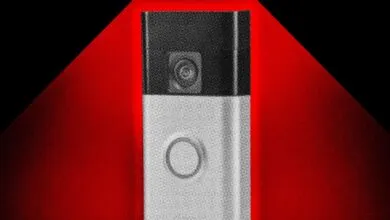
The convenience of modern digital tools often masks a fundamental truth: the devices we invite into our homes are also powerful surveillance tools. This duality is central to understanding the modern privacy landscape. Legal scholar Andrew Guthrie Ferguson emphasizes that his goal is not to scold people for using smart doorbells or voice assistants, but to ensure users make an informed calculation about the trade-offs. The perceived benefits must be weighed against the reality that you are purchasing a product designed to monitor you. This calculation is becoming more urgent as the scope of surveillance widens.
Historically, targeted police surveillance disproportionately affected specific communities, a reality that persists. However, the aperture of surveillance has expanded to now encompass individuals who traditionally enjoyed more privacy. A growing number of people are realizing that the data from their home cameras, emails, and location history could be weaponized if they ever become a person of interest to authorities. This vulnerability applies to protesters, journalists, scientists, or anyone who might draw governmental scrutiny. Our current system was built on norms of prosecutorial discretion, not robust legal frameworks, and those norms are rapidly eroding in the digital age.
This raises a critical question: is our justice system equipped to handle the vast quantities of personal data we now generate? The interpretations of the Fourth Amendment are being tested like never before. As a professor of constitutional criminal procedure, Ferguson constantly examines the collision between new technology and centuries-old law. The Fourth Amendment, ratified in 1791, protects against unreasonable searches and seizures of persons, papers, homes, and effects. The challenge is giving new life to these protections in an era where our digital exposure is unimaginably greater. The core principle, however, remains profoundly relevant. The founders feared a government power of “general rummaging,” the ability of agents to intrude into private spaces to uncover dissent. They understood such power would be abused. Today, the digital power of general rummaging is exponentially more potent, demanding a legal framework that upholds the spirit of those original concerns.
(Source: Ars Technica)